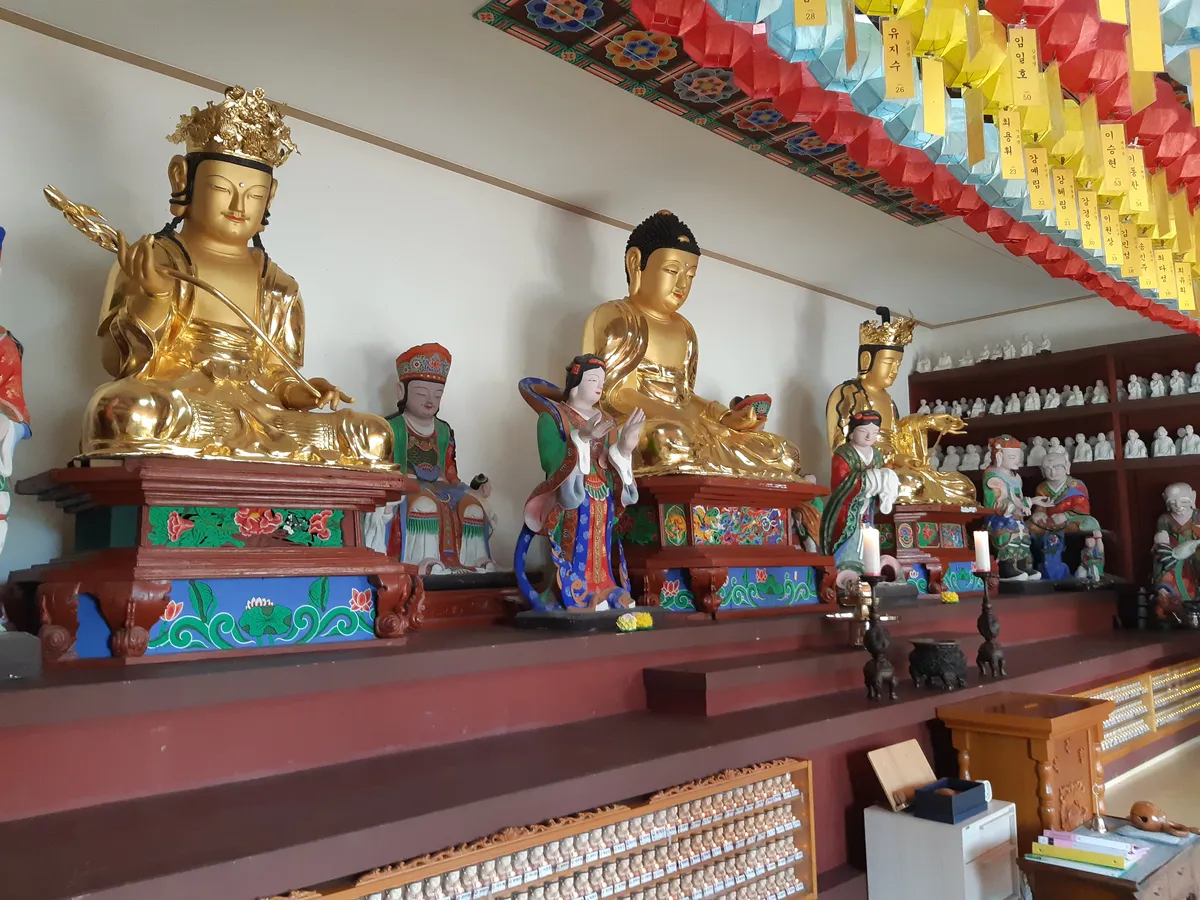
Songgwangsa Mokjoseokgayeoraesamjonjwasang Mit Sojosibyuknahansang (Collection), Wanju
完州 松廣寺 木造釋迦如來三尊坐像 및 塑造十六羅漢像 一括
전북특별자치도 완주군
Basic information
- Designation
- Treasure No.2126
- Category
- Sculpture
- Era
- 1656년(효종 7년)
- Designated year
- 2021
- Location
- 완주군, 전북특별자치도— 전라북도 완주군 송광수만로 255-16 (소양면, 송광사)
- Coordinates
- 34.969400, 127.087900Museum-based location
AI Docent
Coming soonAn AI-generated, friendly retelling of this heritage site is available in Korean. An English version is on our roadmap — for now, please see the official description below.
Description
Machine-translatedThis English description was machine-translated and may contain inaccuracies. Refer to the original Korean text for details.
The Complete Set of Wooden Shakyamuni Buddha Triad Seated and Glazed Sixteen Arhat Statues from Songgwangsa Temple in Wanju represents Buddhist statues created in 1656 (seventh year of King Hyojong), constituting the largest-scale surviving arhat statue work both in quantity and dimensions among seventeenth-century creations. Over thirty participating sculptors participated proportionally to this scale, exceeding the approximately seventeen craftspeople (thirteen sculptors and four metalworkers) who participated in 1622's royal temple Jasusa and Insusa statue projects, warranting particular scholarly attention. Manufacturing methods demonstrate sophisticated integration of contemporary popular wooden and clay techniques alongside coloring practices, displaying artist wit and individuality with notably accomplished craftsmanship. Particularly noteworthy becomes the creator's innovative integration of individual arhat and boy attendant into unified form, with the unprecedented appearance of a dragon-princess presenting offerings in the Yeongsan Assembly—rare occurrence exemplifying practical implementation of Buddhism's fundamental philosophy regarding universal sentient-being Buddhahood. This Buddhist statue group underwent creation under the supervision of chief sculptor Mu-yeom, with thirty-plus sculptors participatively carving individual-to-four sculptors' sections. Participating sculptors reveal participation from Mu-yeom's Seungil school, Hyunjin and Cheong-heon schools, and Suyeon school, consistent with the 1622 Jasusa-Insusa project under renowned Buddhist leader Byeogam Gakseong (1575-1660) request, demonstrating this arhat hall project's importance. The Wanju Songgwangsa sculptures exemplify sculptural collaborative systems alongside gilding-and-repainting operations, demonstrating sculptor-painter cooperation showcasing different discipline artisan collaboration structures. Through dedication texts, sculptor Danneung appears in records of Gimcheon Jikjisa's Four Kings statues and Gumi Bonghwangsa Trinity arrangement, establishing Songgwangsa foundation before expanding Gyeongbuk-Chungbuk activity regions, offering direct documentation of expanded activity range. Therefore, the Complete Wanju Songgwangsa Wooden Shakyamuni Buddha Triad Seated and Glazed Sixteen Arhat Statues possess significant Joseon late-period Buddhist sculpture research importance through clarifying sculptors' activity systems, creative approaches, and stylistic trends based on Songgwangsa foundation records, establishing importance in Buddhist sculpture history.
Location
지도를 불러오는 중…
Have you visited this place?
Log in and verify your visit on-site via GPS to record a stamp in My Journey. (QR verification coming later.)
Images: KOGL (khs.go.kr) · Data source: Korea Heritage Service Open API (khs.go.kr)