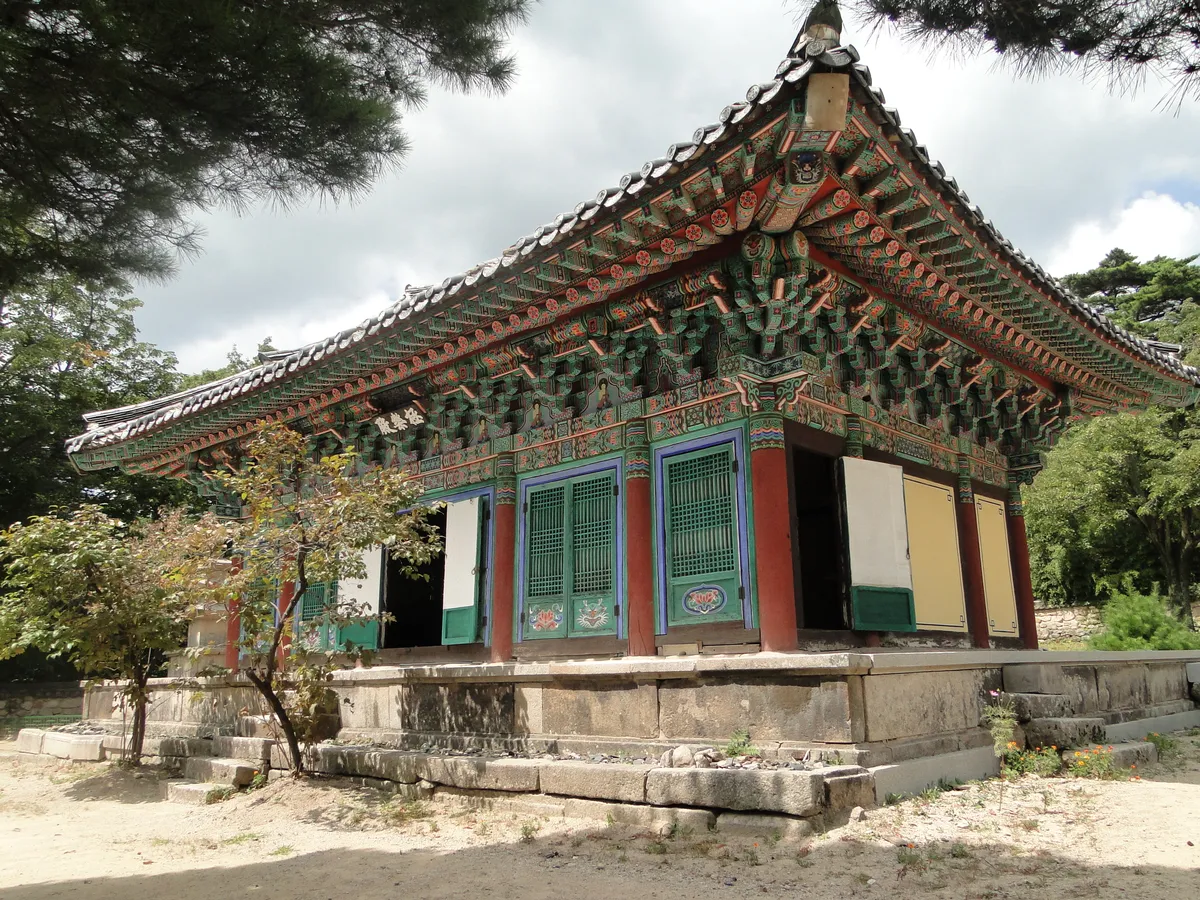
Donghwasa Geungnakjeon Hall, Daegu
大邱 桐華寺 極樂殿
대구광역시 동구
Basic information
- Designation
- Treasure No.2132
- Category
- Architecture
- Era
- 조선시대
- Designated year
- 2021
- Location
- 동구, 대구광역시— 대구광역시 동구 동화사1길 1 (도학동)
- Coordinates
- 35.992509, 128.705210
AI Docent
Coming soonAn AI-generated, friendly retelling of this heritage site is available in Korean. An English version is on our roadmap — for now, please see the official description below.
Description
Machine-translatedThis English description was machine-translated and may contain inaccuracies. Refer to the original Korean text for details.
Daegu Donghwasa Extreme Bliss Hall was established in 1600 (King Seonjo 33) within the Geumtang Hermitage area as the 'Geumtang' (Gold Hall). The previous Sumajaejeon temple's designation as 'Old Gold Hall' in historical records indicates that before Donghwasa's contemporary institutional center established in the Great Treasure Hall area, the founding period temple center existed at Geumtang Hermitage, with 'Geumtang' referencing the newly constructed Extreme Bliss Hall contrasted against the previous 'Old Gold Hall.' Additionally, maintaining the original Unified Silla garam establishment location while preserving period architectural characteristics visible in the existing foundation and foundation stones, the upper timber structure represents seventeenth-century early architectural construction. Due to foundation and foundation stone reuse from original construction, the bay spacing remained identical without structural displacement or relocation shifts, while the upper timber framework fundamentally retained ancient construction techniques. The current wooden floor base additionally demonstrates ancient technique preservation through foundation brick placement. Documentary records clearly establish the current upper timber construction date as 1622. Among surviving post-Imjin War late-Joseon Buddhist halls, this represents relatively early construction period examples, with structural modifications evident in eaves, windows, and painted decorations from post-Japanese colonial periods, though overall architectural structure and ornamentation maintain construction-period appearance with proportional elegance remaining intact. The Extreme Bliss Hall's bracket work artistry and structure merit particular attention. During the upper timber construction process over the ancient column spacing, delicate adjustment of bracket depths achieved ornamental consistency of the bracket assemblies, demonstrating remarkable craftsmanship of this building's carpenter. The bracket arm ends feature decorative bracket treatment, with corner-bay brackets employing supplementary brackets where rafter corners intersect, representing seventeenth-to-eighteenth-century techniques concentrated in Palgongsan-centered Yeongnam regions. These regional specialist group characteristics possess considerable scholarly value.
Location
지도를 불러오는 중…
Have you visited this place?
Log in and verify your visit on-site via GPS to record a stamp in My Journey. (QR verification coming later.)
Images: KOGL (khs.go.kr) · Data source: Korea Heritage Service Open API (khs.go.kr)