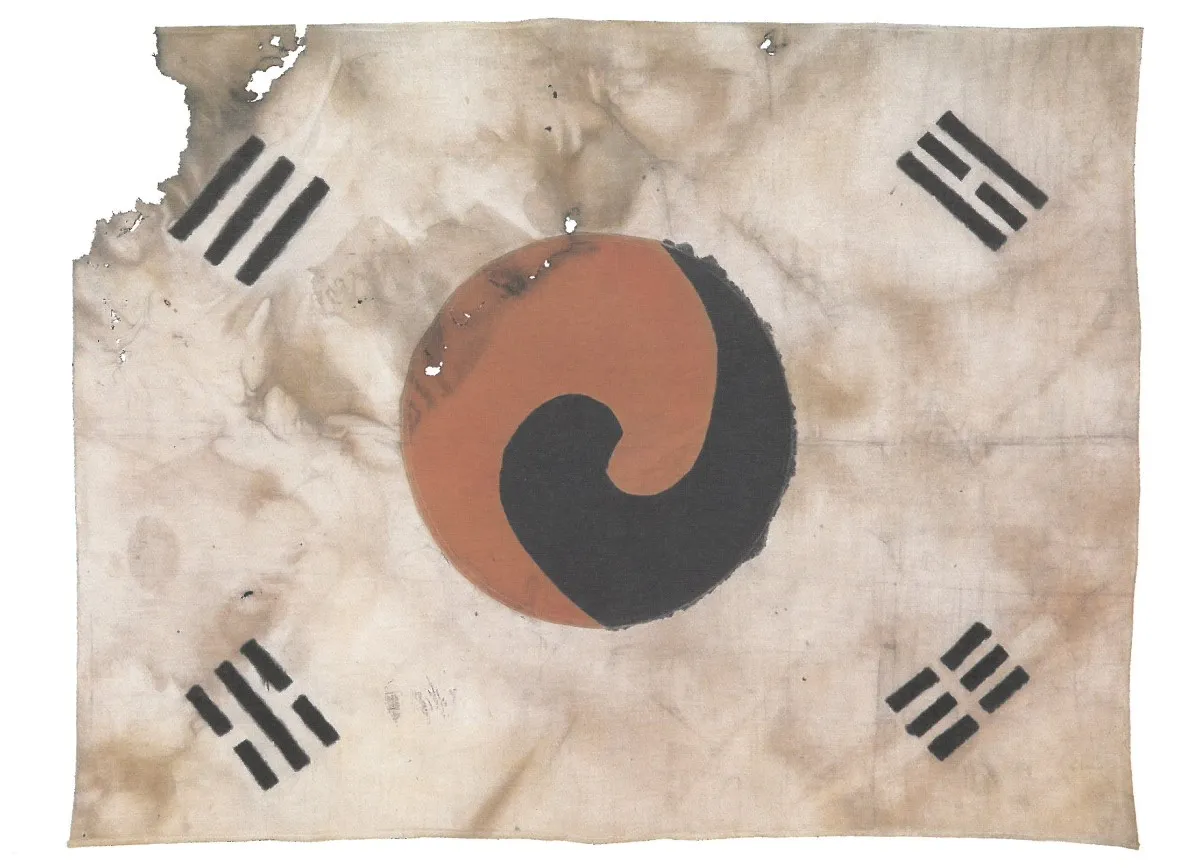
Jingwansa Taegeukgi, Seoul
서울 津寬寺 太極旗
서울특별시 은평구
Basic information
- Designation
- Treasure No.2142
- Category
- Craft
- Era
- 1919년 경
- Designated year
- 2021
- Location
- 은평구, 서울특별시— 서울특별시 은평구 진관길 73 (진관동, 진관사)
- Coordinates
- 37.637857, 126.946513Kakao address conversion
AI Docent
Coming soonAn AI-generated, friendly retelling of this heritage site is available in Korean. An English version is on our roadmap — for now, please see the official description below.
Description
Machine-translatedThis English description was machine-translated and may contain inaccuracies. Refer to the original Korean text for details.
The Jingwan Temple Taegeukgi was discovered in May 2009 within the temple's Chilseong Pavilion during renovation work, wrapped with nineteen independence newspaper publications spanning June 6 to December 25, 1919. The surviving newspapers include official proclamations, independence publications, and various newspapers from the 1919 era. Buddhist monks, particularly Baekchowol, are presumed to have concealed the flag. The flag's distinctive feature is the overpainting of taegeuk and trigram designs in black ink directly atop a Japanese flag, maximizing anti-Japanese defiance. Physical damage indicates battlefield use during or after the March First Movement. As one of the few surviving 1919 flags, it represents crucial primary evidence of the independence movement. Accompanied newspapers contain important interpretations of taegeuk symbolism—representing 'force and love' underlying 'freedom and equality'—providing context for understanding the flag's evolving significance. As the first colonial-era flag discovered in a Korean Buddhist temple, it demonstrates monasteries' crucial role as independence movement centers, symbolizing the union of religious faith and patriotic resistance.
Location
지도를 불러오는 중…
Have you visited this place?
Log in and verify your visit on-site via GPS to record a stamp in My Journey. (QR verification coming later.)
Images: KOGL (khs.go.kr) · Data source: Korea Heritage Service Open API (khs.go.kr)