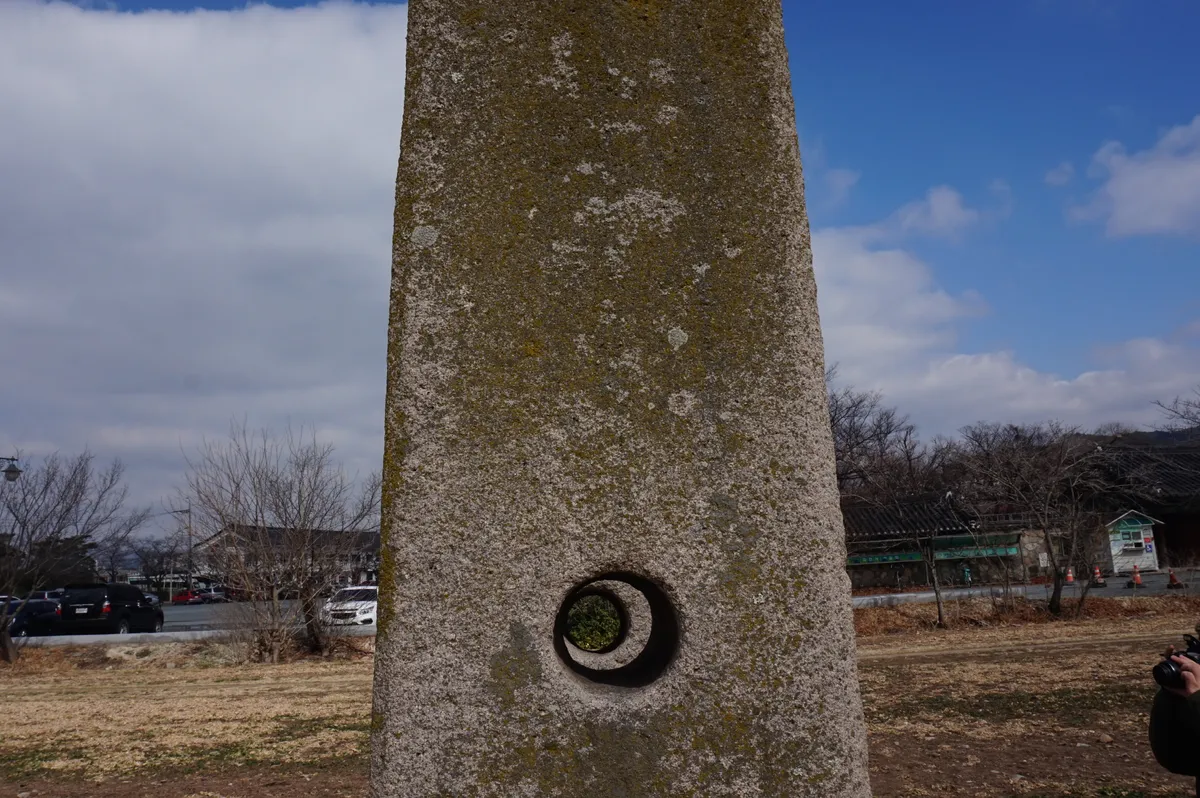
Bunhwangsa Flagpole Support Pillars, Gyeongju
慶州 芬皇寺 幢竿支柱
경상북도 경주시
Basic information
- Designation
- Treasure No.2143
- Category
- Architecture
- Era
- 통일신라시대
- Designated year
- 2021
- Location
- 경주시, 경상북도— 경상북도 경주시 구황동 315-2
- Coordinates
- 35.839742, 129.233065Kakao address conversion
AI Docent
Coming soonAn AI-generated, friendly retelling of this heritage site is available in Korean. An English version is on our roadmap — for now, please see the official description below.
Description
Machine-translatedThis English description was machine-translated and may contain inaccuracies. Refer to the original Korean text for details.
Gyeongju Bunhwangsa's chronology and flag tower foundation: Bunhwangsa located in Hwangdong, Gyeongju represents one of the Seven Temple Complexes documented in 'Memorabilia of the Three Kingdoms,' established in 634 (Queen Sondok 3) on the north side of the Dragon Palace according to historical records. During its founding, Bunhwangsa received royal support parallel to Hwangryongsa, maintaining close institutional relationships with successive sovereigns. Queen Sondok hosted National Preceptor Jajang (慈藏, 590-658) at Bunhwangsa upon his 643 return from Tang Dynasty China, and in 645 initiated Hwangryongsa pagoda construction at Jajang's request. Post-establishment, Bunhwangsa maintained paramount-status equivalent to Hwangryongsa with close central government and royal relationships, functioning as the religious center for Silla Buddhism. Currently, Bunhwangsa preserves molded-brick stone pagodas, diverse stone Buddhas, flag towers, octagonal wells, and monument bases alongside numerous structural stones and tile fragments indicating its former grandeur as an ancient temple. The flagpole tower positioned south of Bunhwangsa's entrance relates to Bunhwangsa's garam scale and organization, ancient temple-complex flag tower positioning, surrounding temple arrangements and directional orientation, and the Hwangryongsa site's partially damaged separate flagpole tower remains—collectively suggesting intentional construction for Bunhwangsa's use, confirming its proprietorial association. Flag tower styling and characteristics: Documentary records from Japanese colonial-era investigation photography exist, with comparison indicating minimal contemporary changes since that period. While the flagpole previously establishing inter-tower construction no longer survives, the coordination technique and positioning style, along with supporting tortoise-form base stone, remain in presumably original locations in relatively complete state. The flag tower lower portion remains deeply embedded, preventing detailed foundation examination; however, contemporary stone-dressing techniques visible in the base and tower-lower sections indicate non-constructed foundation terracing. The supportive tortoise-base foundation employs distinctive technique absent from other flag towers. The base features simplified tortoise head and foot representation, lacking precise sculptural technique characteristic of Silla-period tortoise forms while maintaining tortoise designation. Above the tortoise-form foundation, a rectangular support base incorporates decorative lotus patterns on front and rear surfaces, expression techniques demonstrating affinity with Silla lotus patterns. The foundation center features a recessed square with unilateral drainage grooves—demonstrating quite sophisticated stone-dressing—suggesting original flagpole square floor plans. The tortoise-base foundation's turtle head directional orientation proves useful for inferring flag-tower directional positioning with temple-access direction. Silla and Goryeo period flagpole and tower examples display diverse base-stone categories, with tortoise-form foundation examples unique to Gyeongju Bunhwangsa. Though turtle-base carving demonstrates somewhat formalized sculpting technique and factual realism reduction, work appears purposeful regarding functional design, with comprehensive stone-dressing and sculptural technique appearing contemporary with flag-tower creation. Two identical flag towers demonstrate consistent creation technique, styling, and stone-dressing methodology. The flag tower employs 'ㄷ'-shaped grooves on tortoise-base left-right sides, with tower-lower portions partially inserted and fixed into tortoise-base grooves ensuring secure establishment. The complete flag-tower form features rectangular plan-view columns narrowing progressively toward the summit. The exterior surface rises to approximately 148cm in height with single-stage treatment, with left-right exterior-corner edges 4cm-width beveling. The tower summit features smooth arc-shaped finishing from interior to exterior surfaces, demonstrating minor decorative technique application. Circular flag openings (15cm diameter) perforate the tower-inner-to-outer surfaces at three positions enabling flag insertion and fixation, with no summit-peak tower-inner flag-notch construction. This three-position flag-opening methodology and outer-surface or front-rear single-stage height treatment (raising or lowering block-cutting technique) represent commonly applied Unified Silla flag-tower construction methodology. Gyeongju Bunhwangsa's flag tower demonstrates consistent contemporary surface-finishing through comprehensive stone-dressing, establishing considerable construction care. Contemporary Gyeongju-area flag towers similarly display coordinated, stable external appearance. Particularly distinctive are the lower-section single-stage height treatment combined with outer-corner beveling establishing decorative technique application and through-opening circular flag-fixation methodology consistency with period-comparable outer-feature styling and general tower-section appearance demonstrating similarities to Gyeongju Mangdeoksa, Gyeongju Bomun, and Gyeongju Namgan flag towers, indicating comparable period establishment. Gyeongju Bunhwangsa flag tower significance and opinion: Equivalent to other Unified Silla flag towers, this structure demonstrates throughout-consistent orderly and refined stone-dressing technique and styling. Comprehensive surface-finishing indicates work by exceptional stonemasons demonstrating sophisticated design and execution. Gyeongju Bunhwangsa flag tower demonstrates similar creation technique and styling comparable to important regional temple flag towers, appearing likely established in similar period. Particularly remarkable are the through-opening circular flag-fixation three-position arrangement and unique tortoise-form foundation—unparalleled among Unified Silla flag towers—adding symbolic significance to flagpole and flag. Comprehensive creation technique, styling, and accompanying historical, scholarly, artistic, and technical value examination combined with current nationally designated flag tower preservation status comprehensive consideration establishes sufficient nationally designated heritage designation worthiness.
Location
지도를 불러오는 중…
Have you visited this place?
Log in and verify your visit on-site via GPS to record a stamp in My Journey. (QR verification coming later.)
Images: KOGL (khs.go.kr) · Data source: Korea Heritage Service Open API (khs.go.kr)