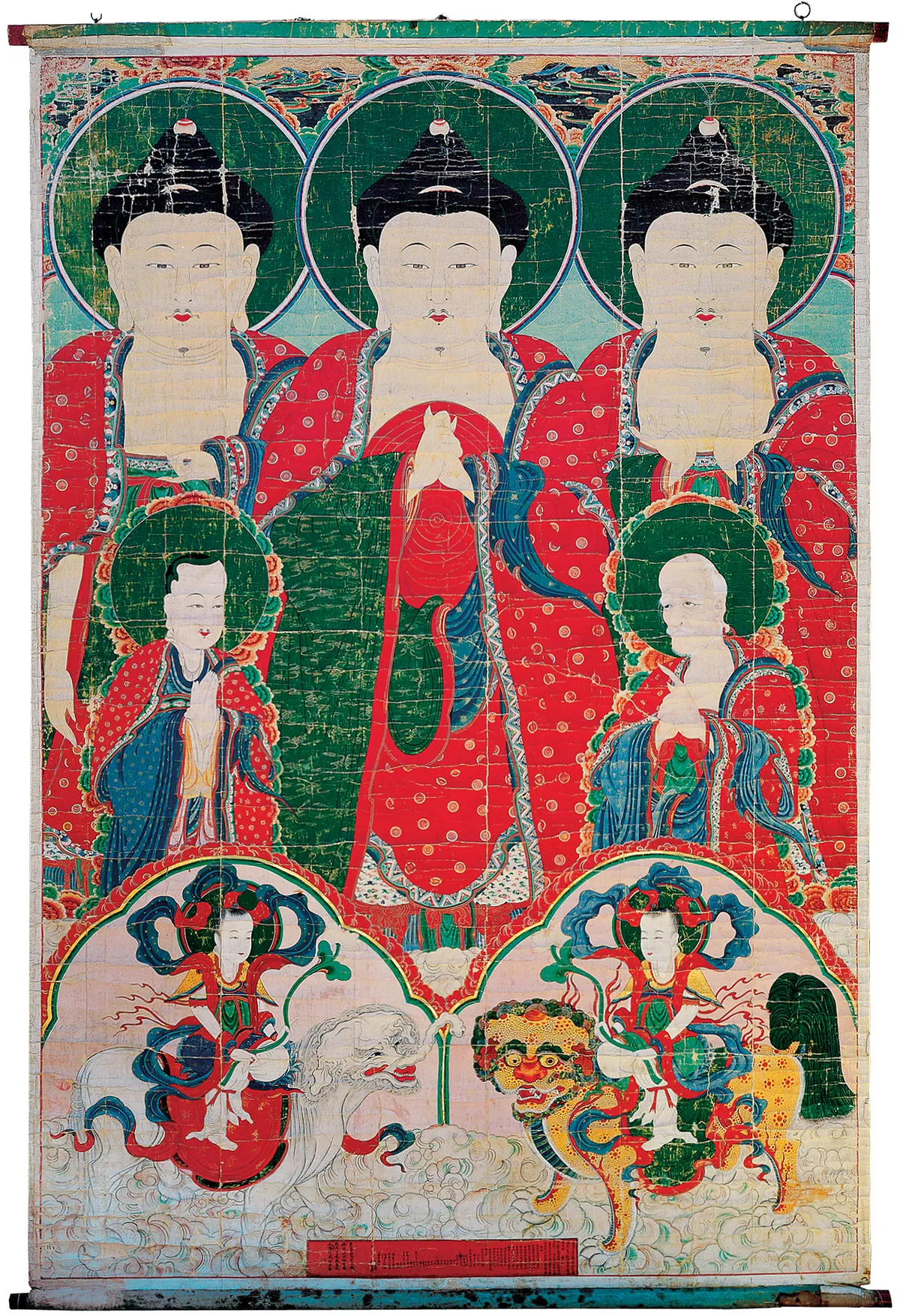
Heungcheonsa Birojanabul Samsin Hanging Buddhist Painting, Seoul
서울 興天寺 毘盧遮那佛 三身掛佛圖
서울특별시 성북구
Basic information
- Designation
- Treasure No.2150
- Category
- Painting
- Era
- 조선 순조 32년(1832년)
- Designated year
- 2021
- Location
- 성북구, 서울특별시— 서울특별시 성북구 흥천사길 29 (돈암동, 흥천사)
- Coordinates
- 37.595800, 126.990700Museum-based location
AI Docent
Coming soonAn AI-generated, friendly retelling of this heritage site is available in Korean. An English version is on our roadmap — for now, please see the official description below.
Description
Machine-translatedThis English description was machine-translated and may contain inaccuracies. Refer to the original Korean text for details.
The Birushana Buddha Trisoma Hanging Dharma Scroll from Heungcheon Temple in Seoul was created in 1832 by master painter Hwadamsinseon and seventeen other Buddhist painters. Hwadamsinseon inherited the painting traditions from accomplished contemporary Seoul-Gyeonggi region artists including Sanggyeom, Minkwan, and Yeonheung who created the Yongju Temple paintings in 1790. He represents the exemplary painter-priest of 19th-century Seoul school Buddhism. The scroll was commissioned for the longevity and wellbeing of King Sunjo, his queen, the crown prince's wives, and the future King Heonjong. Patrons included Kim Jo-soon, Sunjo's father-in-law, along with King Jeongjo's daughter Princess Sukseon and various court ladies representing royal sponsorship. The iconography demonstrates distinctive characteristics, featuring Noshana Buddha rendered as a Tathagata form, creating variations in traditional trisoma iconography. The composition of Buddha-disciples-attendant bodhisattvas arranged in three tiers influenced countless subsequent 19th-century Seoul-Gyeonggi hanging scrolls. The execution displays refined, dignified imagery alongside precise brushwork, brilliant colors, and intricate decorative patterns, maintaining distinguished artistic standards throughout the entire composition.
Location
지도를 불러오는 중…
Have you visited this place?
Log in and verify your visit on-site via GPS to record a stamp in My Journey. (QR verification coming later.)
Images: KOGL (khs.go.kr) · Data source: Korea Heritage Service Open API (khs.go.kr)