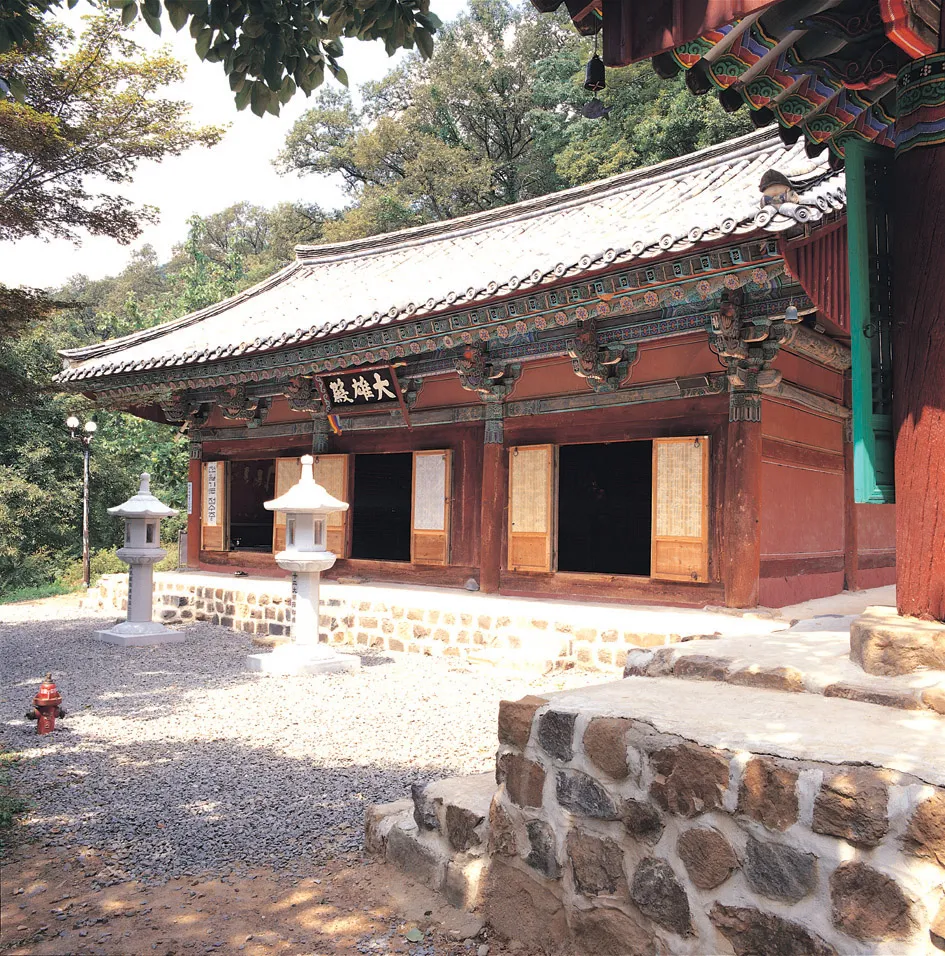
Upper Daeungjeon Hall of Janggoksa Temple, Cheongyang
靑陽 長谷寺 上 大雄殿
충청남도 청양군
Basic information
- Designation
- Treasure No.162
- Category
- Architecture
- Era
- 고려시대
- Designated year
- 1963
- Location
- 청양군, 충청남도— 충남 청양군 대치면 장곡리 14번지 장곡사
- Coordinates
- 36.417627, 126.860268
AI Docent
Coming soonAn AI-generated, friendly retelling of this heritage site is available in Korean. An English version is on our roadmap — for now, please see the official description below.
Description
Janggoksa Temple, located at the foot of Chilgapsan Mountain, was constructed by State Preceptor Bojo toward the end of the Silla Dynasty. The temple underwent successive repair works in 1777 (the first year of the reign of King Jeongjo of the Joseon Dynasty), in 1866 (the 3rd year of the reign of King Gojong of the Joseon Dynasty), in 1906 (The Korean Empire), and again in 1960. Notably, this temple has two Daeungjeon Halls, one situated in the upper area and another in the lower area of the temple. The upper Daeungjeon Hall has a gable roof and measures three kan (a unit of measurement referring to the distance between two columns) at the front and two kan at the sides. The eaves of the roof are supported by a system of brackets placed both on and between the columns. The interior floor of the building is made with bricks, some of which are engraved with eight-petal lotus patterns which appear to have been made during the Unified Silla Period. The upper Daeungjeon Hall, with its unusual support structure for the eaves, is an important relic for studies on the history of architecture in Korea. In addition, the hall houses valuable cultural assets including the Iron Seated Bhaisajyaguru Buddha and Stone Pedestal of Janggoksa Temple, Cheongyang (National Treasure No. 58), and the Iron Seated Vairocana Buddha and Stone Pedestal of Janggoksa Temple, Cheongyang (Treasure No. 174).
Location
지도를 불러오는 중…
Have you visited this place?
Log in and verify your visit on-site via GPS to record a stamp in My Journey. (QR verification coming later.)
Images: KOGL (khs.go.kr) · Data source: Korea Heritage Service Open API (khs.go.kr)