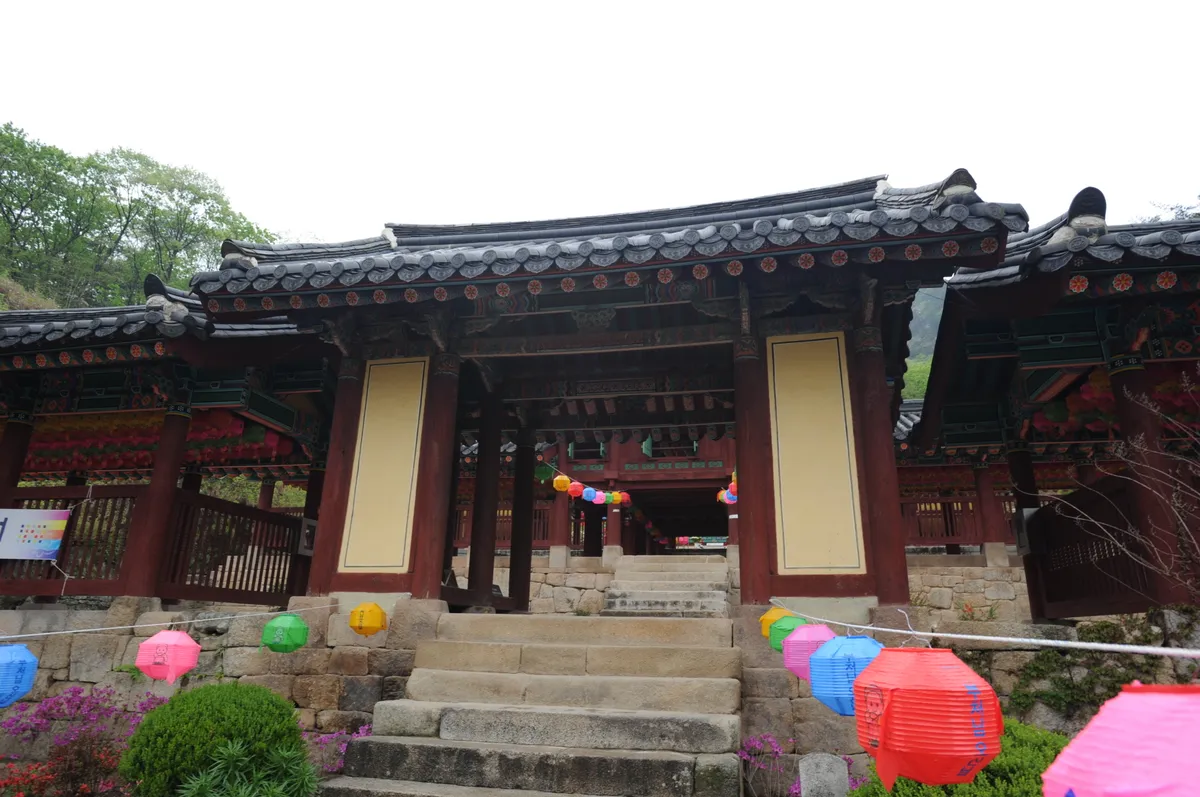
Hoejeonmun Gate of Cheongpyeongsa Temple, Chuncheon
春川 淸平寺 廻轉門
강원특별자치도 춘천시
Basic information
- Designation
- Treasure No.164
- Category
- Architecture
- Era
- 조선 명종
- Designated year
- 1963
- Location
- 춘천시, 강원특별자치도— 강원특별자치도 춘천시 오봉산길 810(북산면, 청평사)
- Coordinates
- 37.986170, 127.808931
AI Docent
Coming soonAn AI-generated, friendly retelling of this heritage site is available in Korean. An English version is on our roadmap — for now, please see the official description below.
Description
Cheongpyeongsa Temple, originally called Baegamseonwon Temple, was built by a Buddhist monk named Seunghyeon in 973 (the 24th year of the reign of King Gwangjong of the Goryeo Dynasty). Thereafter, it was repaired a couple of times and expanded, and eventually it was renamed as Cheongpyeongsa Temple in 1550 (the 5th year of the reign of King Myeongjong of Joseon), when a Buddhist monk Bou came to renovate the temple. Hoejeonmun Gate, which is considered the second gate (the gate of the Four Devas) of a temple, is designed to awaken mankind to the previous life and the eternal cycle of birth, death, and rebirth (i.e. to enlighten people about the transmigration of souls). The gate building measures three kan (a unit of measurement referring to the distance between two columns) at the front and one at the sides. In the front middle of the gate is a wide passageway measuring one kan, and a wooden floor measuring two kan. Architecturally, the gate with gable roof displays the transition from the earlier columnar-head bracketing to the later double-wing bracketing system. The horizontal crimson bars at the top of the ceiling are typical of gates of this type. The niches on either side of the wide entrance were made to enshrine the Buddhist guardian deities. This gate is an important cultural asset for research on the development of construction techniques in the mid- 16th century. In addition, Geungnakjeon Hall, which was burnt down during the Korean War, used to stand on the hill to the west of the temple. It is a fine example of the construction techniques of the Goryeo Dynasty.
Location
지도를 불러오는 중…
Have you visited this place?
Log in and verify your visit on-site via GPS to record a stamp in My Journey. (QR verification coming later.)
Images: KOGL (khs.go.kr) · Data source: Korea Heritage Service Open API (khs.go.kr)