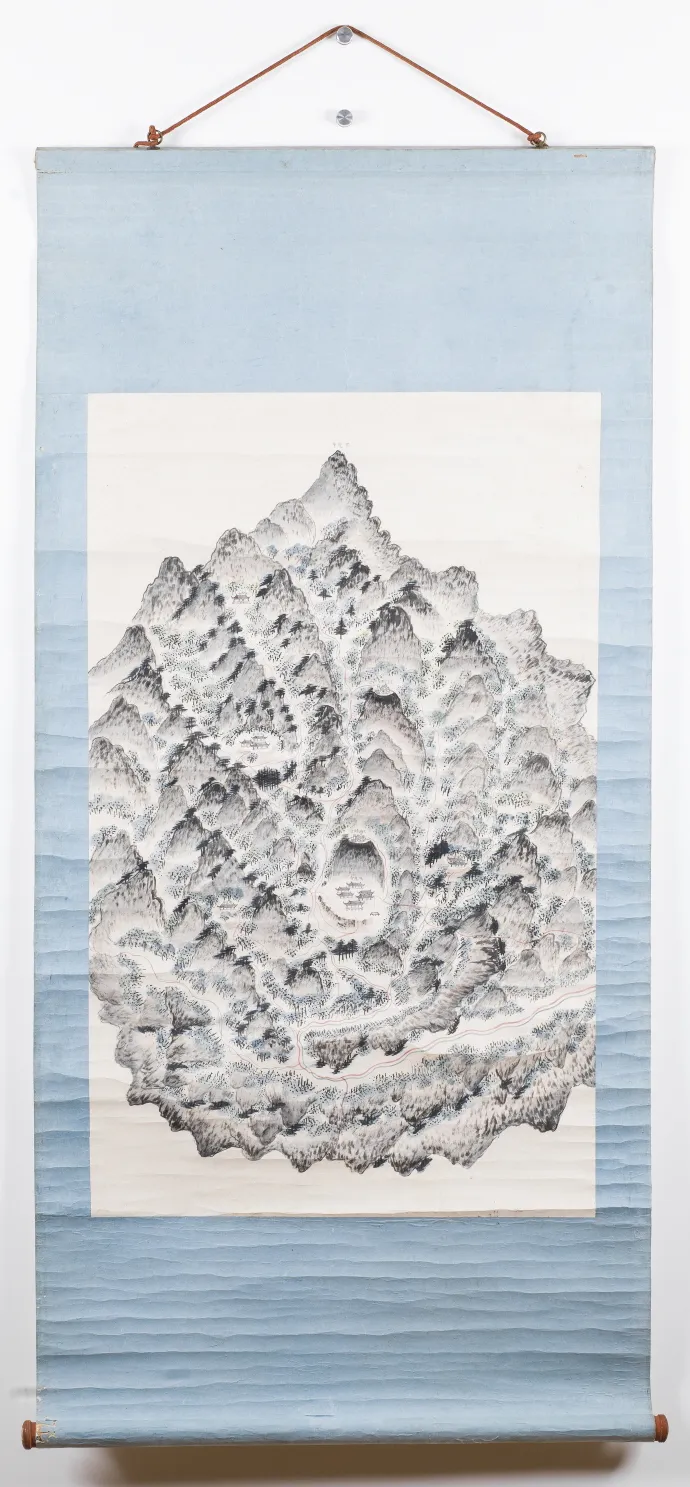
Jangjo Taebongdo
莊祖 胎封圖
경기도 성남시
Basic information
- Designation
- Treasure No.2173
- Category
- Painting
- Era
- 1785년(정조 9) 경
- Designated year
- 2022
- Location
- 성남시, 경기도— 경기도 성남시 분당구 하오개로 323 (운중동, 한국학중앙연구원)
- Coordinates
- 37.391826, 127.055645Kakao address conversion
AI Docent
Coming soonAn AI-generated, friendly retelling of this heritage site is available in Korean. An English version is on our roadmap — for now, please see the official description below.
Description
Machine-translatedThis English description was machine-translated and may contain inaccuracies. Refer to the original Korean text for details.
The Jangjo Tae Bong Do represents a 1785 landscape painting commissioned by King Jeongjo depicting the formal placental burial site of Crown Prince Jangjo (1735-1762, posthumously elevated to royal title). Following Jangjo's January 1735 birth, the royal placenta underwent ceremonial burial in a specially constructed burial chamber situated at the rear of Myungbongsa Temple in the Myungbong area of Gyeongbuk Province. Subsequently, following King Jeongjo's formal elevation of Jangjo to posthumous royal status in 1785, the burial site underwent ceremonial upgrading to royal preeminence status with additional stone architectural fixtures subsequently installed. The artistic composition renders numerous mountain peaks utilizing ink and pigment materials arranged within an elliptical compositional structure, with descending mountain forms appearing in lower-register compositions. Labeled architectural structures provide informational reference, red linear routes indicate roadway networks, and blue linear indicators represent waterway systems in cartographic fashion. The composition emphasizes Mount Wongak positioned prominently at composition apex, with Myungbongsa Temple and King Munjong's burial site located at composition center region, while the Kyungmo Palace burial site occupies superior positioning. The burial chamber renders characteristic double-flower-roof capstone architectural elements topped with octagonal stone balustrade railings and inscribed stone marker monuments positioned anteriorly. Technical execution demonstrates maplike precision through labeled geographic nomenclature, radiant flower-petals compositional arrangement, serrated triangular mountain forms rendered through heavy ink application, and distinctive artistic brushwork reflecting specialized cartographic representation methodologies combined with classical landscape painting traditions.
Location
지도를 불러오는 중…
Have you visited this place?
Log in and verify your visit on-site via GPS to record a stamp in My Journey. (QR verification coming later.)
Images: KOGL (khs.go.kr) · Data source: Korea Heritage Service Open API (khs.go.kr)