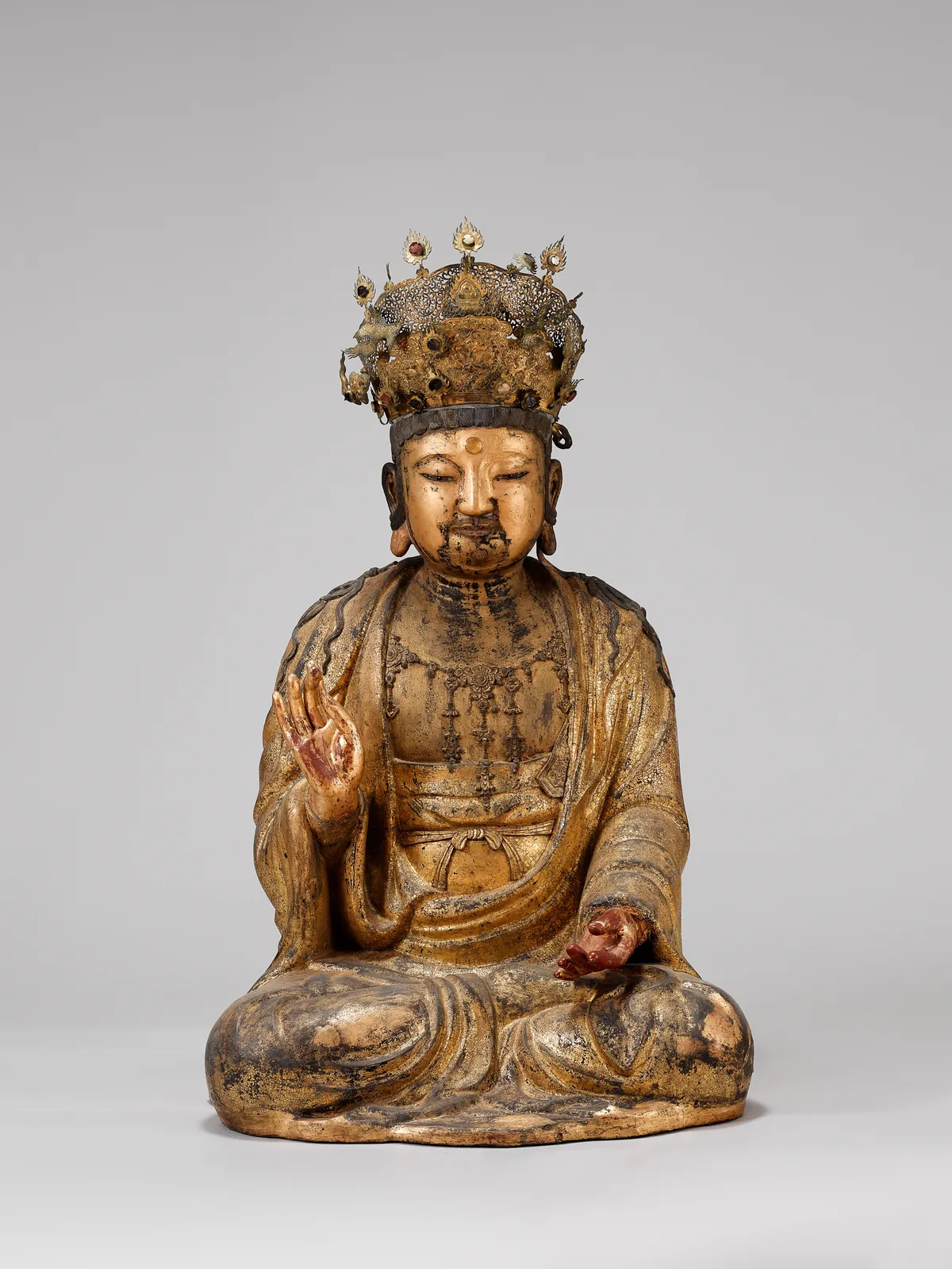
Geonchilbosal Seated Figure
乾漆菩薩坐像
서울특별시 용산구
Basic information
- Designation
- Treasure No.2176
- Category
- Sculpture
- Era
- 고려 말 ~ 조선 초
- Designated year
- 2022
- Location
- 용산구, 서울특별시— 서울특별시 용산구 서빙고로 137 (용산동6가, 국립중앙박물관)
- Coordinates
- 37.523500, 126.980100Museum-based location
AI Docent
Coming soonAn AI-generated, friendly retelling of this heritage site is available in Korean. An English version is on our roadmap — for now, please see the official description below.
Description
Machine-translatedThis English description was machine-translated and may contain inaccuracies. Refer to the original Korean text for details.
The dry-lacquer bodhisattva statue represents a standing bodhisattva figure adorned with elaborate crown jewelry while displaying the iconic hand gesture conventionally representing dharma teaching transmission. Dry-lacquer construction involves coating successive cloth layers over earthen clay sculpted foundations, applying protective lacquer layers, and subsequently removing the underlying clay substrate material. Korea's earliest surviving dry-lacquer Buddha example dates to the late Silla-early Goryeo periods, represented by the Cheongryang Temple dry-lacquer Bhaisajyaguru Buddha statue, with Haeinsa Temple's dry-lacquer Hirang the Great Master statue from the 10th-century early period representing the subsequent chronologically oldest dry-lacquer sculptural example. Approximately twenty dry-lacquer Buddha examples survive in contemporary Korean collections, establishing dry-lacquer sculptural technique itself as exceptionally rare within Buddhist sculpture history. Measuring 124.5 centimeters in overall height, this particular bodhisattva statue displays notable monumental scale combined with solemn aesthetic qualities balanced against intricate decorative refinement. The sculpture demonstrates exceptionally balanced bodily proportions, stately physical form rendering, sophisticated emphasis on tactile hand modeling reflecting human anatomical naturalism, naturally flowing hair descending gracefully across both shoulders, and precisely inlaid crystalline quartz stone eye pupils exemplifying sculptural realism's ultimate technical refinement. This profound technical precision creates compelling aesthetic contrast with the solemn, austere facial expression and broadened shoulder structure conveys monumental authority, thereby communicating composed aesthetic beauty throughout the entire sculptural composition. The National Central Museum example maintains minimal subsequent restoration evidence, thereby preserving original creation-period appearance with remarkable completeness. Among existing dry-lacquer bodhisattva examples in contemporary collections, this represents the largest-scale sculptural specimen demonstrating impressive compositional monumentality through commanding weighty sculptural presence. The work comprehensively displays dry-lacquer artistic techniques and sophisticated metalworking craftsmanship characteristic of late Goryeo through early Joseon periods, thereby warranting treasure preservation designation for sustained scholarship and cultural research.
Location
지도를 불러오는 중…
Have you visited this place?
Log in and verify your visit on-site via GPS to record a stamp in My Journey. (QR verification coming later.)
Images: KOGL (khs.go.kr) · Data source: Korea Heritage Service Open API (khs.go.kr)