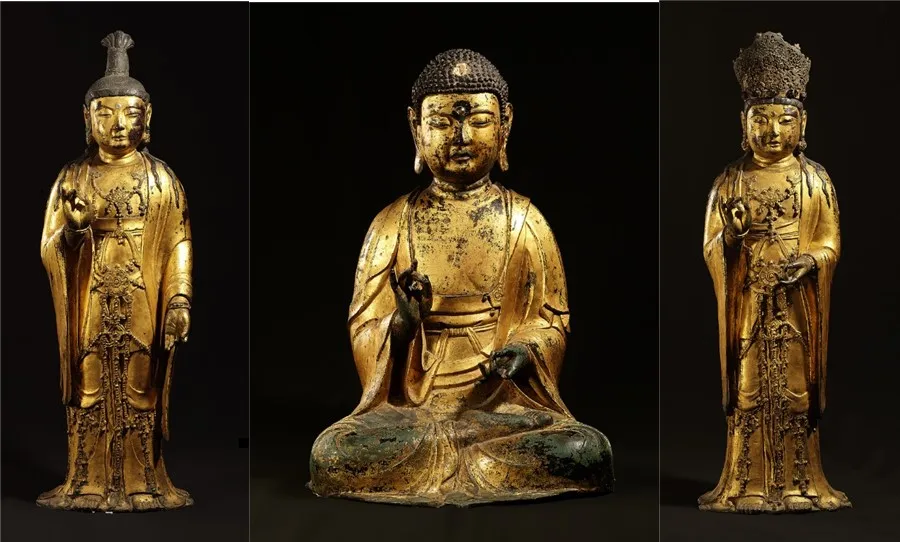
Geumdongamitayeoraesamjonsang Mit Reliquary Objects
金銅阿彌陀如來三尊像 및 腹藏遺物
서울특별시 용산구
Basic information
- Designation
- Treasure No.2177
- Category
- Sculpture
- Era
- 1333년(충숙왕 2)
- Designated year
- 2022
- Location
- 용산구, 서울특별시— 서울특별시 용산구 서빙고로 137 (용산동6가, 국립중앙박물관)
- Coordinates
- 37.523500, 126.980100Museum-based location
AI Docent
Coming soonAn AI-generated, friendly retelling of this heritage site is available in Korean. An English version is on our roadmap — for now, please see the official description below.
Description
Machine-translatedThis English description was machine-translated and may contain inaccuracies. Refer to the original Korean text for details.
The gilt-bronze Amitabha Buddha triad and accompanying consecration relics were created in 1333 according to devotional documentation discovered within the Buddha's consecration chamber interior. The sculptural composition comprises the principal Amitabha Buddha figure positioned centrally, accompanied by paired attendant bodhisattvas Guanyin and Dasthizhi arranged in conventionally established configurations. This sculptural assembly demonstrates characteristic 14th-century iconographic conventions while simultaneously establishing critical stylistic standards of immense importance for Buddhist sculpture scholarship and research. The Buddha principal figure and accompanying bodhisattva statues display distinctive aristocratic facial features alongside elegant formal configurations, circular intermediate decorative beads, elevated coiffure arrangements featuring distinctive binding techniques, graceful bodily curvature rendering, neatly arranged undergarment-tie compositions, elaborate double-flower decorative coiffure designs, and exceptionally intricate jeweled crown ornamentations created through diverse advanced carving methodologies. These comprehensive aesthetic qualities document 14th-century Buddhist sculptural fashion conventions while simultaneously demonstrating exceptionally refined carving execution and sophisticated bronze-casting techniques. Distinctive formal characteristics include the seated Buddha principal configuration paired with standing bodhisattva attendant arrangement, consecration records containing mantric script impressions, documented name-arrangement formatting conventions reflective of period practices, religious invocation-song appearances representing doctrinal content, and attendant bodhisattva consecration-chamber wooden sealing elements bearing written inscriptions representing novel ceremonial practices without historical precedent. The consecration materials include critical devotional records identifying the 1333 creation year, comprehensive ritual documentation, mantric inscriptions bearing donor names including Jangwon and consort Seon, ritual overseer Haengin, and consecration-chamber supervisors Ohoé alongside donors Kimjin and Iggyeom. These named donors held prominent official governmental positions, with historical documentation confirming their substantial involvement in important Buddhist ceremonial projects. This gilt-bronze Amitabha Buddha triad ensemble represents exceptional research significance through its comprehensive survival comprising the Buddha principal statue alongside paired attendant bodhisattva sculptures, maintaining their original creation-period appearance throughout the complete ensemble. The sculptures' distinctive stylistic elements, iconographic characteristics, compositional features, and thoroughly documented historical participants collectively establish fundamental understanding essential for late Goryeo Buddha statue research and Buddhist art history scholarship.
Location
지도를 불러오는 중…
Have you visited this place?
Log in and verify your visit on-site via GPS to record a stamp in My Journey. (QR verification coming later.)
Images: KOGL (khs.go.kr) · Data source: Korea Heritage Service Open API (khs.go.kr)