Injongdaewang Taesil, Yeongcheon
永川 仁宗大王 胎室
경상북도 영천시
Basic information
- Designation
- Treasure No.2178
- Category
- Sites & Pagodas
- Era
- 조선시대
- Designated year
- 2022
- Location
- 영천시, 경상북도— 경상북도 영천시 청통면 치일리 산 24
- Coordinates
- 35.997119, 128.778673Kakao address conversion
AI Docent
Coming soonAn AI-generated, friendly retelling of this heritage site is available in Korean. An English version is on our roadmap — for now, please see the official description below.
Description
Machine-translatedThis English description was machine-translated and may contain inaccuracies. Refer to the original Korean text for details.
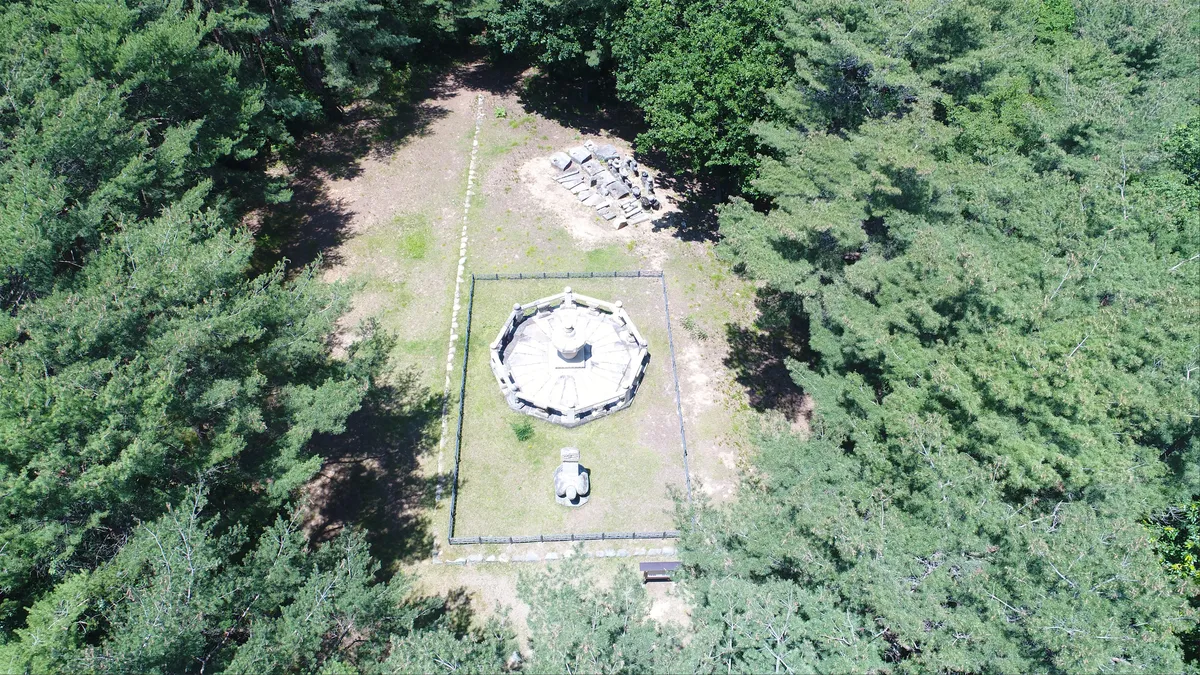
The Yeongcheon Injo Daewang Taesil (Placental Repository of King Injo) was first established in 1521 following the royal placental ceremonies whereby the Joseon royal family would enshrine placentas. After Injo ascended to the throne, the elevation ceremony (ga-bong) was completed in 1546, and the structure underwent repair in 1680 and reconstruction in 1711. During the Japanese colonial period, the Japanese Government-General relocated the placentas and placental stones from fifty-four placental repositories throughout the nation to Seoreum Royal Tomb in 1928, including that of Yeongcheon Injo Daewang Taesil. Subsequently, the site was left neglected until survey work on buried stonework was conducted in the 1960s-70s, with excavation surveys undertaken in 1999. The site was subsequently restored to its present form in 2007, comprising one placental repository, one commemorative stele, and additional stone artifacts. The placental repository features an octagonal plan when viewed from above, with protective balustrade stones surrounding a central pagoda-form middle stone (jung-dong-seok) where the placenta was enshrined. The middle stone rests upon a large rectangular stone decorated with lotus-flower patterns, above which sits a roof-form capping stone (gae-cheom-seok) with a thick eave. Atop the capping stone stands a jeweled finial (bo-ju) decorated with two tiers of pearl-flower patterns. Multiple radiating stones surround the middle stone, forming the octagonal plan, with a stone balustrade encircling the outer perimeter. The commemorative stele located at the front comprises three components: a tortoise-shaped base (gwi-bu), a stele body (bi-sin), and a decorative coping (i-su). The front surface of the stele body bears the inscription "Injo Daewang Taesil" while the rear surface reads "Built in the 25th year of Jiajing era, Fifth Month" (1546), clarifying the repository's origin and construction date. The Yeongcheon Injo Daewang Taesil benefits from comparative detailed historical documentation regarding its establishment and provenance, and its overall construction techniques and structure correspond with the content of the royal placental repository protocols (ui-gwe). The construction techniques of both repository and commemorative stele demonstrate high quality, and the detailed stone-work and decorative techniques employed in the repository's component stones show meticulous craftsmanship and superior artistic treatment, conferring high historical, scholarly, artistic, and technical value. Since initial establishment, the repository has maintained its original location while preserving the complete composition and setting consistent with the original design intentions. Reflecting the cultural traditions of the period regarding placental enshrinement, the existing repository represents one of the largest among surviving Joseon royal placental repositories, possessing both universal cultural heritage value alongside exceptional completeness and authenticity, demonstrating sufficient merit for elevation to national-level heritage status.
Location
지도를 불러오는 중…
Have you visited this place?
Log in and verify your visit on-site via GPS to record a stamp in My Journey. (QR verification coming later.)
Images: KOGL (khs.go.kr) · Data source: Korea Heritage Service Open API (khs.go.kr)