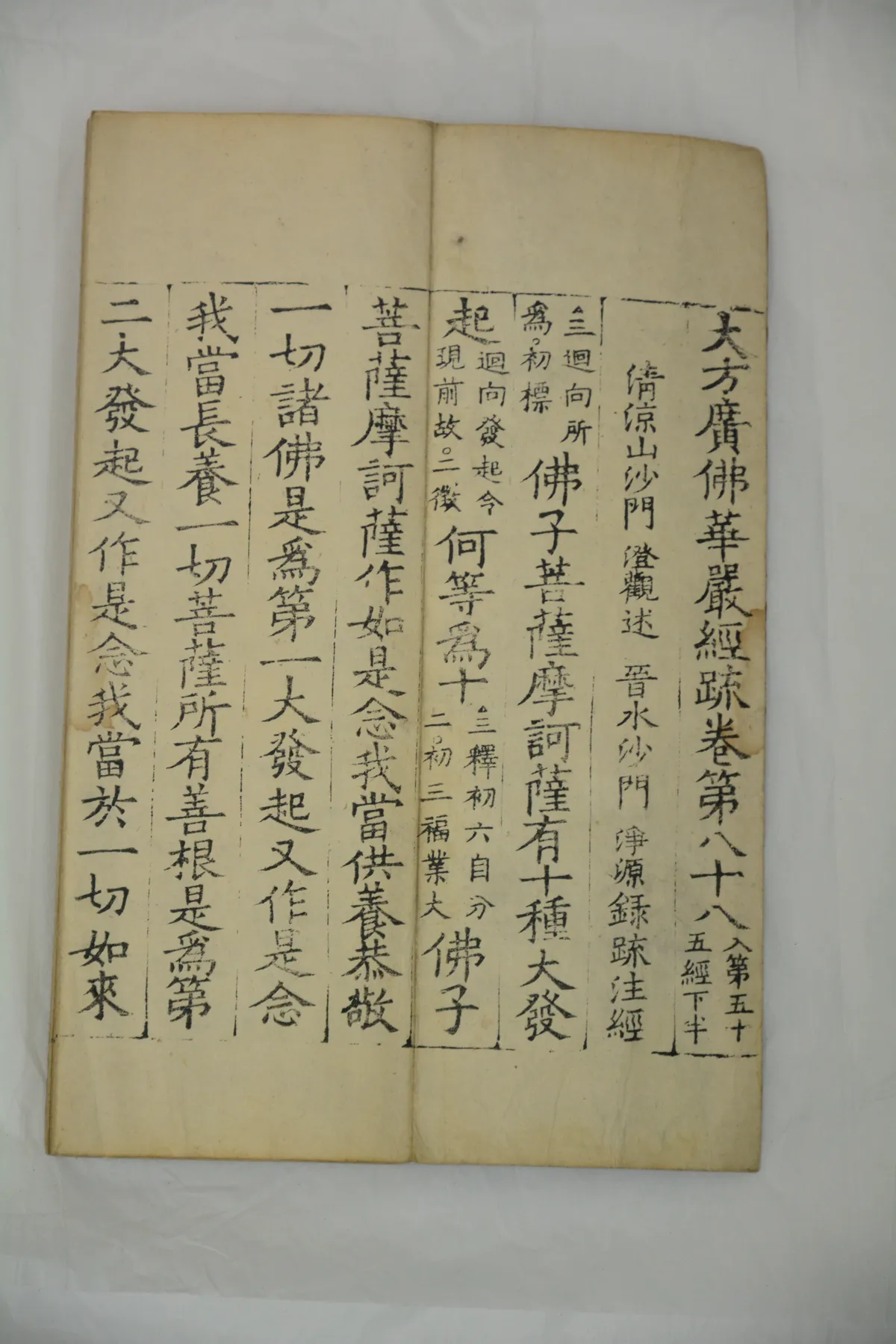
Daebanggwangbulhwaeomgyeongso Gwon88
大方廣佛華嚴經疏 卷八十八
부산광역시 서구
Basic information
- Designation
- Treasure No.2197
- Category
- Books & Records
- Era
- 고려 12세기
- Designated year
- 2022
- Location
- 서구, 부산광역시— 부산광역시 서구 구덕로 225 (부민동2가, 동아대학교박물관)
- Coordinates
- 35.103741, 129.019415Kakao address conversion
AI Docent
Coming soonAn AI-generated, friendly retelling of this heritage site is available in Korean. An English version is on our roadmap — for now, please see the official description below.
Description
Machine-translatedThis English description was machine-translated and may contain inaccuracies. Refer to the original Korean text for details.
The Daebanggwang Burhwaeom Gyeong So represents comprehensive Buddhist commentary by the Northern Song Buddhist monk Jingyuan (1011-1088) carefully elaborating upon the explanatory scriptural work composed by the Tang-dynasty monk Chengguan (738-839) regarding the Flower Garland Sutra's teachings. The complete comprehensive commentary spans 120 complete fascicles, with the designated example representing the specific fascicle 88 section. The Flower Garland Sutra constitutes the foundational scripture of the Huayan school of Buddhism, exercising profound influence alongside the Lotus Sutra in establishing Buddhist philosophical foundations throughout Korean tradition. The sutra's central theological teaching emphasizes fundamental nonduality between Buddha-nature and sentient beings, representing the essential philosophical core of Mahayana Buddhism's greatest spiritual accomplishments. The commentary work maintains critical significance within East Asian Buddhist intellectual interchange among Korea, China, and Japan throughout medieval and early modern periods. Historical records clearly indicate that Great Enlightenment National Teacher Uicheon (1055-1101) received a precious presentation copy from the Northern Song master Jingyuan upon his religious return to Goryeo, subsequently commissioning woodblock reproduction manufacturing by the renowned Hangzhou professional carver Yan Ming. The text achieved widespread scholarly circulation in 1087 when the Song merchant Xu Jian transported approximately 2,900 carved woodblock printing plates to Goryeo from China. However, during the subsequent Joseon period in 1424, when Japan repeatedly requested Tripitaka woodblock plates for Buddhist temple use, Korea provided this particular edition alongside other religious texts, ultimately rendering contemporary domestic reproductions impossible for later generations. The Donga University museum specimen's publication colophon indicates original production during 1116, thereby confirming the original woodblock creation date during Goryeo's King Yeojong period (1105-1122). The binding materials demonstrate exceptional quality throughout, specifically utilizing mulberry-bark paper substrates with elegantly applied gold-foil title inscriptions rendering precise characters. Based upon identifiable woodblock printing characteristics and overall printing condition assessment, this complete edition dates authoritatively to Goryeo's 12th-century manuscript publications, maintaining notably superior preservation quality throughout. Fascicle 88 represents the sole known surviving edition among domestic museum collections of this particular carved woodblock printing version. This transmitted woodblock edition physically imported from Song to Goryeo comprehensively documents Great Enlightenment National Teacher Uicheon's ambitious complete Buddhist canon systematization efforts and subsequent significant diplomatic cultural transfers, exemplifying magnificent medieval East Asian Buddhist scholarship and sophisticated cultural transmission across Korea, China, and Japan throughout this formative historical period.
Location
지도를 불러오는 중…
Have you visited this place?
Log in and verify your visit on-site via GPS to record a stamp in My Journey. (QR verification coming later.)
Images: KOGL (khs.go.kr) · Data source: Korea Heritage Service Open API (khs.go.kr)