Ibongchang Uisa Seonseo Gate
李奉昌 義士 宣誓文
서울특별시 용산구
Basic information
- Designation
- Treasure No.2200
- Category
- Arms & Armor
- Era
- 1931년 12월 13일
- Designated year
- 2022
- Location
- 용산구, 서울특별시— 서울특별시 용산구 서빙고로 137(용산동6가, 국립중앙박물관)
- Coordinates
- 37.523500, 126.980100Museum-based location
AI Docent
Coming soonAn AI-generated, friendly retelling of this heritage site is available in Korean. An English version is on our roadmap — for now, please see the official description below.
Description
Machine-translatedThis English description was machine-translated and may contain inaccuracies. Refer to the original Korean text for details.
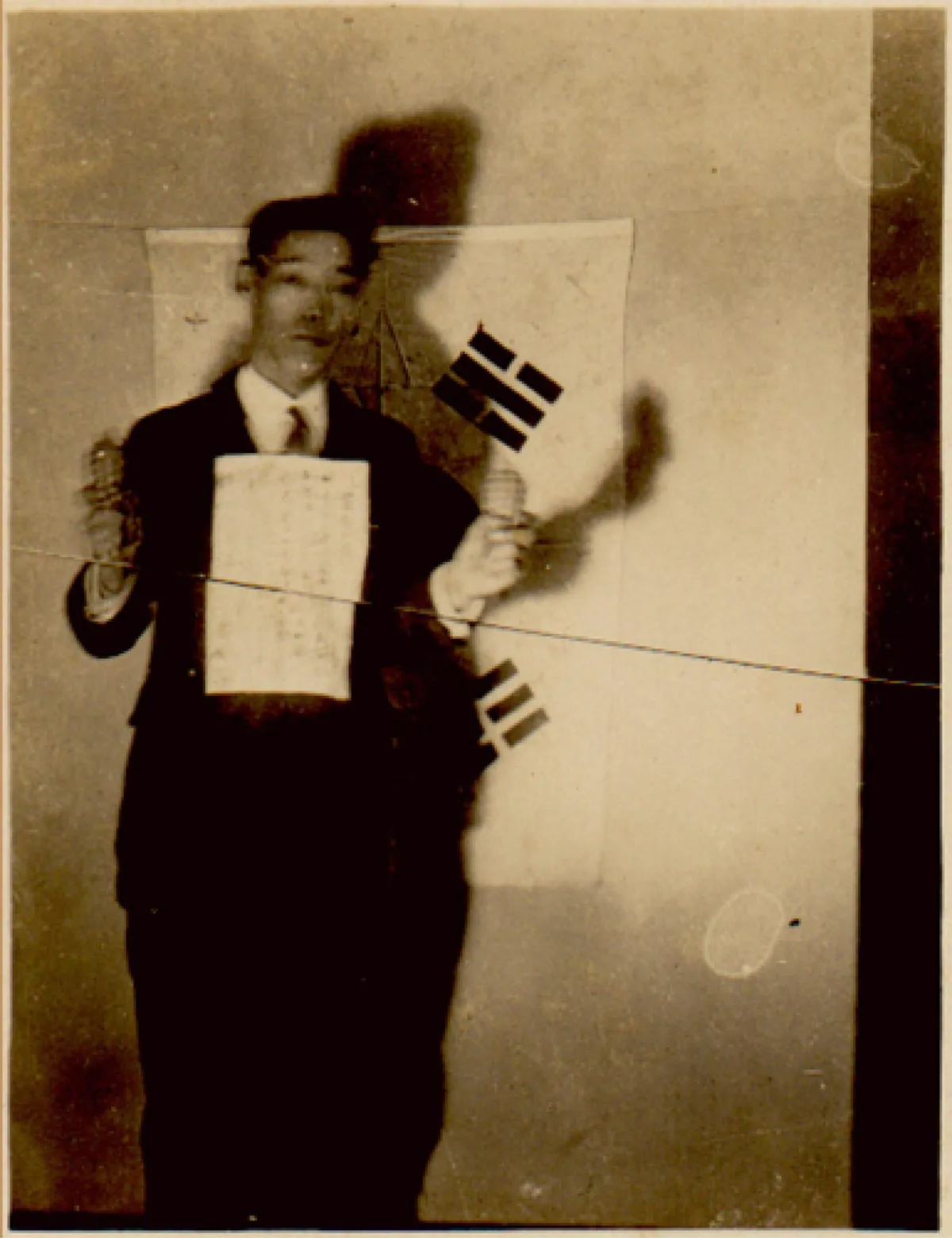
The 'Yi Bong-chang's Oath of Allegiance' was written on December 13, 1931, expressing the resolve of independence activist Yi Bong-chang (1901-1932) to carry out armed resistance against Japan. This bilingual Korean-Chinese oath was submitted to the Korean Patriotic Corps (韓人愛國團), a Japanese-resistance independence movement organization established by Kim Gu. After signing on December 13, 1931, Yi Bong-chang was photographed at the residence of An Gong-geun, the younger brother of independence activist An Jung-geun and an executive of the Korean Patriotic Corps, holding grenades in both hands with the oath document pinned to his chest. A black-and-white photograph from this session survives. Subsequently, Yi Bong-chang traveled to Japan and on January 8, 1932, at a military review at the Tokyo parade ground, threw a bomb at Emperor Hirohito as he passed in front of the Metropolitan Police Office (an incident known as the 'Tokyo Uprising'). The attack ultimately failed. Yi Bong-chang was arrested on the scene and, after a closed trial in October of that year, received a death sentence and was executed at Ichigaya Prison. This incident profoundly influenced Chinese anti-Japanese consciousness and triggered the First Shanghai Incident in 1932, when the Japanese military moved to suppress Chinese resistance, subsequently followed by independence activist Yun Bong-gil's 'Hongkou Park Uprising.' Therefore, it is assessed as a pivotal turning point in Korean independence movement history during the Japanese occupation period. The Korean Patriotic Corps was a Japanese-resistance armed organization established under Kim Gu's leadership with the aims of promoting Korea-China friendship and assassinating Japanese leaders in 1931 in Shanghai, China. Both Yi Bong-chang and Yun Bong-gil served as members of this organization. The 'Yun Bong-gil's Oath of Allegiance' (1932), also designated as Treasure and serving as an enlistment document for the Korean Patriotic Corps, exhibits nearly identical documentary format to Yi's oath, making it valuable historical evidence of the organization's activities. Yi Bong-chang's oath represents an official record from his enlistment as the first member of the Korean Patriotic Corps in 1931, serving as precious historical documentation proving the Tokyo Uprising, the Korean Patriotic Corps activities, and the history of anti-Japanese struggle, and it is recognized alongside Yun Bong-gil's oath, written a year later in Hongkou Park, as among the most important artifacts in Korean independence movement history.
Location
지도를 불러오는 중…
Have you visited this place?
Log in and verify your visit on-site via GPS to record a stamp in My Journey. (QR verification coming later.)
Images: KOGL (khs.go.kr) · Data source: Korea Heritage Service Open API (khs.go.kr)