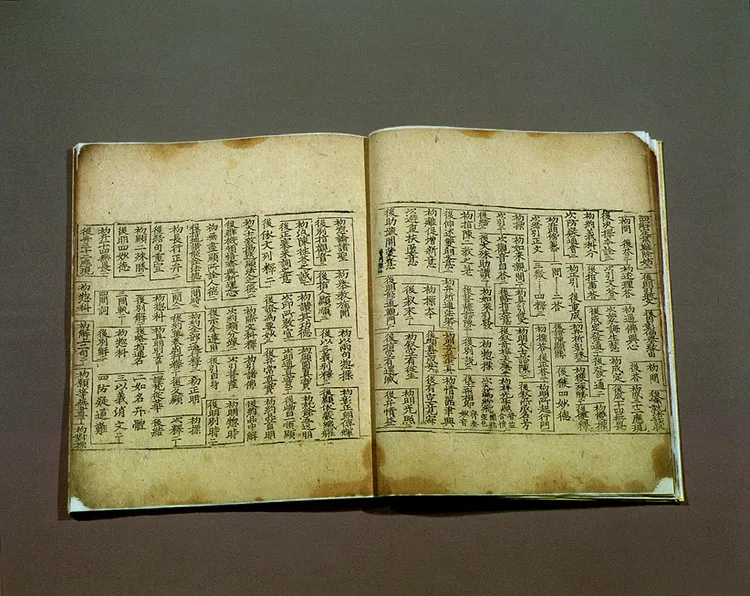
Saddharmapundarika Sutra (The Lotus Sutra)
妙法蓮華經觀世音菩薩普門品三玄圓贊科文
전라남도 순천시
Basic information
- Designation
- Treasure No.204
- Category
- Books & Records
- Era
- 고려 숙종 4년(1099)
- Designated year
- 1963
- Location
- 순천시, 전라남도— 전남 순천시 송광면 송광사안길 100, 송광사 (신평리)
- Coordinates
- 35.002169, 127.275655
AI Docent
Coming soonAn AI-generated, friendly retelling of this heritage site is available in Korean. An English version is on our roadmap — for now, please see the official description below.
Description
The Saddharmapundarika Sutra, also known as The Lotus Sutra, is the basic sutra of the Cheontae Order of Korean Buddhism, and expresses the idea that all people can attain Buddhahood in their present form. Along with the Avatamsaka Sutra, the Lotus Sutra has had a profound influence on the establishment of Korean Buddhism. This book, measuring 26 cm by 35 cm, was written by Sahyo of the Sung Dynasty to make it easier to understand chapter 25 (out of 28) of the Lotus Sutra, in which the Buddha saves mankind. Based on its original text, titled Sokjanggyeong (Supplement to the Tripitaka), which was composed by State Preceptor Uicheon of the Goryeo Dynasty, it was reprinted by the Gangyeongdogam, a governmental office established in 1461 (the 7th year of the reign of King Sejo of the Joseon Dynasty) for the translation and publication of Buddhist texts into Korean. Unlike other books, it summarized the text using a diagram, but the number of characters for each line is irregular and there is no boundary line between the sentences. Although it is recorded at the end of the book that it was produced in 1099 (the 4th year of the reign of King Sukjong of the Goryeo Dynasty), given the similarity of the carving technique and the quality of the paper with the Commentary on the Vajracchedika prajnaparamita Sutra (The Diamond Sutra), Volumes 4-5 (Treasure No. 207) of Songgwangsa Temple, published in 1461, it is believed that the book was re-published in that period.
Location
지도를 불러오는 중…
Have you visited this place?
Log in and verify your visit on-site via GPS to record a stamp in My Journey. (QR verification coming later.)
Images: KOGL (khs.go.kr) · Data source: Korea Heritage Service Open API (khs.go.kr)