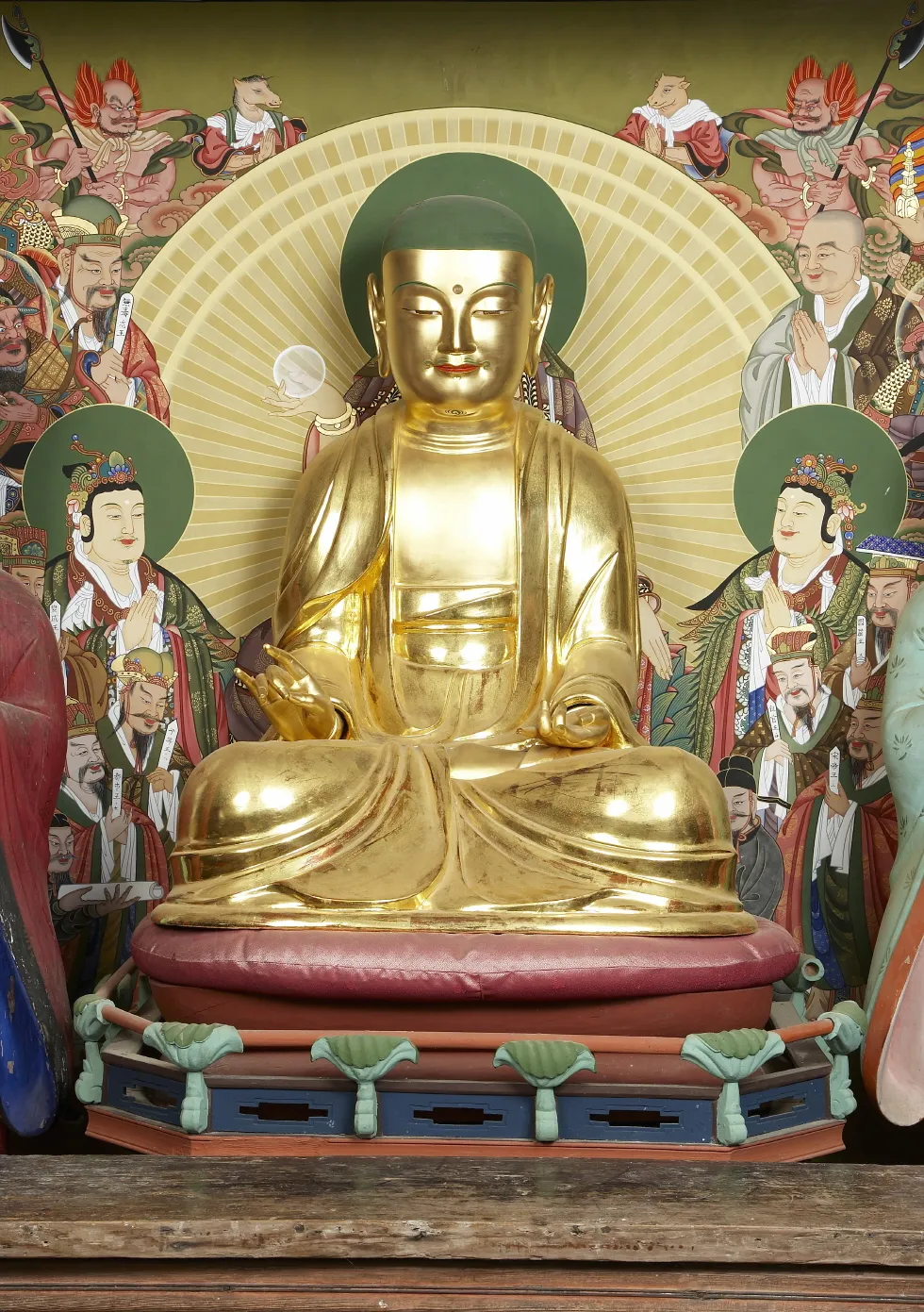
Gwanryongsa Mokjojijangbosalsamjonsang Mit Siwangsang (Collection), Changnyeong
昌寧 觀龍寺 木造地藏菩薩三尊像 및 十王像 一括
경상남도 창녕군
Basic information
- Designation
- Treasure No.2210
- Category
- Sculpture
- Era
- 1652년(효종 3)
- Designated year
- 2023
- Location
- 창녕군, 경상남도— 경상남도 창녕군 화왕산관룡사길 171 (창녕읍)
- Coordinates
- 35.532734, 128.553527Kakao address conversion
AI Docent
Coming soonAn AI-generated, friendly retelling of this heritage site is available in Korean. An English version is on our roadmap — for now, please see the official description below.
Description
Machine-translatedThis English description was machine-translated and may contain inaccuracies. Refer to the original Korean text for details.
The 'Changnyeong Gwangyong-sa Wooden Bodhisattva Ksitigarbha Triad and Kings of Hell Statues' is a set of 17 Buddhist statues created and enshrined in the Myeongbu Hall of Gwangyong-sa in March 1652 by sculptors including Eunghye (應惠) and eight others. The enshrined figures include a wooden Ksitigarbha Bodhisattva triad, the Ten Kings of Hell, a judge, a demon king, two vajra warriors, and others. While the number of judge, demon king, and two vajra warriors represents a smaller configuration compared to other temples' Myeongbu Halls of the same period, this relates to the mounting stone inscription recording that the original Ten Kings Hall of Gwangyong-sa fell into disrepair and was converted to a Myeongbu Hall by expanding the Seven Stars Hall by one bay. This suggests that the original hall housed the Ten Kings and Ksitigarbha Bodhisattva triad at its center, and the statue sizes were likely determined to fit the narrow temple structure. Master sculptor Eunghye, whose activities are documented from 1634 to 1674, was among the most representative sculptors of the mid-17th century. Before becoming a master sculptor, he trained at the work sites of prominent contemporary sculptors such as Cheongheun and Seungil, acquiring and perfecting his technical skills. This Myeongbu triad represents his second such work and was created during his most vigorous and mature sculptural period. The work also maintains completeness since the number of statues recorded in the vow inscription matches the existing statues. The Gwangyong-sa statues feature narrow shoulders and elongated bodies with broad, high knees. Composed of demon kings and Bodhisattvas in palms-together mudra without separate ritual implements, they display characteristic features of Eunghye's sculpture including forward-gazing postures, pointed beards and low noses, one arm relaxed and touching the beard, and elaborate armor-clad warrior figures. The 'Changnyeong Gwangyong-sa Myeongbu Hall Wooden Ksitigarbha Bodhisattva Triad and Kings of Hell Statues' occupies an important position as a representative work of sculptor Eunghye in the transformation of the temple hall layout and in the establishment of the configuration and distinctive style of 17th-century Myeongbu Hall statues, holding significant academic value as the work of a representative sculptor active in Jeolla and Gyeongsang provinces during the mid-17th century with excellent artistic completion and comprehensive related records.
Location
지도를 불러오는 중…
Have you visited this place?
Log in and verify your visit on-site via GPS to record a stamp in My Journey. (QR verification coming later.)
Images: KOGL (khs.go.kr) · Data source: Korea Heritage Service Open API (khs.go.kr)