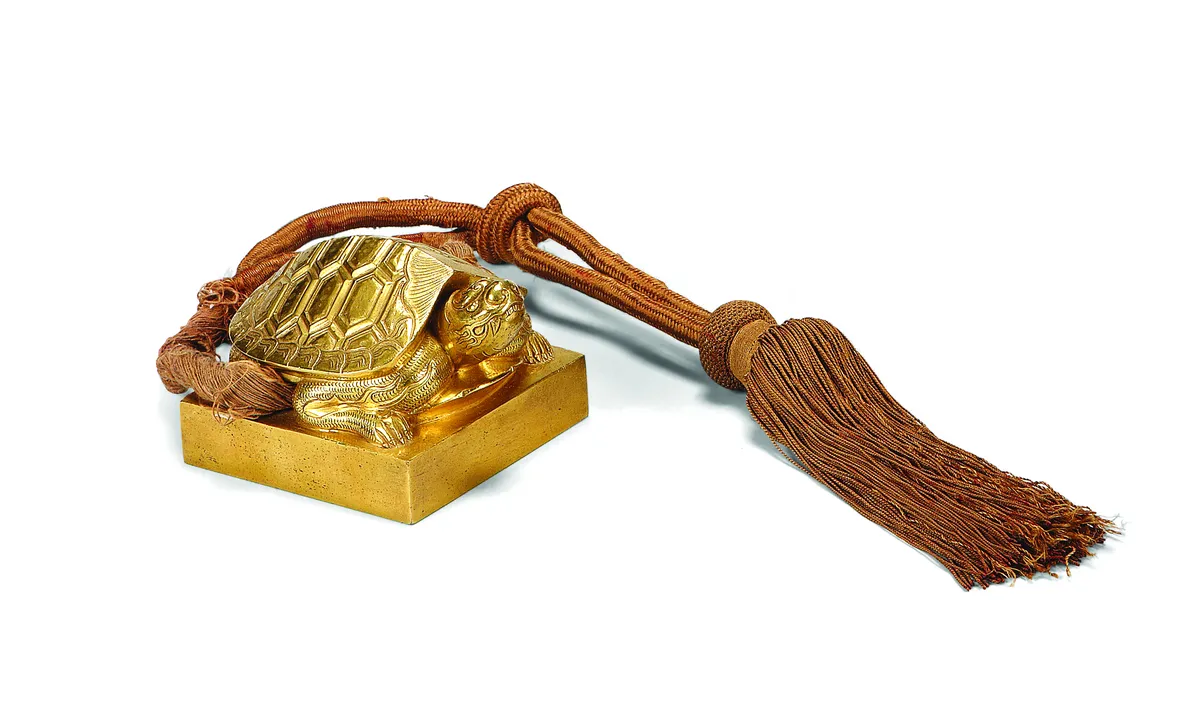
Joseonwangjo Eobo・eochaek・gyomyeong(2023-1)
朝鮮王朝 御寶・御冊・敎命(2023-1)
서울특별시 종로구
Basic information
- Designation
- Treasure No.2216-1
- Category
- Books & Records
- Era
- 1420년~1910년
- Designated year
- 2023
- Location
- 종로구, 서울특별시— 서울특별시 종로구 효자로 12 (세종로, 국립고궁박물관)
- Coordinates
- 37.576592, 126.974975Kakao address conversion
AI Docent
Coming soonAn AI-generated, friendly retelling of this heritage site is available in Korean. An English version is on our roadmap — for now, please see the official description below.
Description
Machine-translatedThis English description was machine-translated and may contain inaccuracies. Refer to the original Korean text for details.
The 'Royal Seals, Royal Edicts, and Patent Documents of the Joseon Dynasty (2023-1)' refers to ceremonial seals and edicts that were impressed and bestowed during ennobling rituals for queens, crown princes, and crown princesses, or when conferring posthumous titles, temple names, throne names, and honorific titles upon kings, queens, retired kings, queen mothers, and grand queen mothers from the founding of Joseon in 1392 through 1897 when the Korean Empire was proclaimed, and continuing until 1910 when Korea was forcibly annexed by Japan. The 'Royal Seals' (御寶) are ceremonial seals created when ennobling the crown prince, crown princess, crown grandson and their spouses, or conferring posthumous and honor titles. The 'Royal Edicts' (御冊) are presented together with seals, documenting the historical background, significance, and content of these ceremonies. Royal Seals were distinguished by material and rank into golden seals, jade seals, and silver seals, while Royal Edicts were classified as jade documents, bamboo documents, and gold documents. Patent Documents (敎命) are official instruction documents presented at the coming-of-age ceremony of the crown prince or when ennobling queens, crown princes, crown princesses, and other royal family members, emphasizing the dignity of their positions and admonishing them to fulfill their responsibilities. The 'Royal Seals, Royal Edicts, and Patent Documents of the Joseon Dynasty' were preserved in the spirit shrines of the royal ancestral temple. The Joseon royal ancestral temple comprises 19 spirit shrines in the main hall and 16 in the Eternal Repose Hall. In the center of each shrine is a spirit tablet cabinet housing spirit tablets, with a seal cabinet on the east side and a document cabinet on the west side, containing royal seals and documents respectively. The designation criteria for 'Royal Seals, Royal Edicts, and Patent Documents' are as follows: the creation date limit is 1910, with designation applying only to items created by the Joseon royal house and the Korean Empire, excluding those made during the Japanese occupation; and designation applies only to seals, edicts, and patents of kings and queens enshrined in the 19 main shrines and 16 spirit shrines, excluding crown princes and royal consorts not enshrined. The 'Royal Seals, Royal Edicts, and Patent Documents of the Joseon Dynasty' possess sufficient value for designation as national cultural heritage (Treasure) for the following reasons: First, as symbols of unique royal culture with no parallel in world history, they demonstrate the continuity and historicity of royal ceremonies conducted over 500 years. Second, with comprehensive documentary records surviving in the 'Annals of the Joseon Dynasty,' 'Records of the Office of Royal Secretariat,' and 'Royal Protocols,' their scholarly value as materials confirming the content, character, procedures, forms, creators, materials, and tools of ritual objects is high. Third, as symbolic objects representing royal authority and dignity, they are masterpieces of formative art created by the finest calligraphers of their time as document drafters and distinguished calligraphers as scribes, with work recognized through 20-30 years of service by official or military artisans, possessing high artistic value. Fourth, as items preserved in the spirit shrines of the royal ancestral temple, they symbolically express various virtues of Confucianism, the governing ideology of the Joseon Dynasty, profoundly influencing modern Korean society's emotional and communal consciousness. Fifth, the royal seals, edicts, and documents were recognized for their authenticity and world-historical importance in 2017 when they were registered as UNESCO Memory of the World as 'Royal Seals and Edicts of the Joseon Dynasty.'
Location
지도를 불러오는 중…
Have you visited this place?
Log in and verify your visit on-site via GPS to record a stamp in My Journey. (QR verification coming later.)
Images: KOGL (khs.go.kr) · Data source: Korea Heritage Service Open API (khs.go.kr)