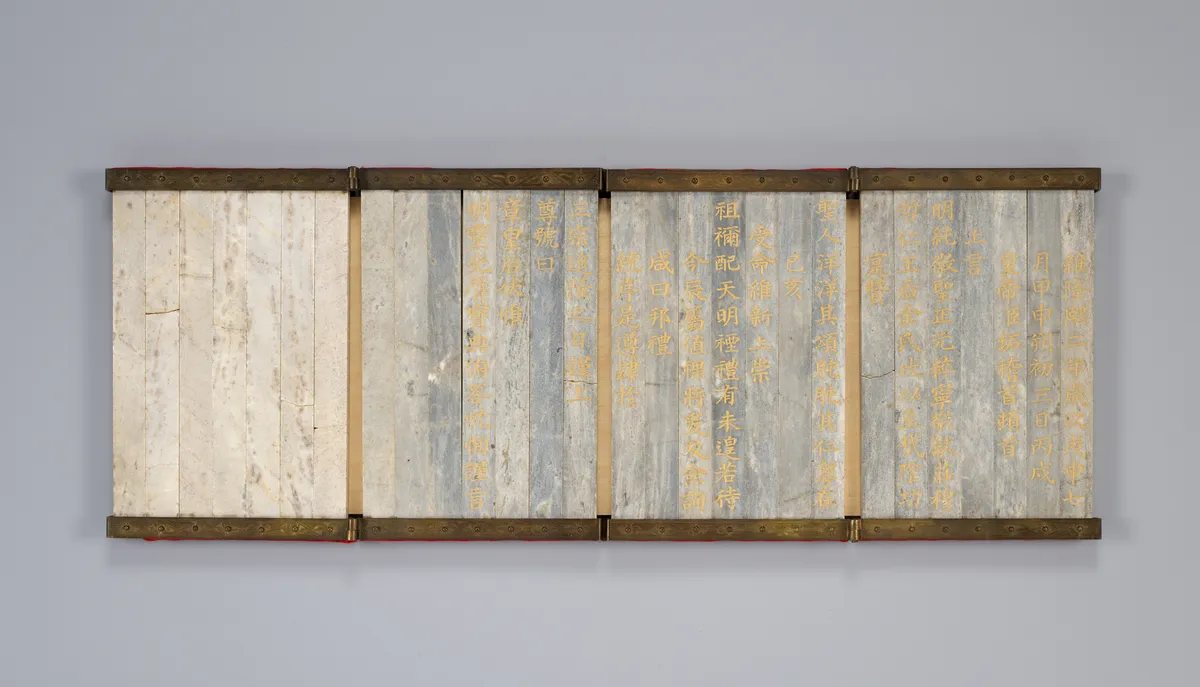
Joseonwangjo Eobo・eochaek・gyomyeong(2023-2)
朝鮮王朝 御寶・御冊・敎命(2023-2)
서울특별시 용산구
Basic information
- Designation
- Treasure No.2216-2
- Category
- Books & Records
- Era
- 1698년~1908년
- Designated year
- 2023
- Location
- 용산구, 서울특별시— 서울특별시 용산구 서빙고로 137 (용산동6가, 국립중앙박물관)
- Coordinates
- 37.524702, 126.977740Kakao address conversion
AI Docent
Coming soonAn AI-generated, friendly retelling of this heritage site is available in Korean. An English version is on our roadmap — for now, please see the official description below.
Description
Machine-translatedThis English description was machine-translated and may contain inaccuracies. Refer to the original Korean text for details.
The Royal Seals, Books, and Decrees of the Joseon Dynasty refer to the ceremonial seals (eobo) and ceremonial written texts (eohaek) that were conferred when enshrining queens, crown princes, and crown princesses, or when bestowing honorary titles (joho), posthumous titles (siho), temple names (myoho), and other designations on kings, queens, and queen dowagers from the founding of Joseon in 1392 through the period after the proclamation of the Korean Empire in 1897 until the forced annexation by Japan in 1910. An eobo (royal seal) is a ceremonial seal created when a king, crown prince, crown grandson, or their consorts were installed or awarded honorary titles; an eohaek (royal text) was conferred alongside the eobo and recorded the historical background, meaning, and content of the ceremony. Depending on rank and material, eobo were classified as gold seals (geumsabo), jade seals (okbo), or silver seals (eumin); eohaek were classified as jade texts (okhaek), bamboo texts (jukhaek), or gold texts (geumhaek). A gyomyeong (royal decree) is a formal instructional document issued when the crown prince underwent the coming-of-age ceremony or when queens, crown princes, crown princesses, and related royalty were invested, emphasizing the dignity of their position and admonishing them to fulfill their responsibilities.
Location
지도를 불러오는 중…
Have you visited this place?
Log in and verify your visit on-site via GPS to record a stamp in My Journey. (QR verification coming later.)
Images: KOGL (khs.go.kr) · Data source: Korea Heritage Service Open API (khs.go.kr)