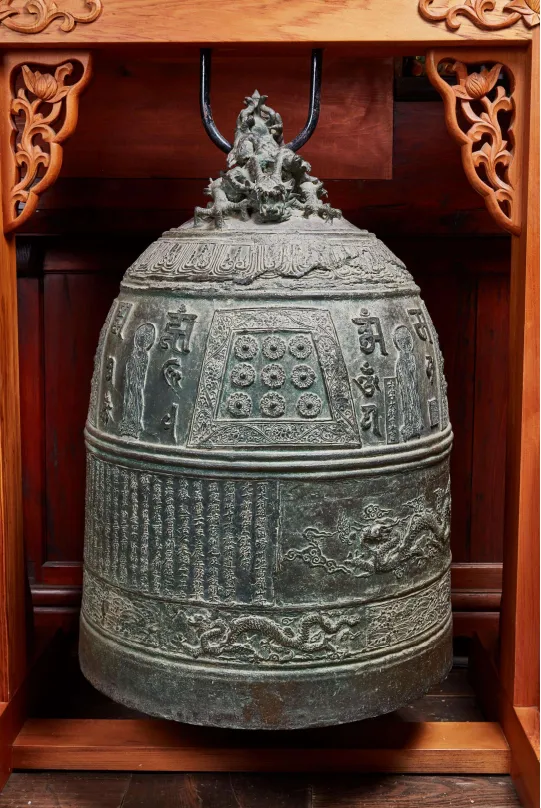
Bogwangsa Bronze Bell, Paju
坡州 普光寺 銅鍾
경기도 파주시
Basic information
- Designation
- Treasure No.2223
- Category
- Craft
- Era
- 1634년(인조 12)
- Designated year
- 2023
- Location
- 파주시, 경기도— 경기도 파주시 보광로474번길 87 (광탄면, 보광사)
- Coordinates
- 37.755575, 126.920565Kakao address conversion
AI Docent
Coming soonAn AI-generated, friendly retelling of this heritage site is available in Korean. An English version is on our roadmap — for now, please see the official description below.
Description
Machine-translatedThis English description was machine-translated and may contain inaccuracies. Refer to the original Korean text for details.
The Bronze Bell of Bogwangsa Temple in Paju can be confirmed to have been created in 1634 (the twelfth year of King Injo's reign) using three hundred geun (approximately 180 kg) of bronze by Cheonbo together with Sangyun, Seonjam, and others, based on the casting record (juseonggi) in essay form. This bell inherits the stylistic tradition of early Joseon (fifteenth to sixteenth century) bells, which absorbed elements from Chinese bell forms while simultaneously reflecting Korea's own aesthetic sensibility during a transitional period. Its representative features are the double-dragon bell knob (bongnyeo) without a sound tube (eumtong) and horizontal bands that divide the bell's body. The Paju Bogwangsa bronze bell's body is divided into upper and lower sections by three horizontal bands. On the upper section, marks of the divided-mold casting method are visible, and the six-syllable great king mantra (yukja daemyeongwang jineon) and the hell-breaking mantra (pajijok jineon) are inscribed there; notably, this bell is the first among Joseon-period bells to use a new Sanskrit script style called Lantsha, demonstrating creative originality. On the lower section, a casting record in neat regular script is visible, through which the date of creation, the purpose, the location and temple of enshrinement, the donors and patrons, the craftsman, and the materials can all be confirmed. The bell's high historical and documentary value makes it a significant example of seventeenth-century Korean Buddhist metalwork.
Location
지도를 불러오는 중…
Have you visited this place?
Log in and verify your visit on-site via GPS to record a stamp in My Journey. (QR verification coming later.)
Images: KOGL (khs.go.kr) · Data source: Korea Heritage Service Open API (khs.go.kr)