Buljosamgyeong(2007)
佛祖三經(2007)
부산광역시 금정구
Basic information
- Designation
- Treasure No.1224-2
- Category
- Books & Records
- Era
- 1384년
- Designated year
- 2007
- Location
- 금정구, 부산광역시— 부산 금정구 범어사로 250 (청룡동)
- Coordinates
- 35.242992, 129.092277
AI Docent
Coming soonAn AI-generated, friendly retelling of this heritage site is available in Korean. An English version is on our roadmap — for now, please see the official description below.
Description
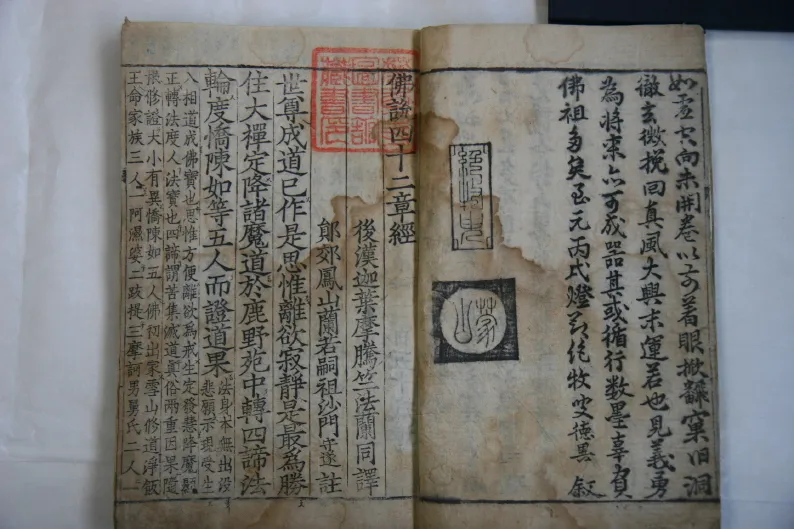
This book is a collection of Bulseol sasibi janggyeong, which is known to be the first Buddhist scripture introduced from India to China, Bulyugyogyeong, a collection of Buddha’s final days of teachings, and Wisangyeongchaek, which is a collection of teachings of Wisan Yeong-u who was the founder of Wiang School of Chinese Zen Buddhism. Immediately after the cover is an introductory statement written by Buddhist monk Mongsan Deogi of the Yuan Dynasty of China in 1286; subsequently, three Sutras are listed in order. At the end of the book is an epilogue written by Yi Saek (pen-name: Mogeun). According to the epilogue, Jibong, Jido, and Gagon re-published the book in the 10th year of the reign of King U (1384) of the Goryeo Dynasty, thanks to an offering made by a benefactor named Kim. The handwritten calligraphy in the epilogue seems to have been recorded after the printing of the book. This book seems to have translated faithfully the original copy of the Yuan Dynasty, judging from the fact that the year of the preface written by Deogi is the same as that of the postscript written by Buddhist monk Ikdae in 1286 on the last page of the book. This book seems to be the same copy as Bulseol sasibi janggyeong hapcheol (Treasure No. 695) and Buljo samgyeong (Treasure No. 1224), which are a collection of the Leeum of Samsung Museum of Art. The preservation condition of this book is relatively good. One more noticeable feature of this book is that an epilogue written by Ikdae at the end of this book cannot be found from the two books, which have been designated as treasure.
Location
지도를 불러오는 중…
Have you visited this place?
Log in and verify your visit on-site via GPS to record a stamp in My Journey. (QR verification coming later.)
Images: KOGL (khs.go.kr) · Data source: Korea Heritage Service Open API (khs.go.kr)