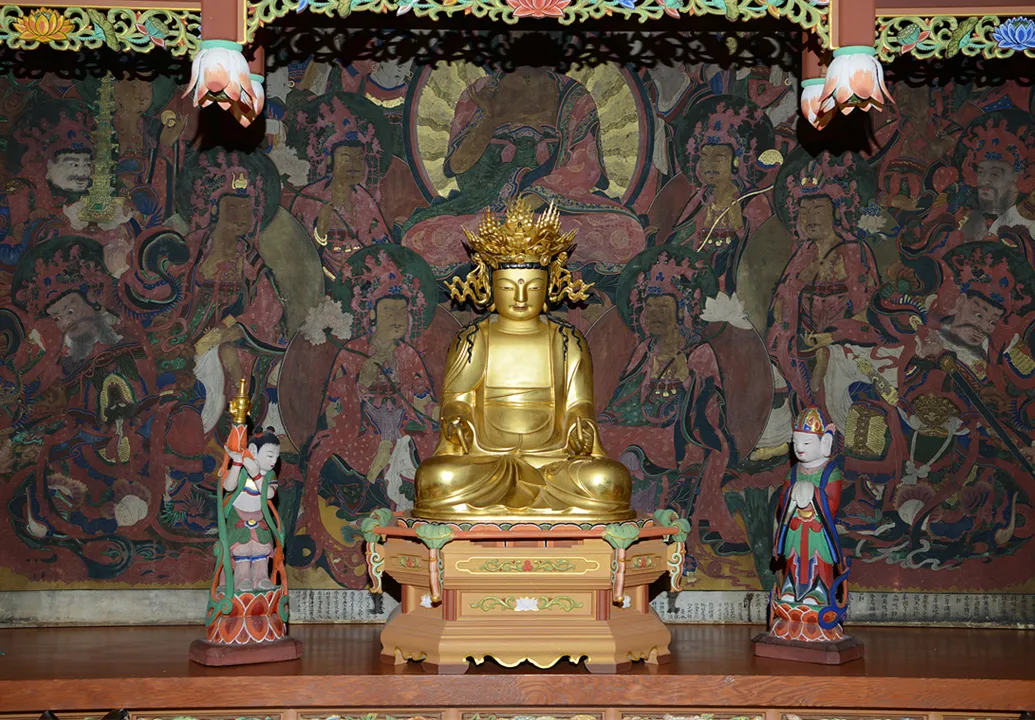
Heungcheonsa Mokjogwaneumbosalsamjonsang, Seoul
서울 興天寺 木造觀音菩薩三尊像
서울특별시 성북구
Basic information
- Designation
- Treasure No.2275
- Category
- Sculpture
- Era
- 1701년(조선 숙종27)
- Designated year
- 2024
- Location
- 성북구, 서울특별시— 서울특별시 성북구 흥천사길 29(돈암동, 흥천사) 대한불교조계종 흥천사
- Coordinates
- 37.597961, 127.008119Kakao address conversion
AI Docent
Coming soonAn AI-generated, friendly retelling of this heritage site is available in Korean. An English version is on our roadmap — for now, please see the official description below.
Description
Machine-translatedThis English description was machine-translated and may contain inaccuracies. Refer to the original Korean text for details.
The wooden Avalokiteshvara Bodhisattva trinity from Seoul's Heungcheonsa Temple is documented through a creation dedicatory inscription to have been produced in 1701 by lead sculptor Beopjam and fellow craftsmen Gyecho, Jinyeol, and Seongin, originally enshrined at Seonghungsa Temple's Jeokjoam Hermitage in Imshil before being relocated to Seoul Heungcheonsa. Documentation indicates that during the 1890 Suweol Gathering Dharma service, the Avalokiteshvara figure, along with the South-pole Star Youth and the Dragon King figures, underwent gilding and repainting. Lead sculptor Beopjam remains relatively undocumented in late Joseon sculptural records, while Gyecho and Jinyeol rank among the most significant sculptors of the eighteenth century. Consequently, this trinity provides invaluable materials for investigating the formation and transmission of these sculptural lineages and may be attributed particular art-historical significance as representing the opening chapter of eighteenth-century Buddhist sculpture, being created in 1701. The Heungcheonsa Avalokiteshvara trinity is exceptionally rare, comprising Avalokiteshvara Bodhisattva, the South-pole Star Youth, and the Dragon King—a trinity composition rarely encountered in sculptural tradition. While antecedents appear in Goryeo-period Buddhist painting, this complete sculptural manifestation appears to have been firmly established only after the seventeenth century. Contemporary late Joseon ritual manuals identify these three figures as the Avalokiteshvara trinity for ritual veneration, making this sculptural trinity an important resource for understanding pre-documentation manifestations of Avalokiteshvara iconography and devotional practices.
Location
지도를 불러오는 중…
Have you visited this place?
Log in and verify your visit on-site via GPS to record a stamp in My Journey. (QR verification coming later.)
Images: KOGL (khs.go.kr) · Data source: Korea Heritage Service Open API (khs.go.kr)