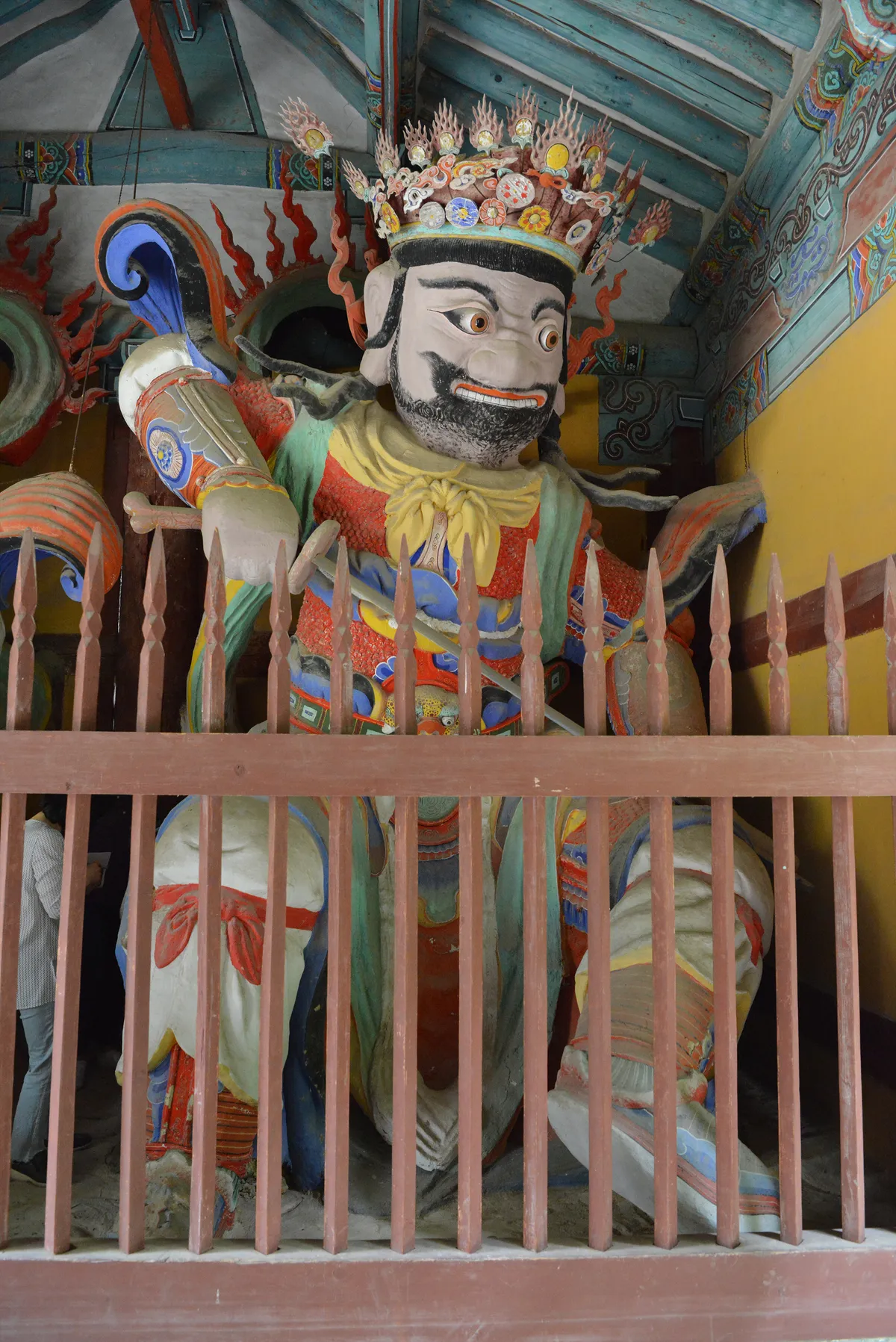
Heungguksa Sojosacheonwangsang, Yeosu
麗水 興國寺 塑造四天王像
전라남도 여수시
Basic information
- Designation
- Treasure No.2225
- Category
- Sculpture
- Era
- 조선시대(17세기 전반)
- Designated year
- 2023
- Location
- 여수시, 전라남도— 전라남도 여수시 흥국사길 160 (중흥동, 흥국사)
- Coordinates
- 34.822816, 127.701606Kakao address conversion
AI Docent
Coming soonAn AI-generated, friendly retelling of this heritage site is available in Korean. An English version is on our roadmap — for now, please see the official description below.
Description
Machine-translatedThis English description was machine-translated and may contain inaccuracies. Refer to the original Korean text for details.
The Four Heavenly Kings enshrined at the temple gate are protective deities (dharma protectors) dwelling on the slopes of Mount Sumeru, guarding the Buddhist law and Buddha lands from the four cardinal directions. These kings govern the four directions—East (Guardian of the Eastern Realm), West (Extensive-eyed King), South (Growing Virtue King), and North (Hearkening King)—each holding ritual implements such as treasured swords, treasured banners and pagodas, dragons and wish-granting jewels, and lutes, though with some variations. They are characteristically depicted with wide-open eyes, gaping mouths that inspire fear, armored bodies, and demon or evil spirits trampled beneath their feet. Heunguk-sa is a temple that served as a base for the Righteous Monk Navy during the Japanese invasions of Korea and maintains deep connections with Admiral Yi Sun-sin's Jeolla Left Naval Command. Following the invasions, beginning in 1624, the temple underwent sequential restoration of major halls under Gyetaek Daesa, with these Four Heavenly King statues estimated to have been created around 1645 when Heunguk-sa's main gates were completed. Following the general arrangement pattern of Four Heavenly King statues in late Joseon, the Eastern and Northern Kings are positioned to the right of the temple gate entrance, while the Southern and Western Kings are positioned to the left. Constructed of wooden frames with clay applied over them, these figures measure approximately 4 meters in height and sit in chair-like positions. The heavy sculptural sensibility, expression of large rectangular wrinkled faces, and detailed patterns and iconography reflect early 17th-century regional style characteristics, appearing deeply connected to the lineage of response workers (應元) and their disciples such as In-gyun (印均) who created the Four Heavenly Kings at Songwang-sa in Suncheon. Like the Four Heavenly Kings of Hwaam-sa, most supernatural beings depicted beneath these statues' feet are omitted, but distinctively, instead of a typical wooden floor, the temple gate floor was finished in clay forming wave patterns. Moreover, beneath the Northern Heavenly King is a turtle-shaped maritime creature supporting his feet. This unique expression of water and turtles on the floor is singular to Heunguk-sa and directly and indirectly expresses the geographic characteristics of a coastal temple and the nationalist symbolism of a righteous monk naval temple, holding significant historical importance.
Location
지도를 불러오는 중…
Have you visited this place?
Log in and verify your visit on-site via GPS to record a stamp in My Journey. (QR verification coming later.)
Images: KOGL (khs.go.kr) · Data source: Korea Heritage Service Open API (khs.go.kr)