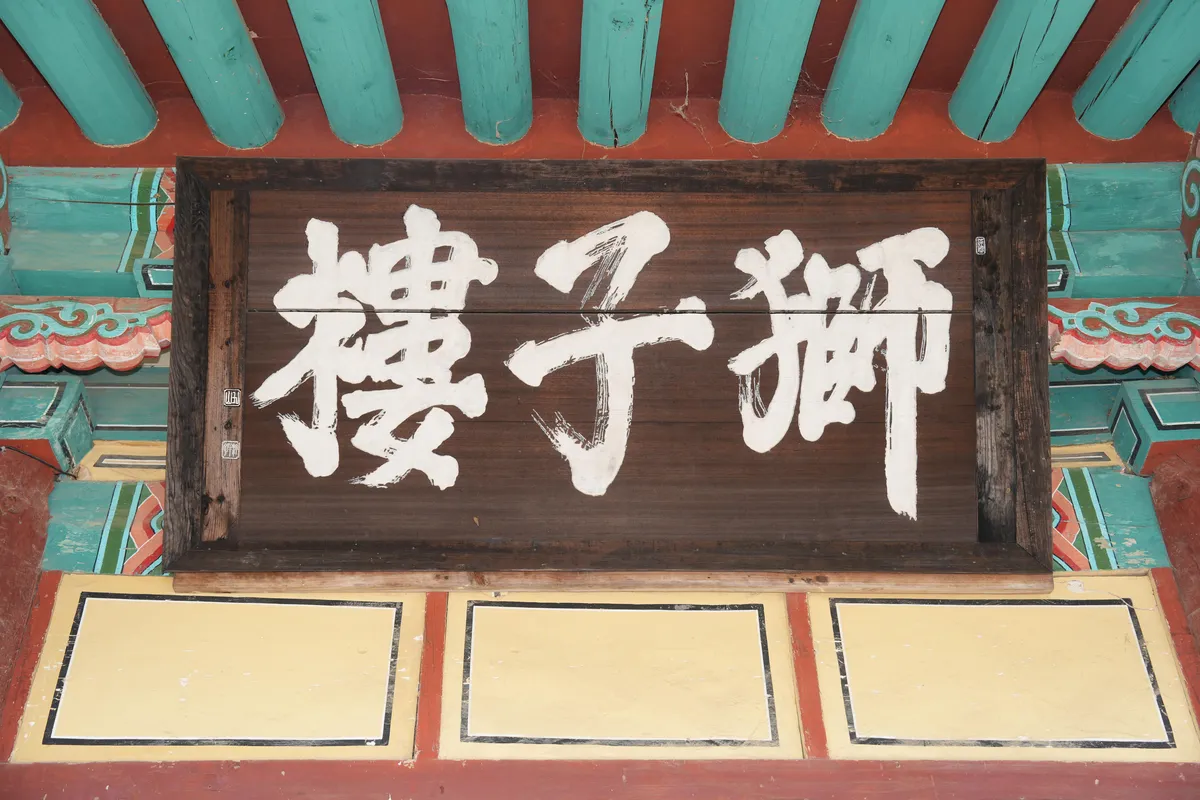
Songgwangsa Chimgye Pavilion, Suncheon
順天 松廣寺 枕溪樓
전라남도 순천시
Basic information
- Designation
- Treasure No.2314
- Category
- Architecture
- Era
- 조선시대
- Designated year
- 2026
- Location
- 순천시, 전라남도— 전라남도 순천시 송광사안길 100(송광면)
- Coordinates
- 34.969400, 127.087900Museum-based location
AI Docent
Coming soonAn AI-generated, friendly retelling of this heritage site is available in Korean. An English version is on our roadmap — for now, please see the official description below.
Description
Machine-translatedThis English description was machine-translated and may contain inaccuracies. Refer to the original Korean text for details.
The 'Seungsil Pavilion at Songgwang Temple in Suncheon' is traditionally believed to have existed from the 14th century onward, as evidenced by a poem composed on the pavilion's subject by the esteemed scholar Yi Sek (1328-1396) recorded in the 'Sinjeung Dongguk Yeoji Seungram' geographic record, though the current structure was reconstructed in 1668 (Sukjong 14) by Buddhist monk Hyemun according to records in the 'Reconstruction Record of Songgwang Temple of Mount Jogye.' Dendrochronological analysis of major wooden structural members including pillars, principal beams, secondary beams, and ridge beams confirms wood harvested in 1687, establishing substantial historical significance. The Seungsil Pavilion, measuring seven bays across and three bays deep with triple-layered beam construction and gable roof, constitutes a large pavilion, distinctly serving as a scholarly lecture hall for Buddhist monks rather than a public pavilion installed before principal halls like the Daeung Hall. Its construction adjacent to a scenic waterway emphasizing superior landscape value significantly enhances scholarly and artistic worth. The building's structural framework employs a no-interior-column, seven-rafter construction with supporting corbels beneath the ridge beam supporting the ridge-pole, bracket construction utilizing single-tier projecting simple bracket style featuring carved lotus decoration on bracket arms above the initial simple bracket style, exemplifying late-17th-century architectural styling reflecting emerging decorative tendencies. The Seungsil Pavilion's column and bracket configuration mirrors construction techniques appearing in the Gyeongbuk region for waterside pavilion placement along streambeds, with differential column heights on the stream side and even heights on the retaining wall side, creating natural interior space arrangement, confirming substantial scholarly value through demonstrating architectural technique exchange between Jeolla and Gyeongbuk provinces.
Location
지도를 불러오는 중…
Have you visited this place?
Log in and verify your visit on-site via GPS to record a stamp in My Journey. (QR verification coming later.)
Images: KOGL (khs.go.kr) · Data source: Korea Heritage Service Open API (khs.go.kr)