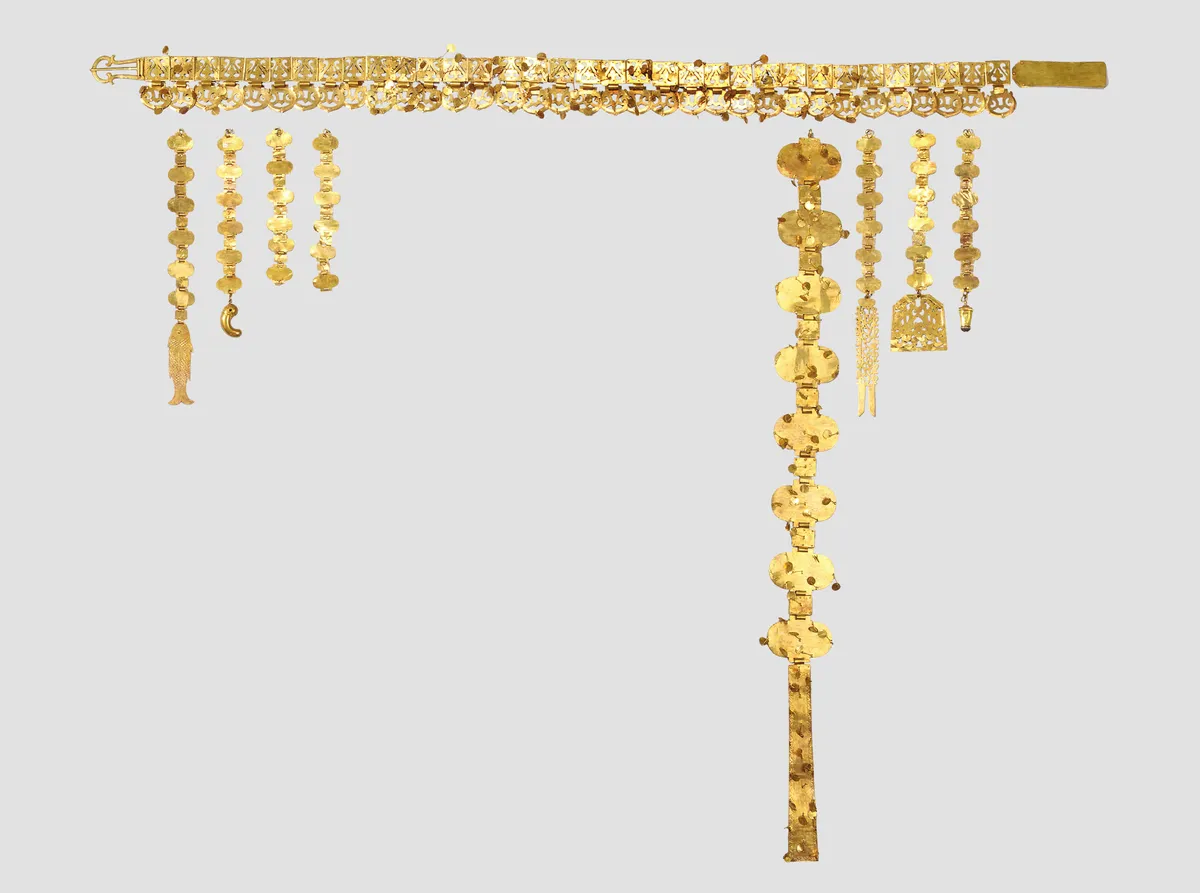
Seobongchong Chulto Geumje Heoritti, Gyeongju
慶州 瑞鳳塚 出土 金製 銙帶
서울특별시 용산구
Basic information
- Designation
- Treasure No.2240
- Category
- Craft
- Era
- 신라시대
- Designated year
- 2023
- Location
- 용산구, 서울특별시— 서울특별시 용산구 서빙고로 137 (용산동6가, 국립중앙박물관)
- Coordinates
- 37.523500, 126.980100Museum-based location
AI Docent
Coming soonAn AI-generated, friendly retelling of this heritage site is available in Korean. An English version is on our roadmap — for now, please see the official description below.
Description
Machine-translatedThis English description was machine-translated and may contain inaccuracies. Refer to the original Korean text for details.
The 'Gold Belt from Gyeongju Seobong Tomb' was excavated in 1926 when the Japanese Government-General of Korea conducted excavations at Seobong Tomb (瑞鳳塚), a Silla period tumulus. Seobong Tomb, the north section of a pear-shaped dual-chamber burial (瓢形墳), features the characteristic Silla stone-tumulus wooden-chamber design (積石木槨墳) with a rectangular pit and wooden chamber, yielding significant artifacts including a gold crown (Treasure), gold earrings, and a silver box inscribed with 'Yanshou First Year Xinmao' (延壽元年辛卯), among many important discoveries illustrating Silla burial culture. The gold belt was discovered inside the wooden coffin, worn at the deceased's waist. The Seobong Tomb deceased is generally considered female, lacking the large ring-handled sword found in Hwangnam Daechong North Chamber. Comprising buckle-type fasteners, decorative plaques, belt-end ornaments, and hanging pendants, the Seobong gold belt originally combined with leather or fabric materials that subsequently deteriorated through time, leaving only the gold ornaments. The Seobong belt exhibits the complete development process of Silla gold belts. After the earliest known Hwangnam Daechong South Chamber gold belt, the decorative plaque center pattern maintained three-leaf pierced designs until the Seobong version displayed center leaves in pointed-leaf form, representing the most elaborate decoration alongside Geumgwan Tomb gold belts. Contrasting other Silla gold belts combining glass and jade materials in hanging pendant decoration, the Seobong belt pendants consist almost entirely of gold, reflecting the original belt design intent and possessing exceptional artistic value as the longest hanging pendant length among Silla excavated gold belts. The 'Gold Belt from Gyeongju Seobong Tomb' possesses clear archaeological provenance and positions itself chronologically between the earliest-made Hwangnam Daechong South Chamber belt and the latest-made Geumllung belt based on decorative plaque interior patterns and hanging pendant decoration techniques, allowing examination of Silla gold belt manufacturing technique development flow, achieving high scholarly significance.
Location
지도를 불러오는 중…
Have you visited this place?
Log in and verify your visit on-site via GPS to record a stamp in My Journey. (QR verification coming later.)
Images: KOGL (khs.go.kr) · Data source: Korea Heritage Service Open API (khs.go.kr)