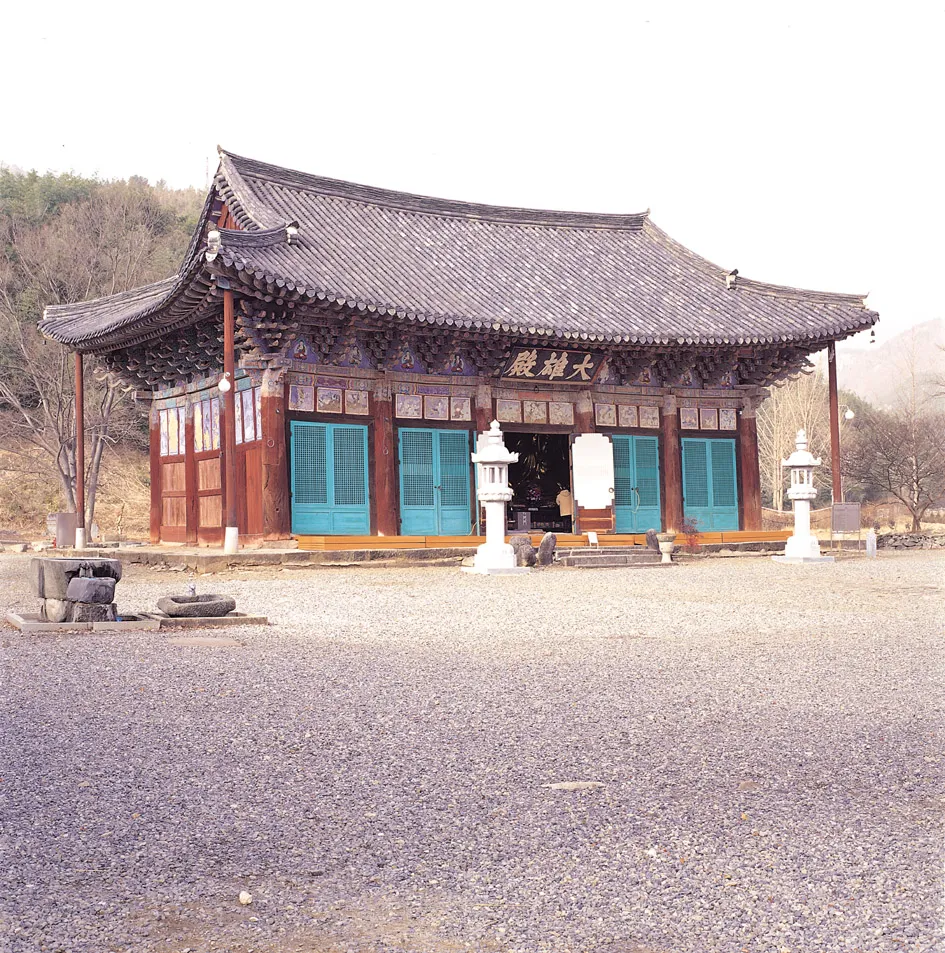
Songgwangsa Daeungjeon Hall, Wanju
完州 松廣寺 大雄殿
전북특별자치도 완주군
Basic information
- Designation
- Treasure No.1243
- Category
- Architecture
- Era
- 조선 광해군 14년(1622)
- Designated year
- 1996
- Location
- 완주군, 전북특별자치도— 전북 완주군 소양면 송광수만로 255-16, 송광사 (대흥리)
- Coordinates
- 35.885765, 127.241751
AI Docent
Coming soonAn AI-generated, friendly retelling of this heritage site is available in Korean. An English version is on our roadmap — for now, please see the official description below.
Description
Songgwangsa Temple was first built by Master Doui in the 7th year of the reign of King Gyeongmun (867) of the Unified Silla Dynasty. After the progressing deterioration of the temple, State Preceptor Jinul, who was a virtuous Buddhist monk of the mid-Goryeo Dynasty, asked his disciples to build a temple at the site, but his wish had not been honored until monks Eungho, Seungmyeong, Unjeong, Deongnim, Deuksun, and Hongsin built a temple at the site in the 14th year of the reign of King Gwanghaegun (1622) of the Joseon Dynasty. The temple went through subsequent renovations and expansions until the 14th year of King Injo’s reign (1636) and grew into a big temple. The Daeungjeon (Main Buddha Hall) is the center of the temple. According to a record, it was rebuilt by State Preceptor Byeogam in the 14th year of King Injo’s reign (1636) and completed by Master Jebong in the 8th year of King Cheoljong’s reign (1857). The hall measures 5 kan (unit of measurement referring to the distance between two columns) on the front side and 3 kan on the lateral side. It has a hip and gable roof with “八”-shaped sides. The bracket sets supporting the eaves of the roof are built both above and between the columns in the style of dapo or multi-cluster bracket system. The calligraphy on the hanging board of Daeungjeon was written by Prince Uichang, King Seonjo's 8th son and King Gwanghaegun's younger brother. The inscription on the monument, which was erected in the 14th year of King Injo’s reign (1636) in celebration of the temple's renovation, was also written by Prince Uichang. The board seems to have been written at that time, so it gives a clue as to the construction date of Daeungjeon. Compared to other buildings in the temple, the center space is relatively narrow, and a painting is drawn on the wall above the door as a relatively unique feature. Enshrined inside the building, on the left and right sides of the Sakyamuni statue, are the statues of Amitabha Buddha and Bhaisajyaguru Buddha, respectively.
Location
지도를 불러오는 중…
Have you visited this place?
Log in and verify your visit on-site via GPS to record a stamp in My Journey. (QR verification coming later.)
Images: KOGL (khs.go.kr) · Data source: Korea Heritage Service Open API (khs.go.kr)