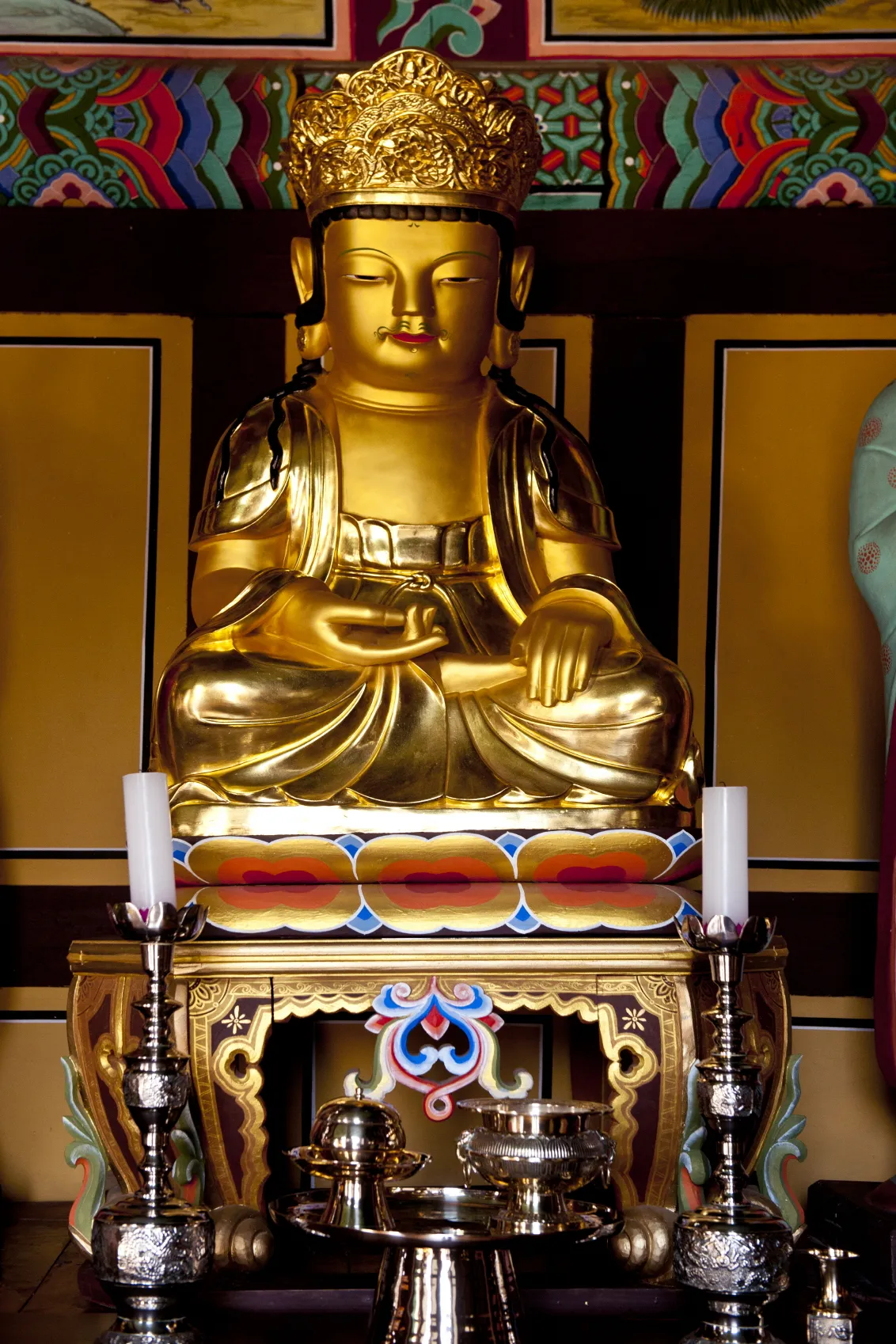
Songrimsa Seokjosamjangbosaljwasang Mit Mokjosiwangsang (Collection), Chilgok
漆谷 松林寺 石造三藏菩薩坐像 및 木造十王像 一括
경상북도 칠곡군
Basic information
- Designation
- Treasure No.2244
- Category
- Sculpture
- Era
- 조선 현종6년(1665년)
- Designated year
- 2024
- Location
- 칠곡군, 경상북도— 경상북도 칠곡군 송림길 73 (동명면, 대한불교조계종 송림사)
- Coordinates
- 35.982148, 128.577622Kakao address conversion
AI Docent
Coming soonAn AI-generated, friendly retelling of this heritage site is available in Korean. An English version is on our roadmap — for now, please see the official description below.
Description
Machine-translatedThis English description was machine-translated and may contain inaccuracies. Refer to the original Korean text for details.
The 'Chilgok Songlim-sa Stone and Wooden Bodhisattva Ksitigarbha Triad and Kings of Hell Statues' collectively comprise works created and enshrined in the Myeongbu Hall of Songlim-sa in 1665 (King Hyeonjong 6) by master sculptor Seung-il (勝一) and sculptors Seong-jo (性照), Ja-gyui (自圭) and others. The Triad of Bodhisattvas represents a concept encompassing heavenly realms, earthly realms, and hell realms, iconographically depicting portions of the assembled beings of the ten directions (sihang segye) receiving offerings during the water-and-land ritual feast (suryuk jae), one of the heavenly-deliverance ceremonies performed in temples during Joseon. While most remaining examples in Korea exist as painted works, Songlim-sa's Bodhisattva triad represents the sole sculptural example of national art-historical significance. Documentary records discovered in the heavenly Bodhisattva statue including repair inscriptions establish the initial creation date and artisan identities, confirming renovation once around 1753. Though some sculptural portions were recreated in recent times, the Bodhisattva triad and principal attendant figures remain substantially unaltered from their original creation, maintaining considerable documentary value. The Chilgok Songlim-sa ensemble employs diverse materials. The Bodhisattva triad was constructed from Buddhist stone (佛石), reflecting 17th-century Joseon's shift toward stability and increased timber demand as the government initiated strong pine-cutting prohibition policies to address timber supply shortages. Sculptors, facing wood shortages for Buddha statue creation, increasingly focused on Buddhist stone carving with easier workability, the Songlim-sa Myeongbu Hall statues exemplifying these socio-economic phenomena. Beyond the Buddhist-stone Bodhisattva triad, Kings of Hell were wooden while general statues were clay, reflecting master sculptor Seung-il's skilled expertise in handling all materials. Seung-il, actively engaged from early to late 17th century, initially trained under master sculptors including Hyun-jin, Muyeom, and Cheong-heon before establishing his distinctive sculptural style from the 1640s onward. The Songlim-sa Myeongbu Hall statues represent important works for researching Seung-il and his lineage formation and transmission, holding significant academic research value.
Location
지도를 불러오는 중…
Have you visited this place?
Log in and verify your visit on-site via GPS to record a stamp in My Journey. (QR verification coming later.)
Images: KOGL (khs.go.kr) · Data source: Korea Heritage Service Open API (khs.go.kr)