‘cheonsuwon’myeong Bronze Drum
‘薦壽院’銘 金鼓
충청남도 아산시
Basic information
- Designation
- Treasure No.2245
- Category
- Craft
- Era
- 1162년(고려 의종 16)
- Designated year
- 2024
- Location
- 아산시, 충청남도— 충청남도 아산시 충무로 123 (권곡동, 온양민속박물관)
- Coordinates
- 36.793231, 127.007910Kakao address conversion
AI Docent
Coming soonAn AI-generated, friendly retelling of this heritage site is available in Korean. An English version is on our roadmap — for now, please see the official description below.
Description
Machine-translatedThis English description was machine-translated and may contain inaccuracies. Refer to the original Korean text for details.
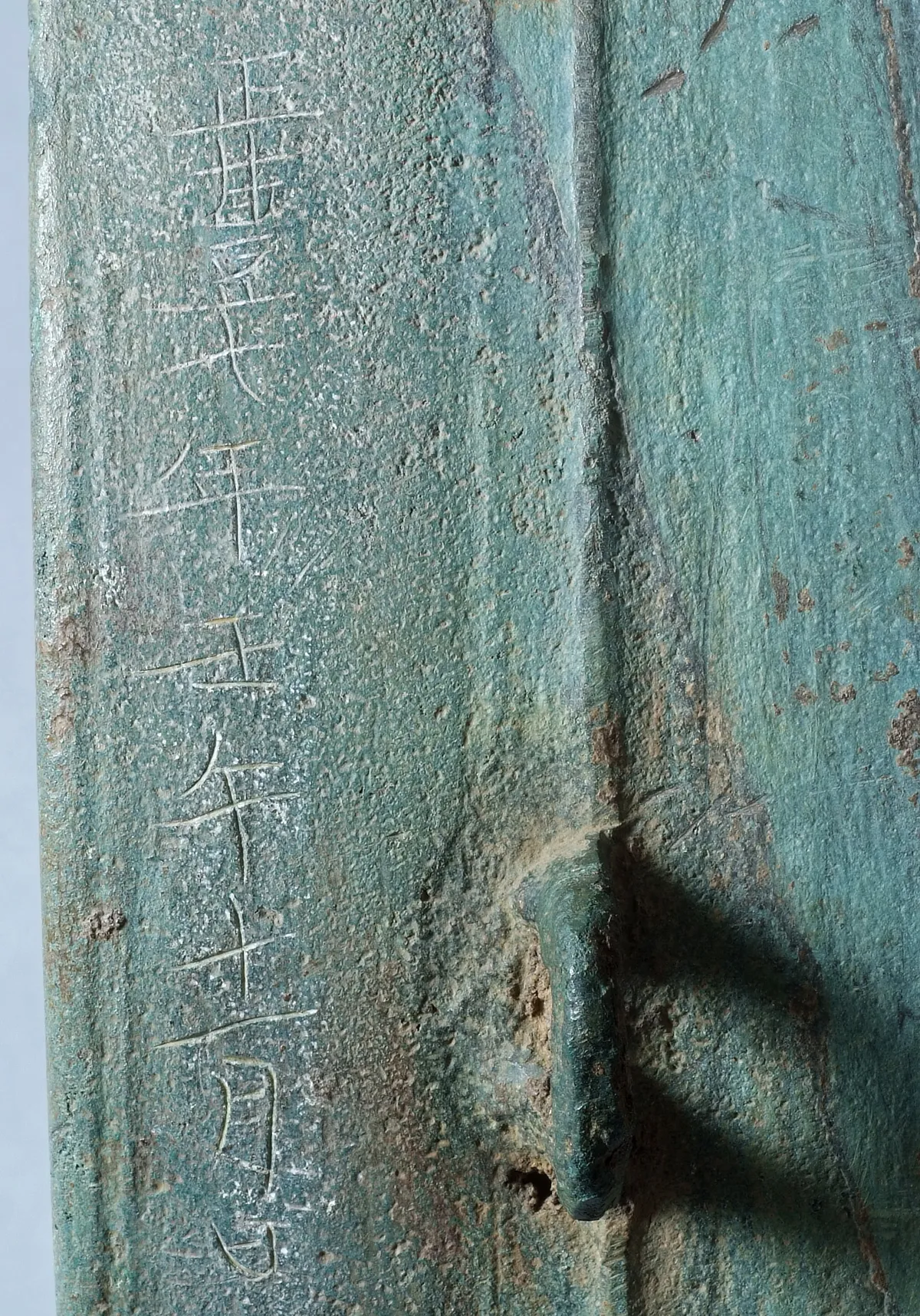
Buddhist bronze gongs used in temples represent visualization of Buddha's merciful light, with rounded forms and circular lines signifying the spreading of Buddhist law and illumination. While struck during various ceremonies and assemblies to gather the community, the gong's resonance carries religious function through its sound, enabling humans to repent wrongdoings and ultimately achieve enlightenment. The 'Cheonsu-won' Bronze Gong housed in Onyang Folk Museum features surface articulation through thick and thin lines creating three zones from center: the striking area, inner zone, and outer zone, each decorated with patterns. The inner zone features stacked flower knobs arranged in triangular form with alternating triangle and inverted-triangle patterns, representing the first appearance of this expression in Goryeo bronze gongs, demonstrating exceptional artistic value. The bronze gong body features a 36-character inscription in intaglio reading 'Zhengfeng Seventh Year Renw Eleventh Month, Azhou District Cheonsu-won Prohibition-opening Single Seated Sixteen Catty Eight Liang Cast, submitted. Beam-master Daoin Yeon-yeo respectfully records,' through which we can clearly establish that in 1162 (King Uijong 16), the Azhou (present-day Asan) Cheonsu-won created this bronze gong at 13 catty 8 liang weight under documentation by Yeon-yeo, the beam-master Daoin. The gong thus serves as important chronological reference material from mid-12th century. The 'Cheonsu-won' Bronze Gong features a narrowly drilled resonance hole on the rear, which, through the 'jinkkow' (prohibition-opening) inscription record, documents that bronze gongs with narrow rear resonance holes are designated as jinkkow gongs. As the second documented example after the Hanthrough Sixth Year Bronze Gong (865) already designated as Treasure, it holds significant art-historical importance. Moreover, while most dated and inscribed bronze gongs produced during Goryeo lack clear excavation location documentation, this bronze gong was discovered near its original installation location, conferring considerable historical value.
Location
지도를 불러오는 중…
Have you visited this place?
Log in and verify your visit on-site via GPS to record a stamp in My Journey. (QR verification coming later.)
Images: KOGL (khs.go.kr) · Data source: Korea Heritage Service Open API (khs.go.kr)