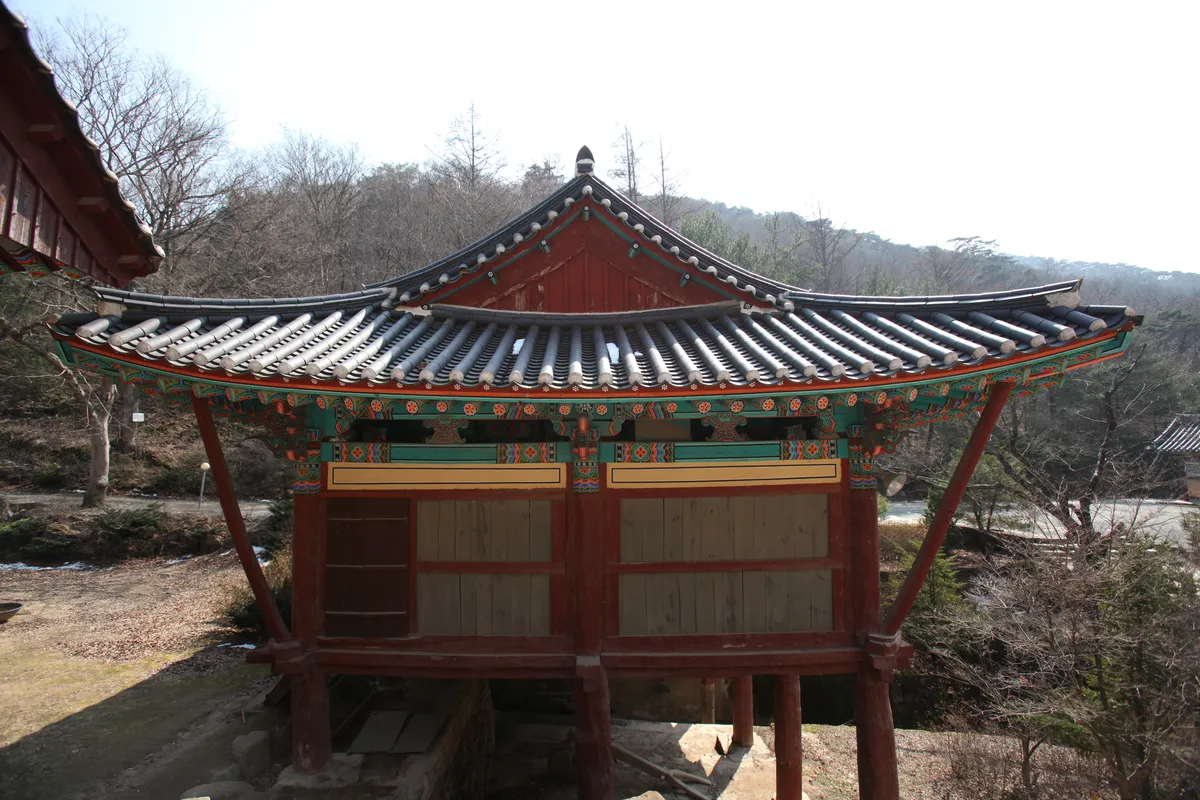
Gounsa Gaun Pavilion, Uiseong
義城 孤雲寺 駕雲樓
경상북도 의성군
Basic information
- Designation
- Treasure No.2267
- Category
- Architecture
- Era
- 조선시대
- Designated year
- 2024
- Location
- 의성군, 경상북도— 경상북도 의성군 고운사길 415 (단촌면)
- Coordinates
- 36.458168, 128.749789Kakao address conversion
AI Docent
Coming soonAn AI-generated, friendly retelling of this heritage site is available in Korean. An English version is on our roadmap — for now, please see the official description below.
Description
Machine-translatedThis English description was machine-translated and may contain inaccuracies. Refer to the original Korean text for details.
The Gaounru Pavilion of Gounsa Buddhist Temple in Uiseong is a rectangular Buddhist temple pavilion measuring 5-bays front and 2-bays side, roofed with hip-gable style, established in 1668 as confirmed by historical records from 1729 and 1918 monument inscriptions. The structure has undergone multiple partial repairs while maintaining its original location without significant damage or alteration. The pavilion exemplifies mid to late Joseon period architectural styling through numerous structural details including fan-shaped decorative bracket elements, specially jointed decorative window frames, window mullions fitted with framework posts, and distinctive bracket-work forms. The Gaounru holds particular significance as the largest temple pavilion spanning a valley gorge, employing distinctive structural techniques to address the dramatic elevation changes created by the watercourse through variations in post height, and resolving the challenge of wide structural bays through specialized engineering solutions that differentiate it from conventional temple pavilion structures. The successful integration with the natural landscape through these innovative engineering approaches demonstrates exceptional architectural and aesthetic merit. With a clearly established construction date, the preservation of mid and late-Joseon period architectural traditions, and distinctive structural design as a valley-spanning Buddhist pavilion, the Uiseong Gounsa Gaounru possesses significant historical and scholarly value.
Location
지도를 불러오는 중…
Have you visited this place?
Log in and verify your visit on-site via GPS to record a stamp in My Journey. (QR verification coming later.)
Images: KOGL (khs.go.kr) · Data source: Korea Heritage Service Open API (khs.go.kr)