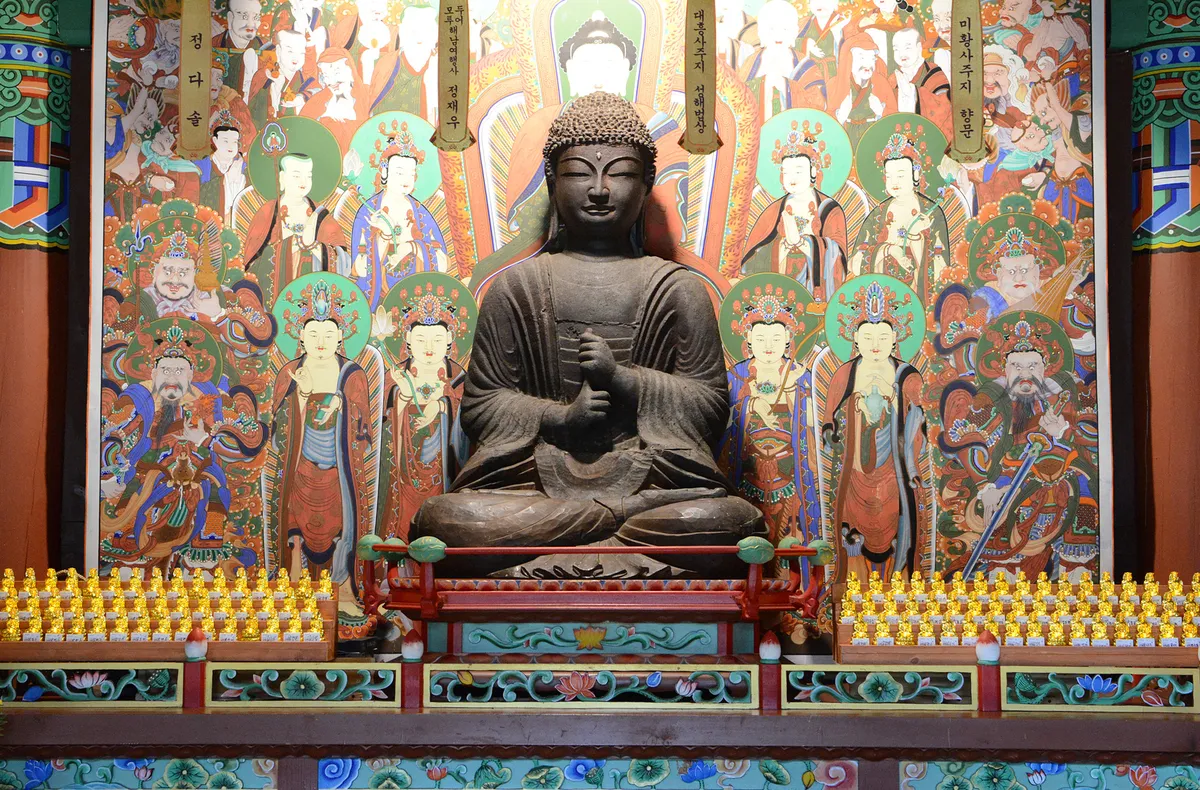
Eunjeoksa Iron Seated Vairocana Buddha, Haenam
海南 隱跡寺 鐵造毘盧遮那佛坐像
전라남도 해남군
Basic information
- Designation
- Treasure No.2271
- Category
- Sculpture
- Era
- 신라 말∼고려 초
- Designated year
- 2024
- Location
- 해남군, 전라남도— 전라남도 해남군 은적사길 404 (마산면, 은적사)
- Coordinates
- 34.597811, 126.601314Kakao address conversion
AI Docent
Coming soonAn AI-generated, friendly retelling of this heritage site is available in Korean. An English version is on our roadmap — for now, please see the official description below.
Description
Machine-translatedThis English description was machine-translated and may contain inaccuracies. Refer to the original Korean text for details.
The iron Buddha statue of Vairocana from Eunjoksa Temple in Haenam represents a significant development in Korean Buddhist sculpture during the transition period from gilt-bronze to iron casting. Vairocana Buddha was adopted as the primary deity not only in Hwaeom Buddhism but also in Seon Buddhism, with iron statues being particularly favored following the establishment of the Gusanseonfold movement in the ninth century, which led to the creation of numerous iron Buddha figures at temples in regions where Seon communities were founded. This Eunjoksa iron Buddha exemplifies this historical and temporal context. The sculpture demonstrates faithful adherence to ninth-century Silla stylistic conventions through its rounded and well-modeled facial features, naturalistic bodily proportions, and the distinctive wisdom-fist hand gesture in which the raised right index finger of the right hand is encircled by the left hand. The facial expression conveys religious sublimity with exceptional artistic refinement. This iron Buddha represents a relatively early-period work created during the transition from gilt-bronze to iron sculpture, thereby acquiring important historical significance. The casting technique demonstrates meticulous consideration in multiple aspects, including the reduction of casting seams through careful alignment along vertical clothing edges and thorough finishing of seam lines, indicating technical mastery. Although the statue sustained damage to the knee area through historical circumstances, the remaining portions preserve the formal integrity and artistic excellence of a superior Silla-Goryeo transitional sculpture, demonstrating both remarkable technical accomplishment and exceptional artistic achievement.
Location
지도를 불러오는 중…
Have you visited this place?
Log in and verify your visit on-site via GPS to record a stamp in My Journey. (QR verification coming later.)
Images: KOGL (khs.go.kr) · Data source: Korea Heritage Service Open API (khs.go.kr)