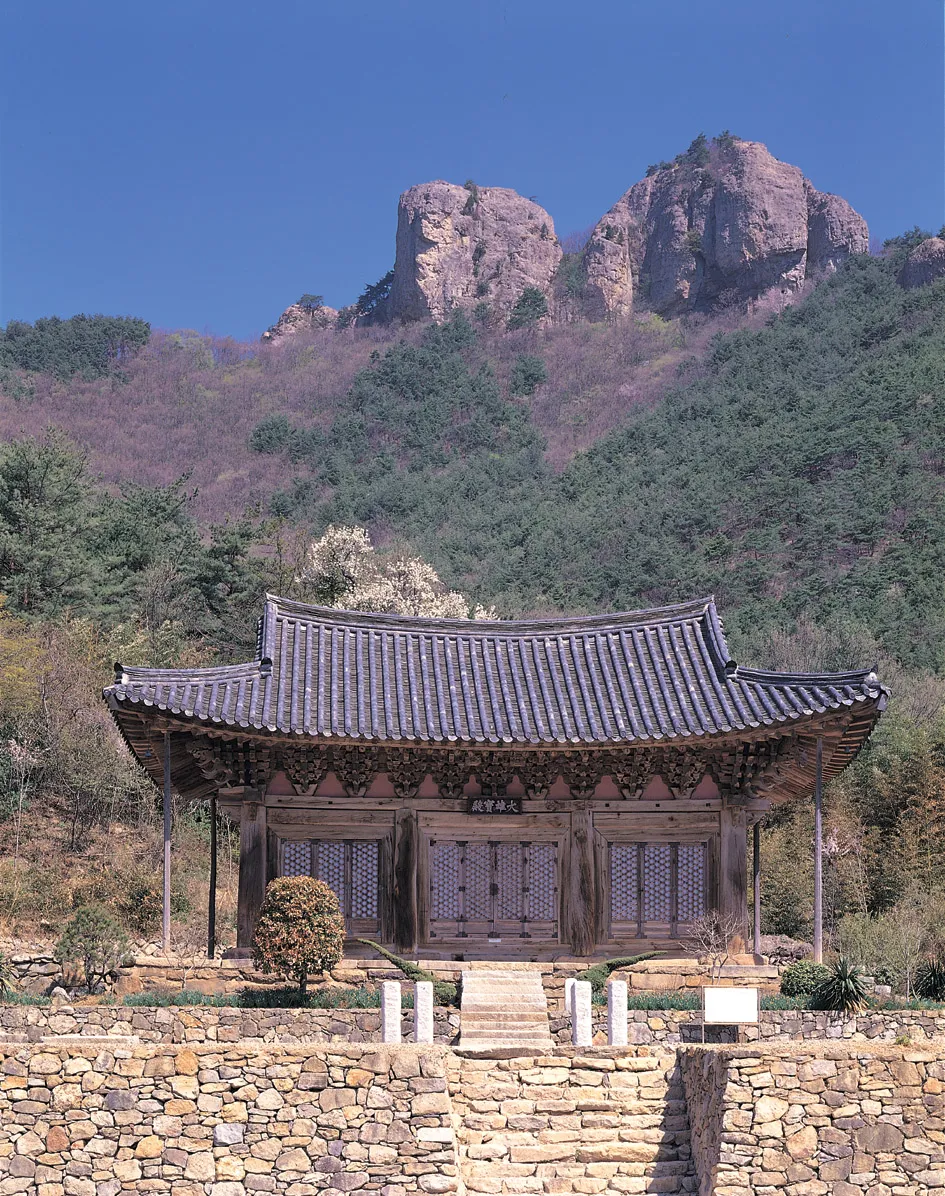
Daeungjeon Hall of Gaeamsa Temple, Buan
扶安 開岩寺 大雄殿
전북특별자치도 부안군
Basic information
- Designation
- Treasure No.292
- Category
- Architecture
- Era
- 조선시대 중기
- Designated year
- 1963
- Location
- 부안군, 전북특별자치도— 전북 부안군 상서면 개암로 248, 개암사 (감교리)
- Coordinates
- 35.662834, 126.649798
AI Docent
Coming soonAn AI-generated, friendly retelling of this heritage site is available in Korean. An English version is on our roadmap — for now, please see the official description below.
Description
The Gaeamsa Temple was built by a Buddhist monk named Myoryeon in 634. The name of Gaeam originates from the story of a war that took place in in B.C. 282. When King Mun of Byeonhan (one of three Han Kingdoms that existed before the Three Kingdoms Period) built a fortress here to protect the kingdom from the other two kingdoms of Jinhan and Mahan, he ordered Generals Wu and Jin to build a palace in the left and right valleys. At the time, the east palace was named Myoam, and the west palace Gaeam. Wongam, a Buddhist monk and State Preceptor of the time, rebuilt the temple here in 1314. The temple went through a couple of repairs since then. The Daeungjeon Hall of this temple measures 3 kan (a unit of measurement referring to the distance between two columns) by 3 kan under a gable roof, which is supported by solid and elaborately carved columns. There is a large rock named Ulgeumbawi about 500m below the temple. The rock has three caves, and the cave named 'Wonhyobang' has small puddles under it. A story has it that there was originally no water but the water gushed out from the ground when one of the most revered Buddhist monks named Wonhyo settled here to lead an ascetic life. The Juryu Fortress in the neighborhood is famous for the historic relics of the Headquarter of the Independence Movement of Baekje Dynasty.
Location
지도를 불러오는 중…
Have you visited this place?
Log in and verify your visit on-site via GPS to record a stamp in My Journey. (QR verification coming later.)
Images: KOGL (khs.go.kr) · Data source: Korea Heritage Service Open API (khs.go.kr)