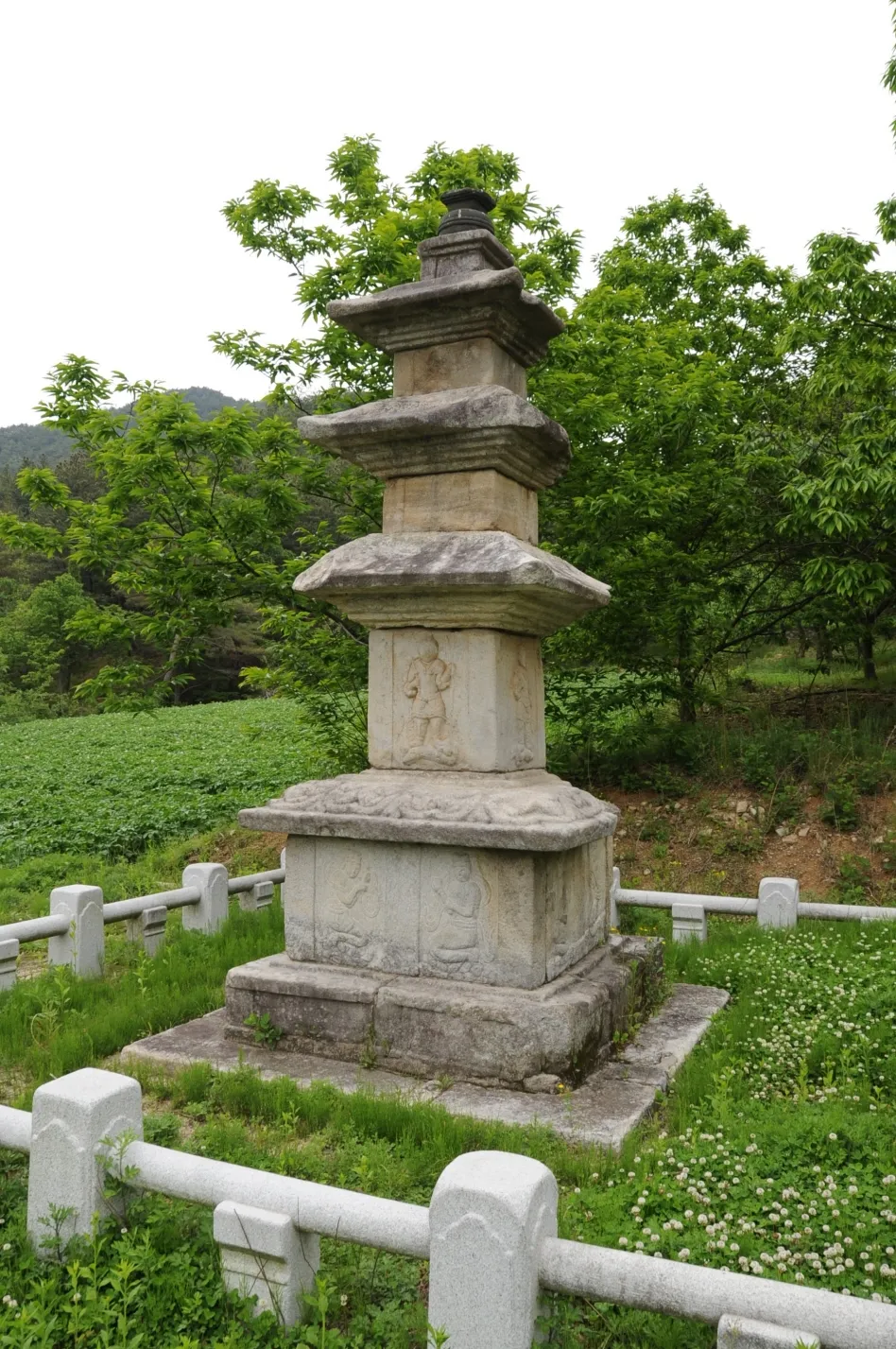
Three-story Stone Pagoda at Seungansa Temple Site, Hamyang
咸陽 昇安寺址 三層石塔
경상남도 함양군
Basic information
- Designation
- Treasure No.294
- Category
- Sites & Pagodas
- Era
- 고려시대
- Designated year
- 1963
- Location
- 함양군, 경상남도— 경남 함양군 수동면 우명리 263번지
- Coordinates
- 35.572636, 127.797204
AI Docent
Coming soonAn AI-generated, friendly retelling of this heritage site is available in Korean. An English version is on our roadmap — for now, please see the official description below.
Description
This pagoda built in the Goryeo Dynasty is located in the Seungansa Temple site. There are no detailed records of the Seungansa Temple. The pagoda was not placed in the original location when it was rebuilt. This three-story pagoda on a two-tiered pedestal, displays the unique style of the Goryeo Dynasty and yet follows the design of pagodas made in the Silla period. Column patterns are engraved on the corner and center of each side of pedestal, while the upper part is engraved with the Buddha, Bodhisattva and 'flying deities' between columns. The capstone of the upper part, engraved with a lotus pattern facing the ground is very rare in pagodas like this one. The pagoda's main body contains the sarira of Buddha and Buddhist scripture. Both the main body and the capstone are made of a single stone. The body narrows from the second tier up, and the Four Guardian Kings are engraved on each side of the main stone on the first tier. The capstone is disproportionately large for the main body, while its base consisted of four stairs. The rooflines are sharply cut, while the eaves are leveled. The corners of eaves are curved upward, adding grandeur to the pagoda. The finial in the shape of a over-turned bowl is placed to support the capstone. A damaged lotus pattern remains on the top of the pagoda. The patterns still remaining on the head of the pagoda indicate that the flower and leaf patterns faced upward. As a whole, this pagoda follows the typical style of the Unified Silla Era, except the imperfect pedestal and simpler design of the main body. It also shows the unique features of pagodas made during the Goryeo Dynasty, with emphasis on making a pagoda highly decorative and unique. However, the pedestal and the main body are disproportionate to each other. It was originally built and moved in 1494 (the 25th year of the reign of King Seongjong of Joseon), judging from the Buddha’s sarira in the main stone. The stone was discovered in 1962, when it was moved to the current location.
Location
지도를 불러오는 중…
Have you visited this place?
Log in and verify your visit on-site via GPS to record a stamp in My Journey. (QR verification coming later.)
Images: KOGL (khs.go.kr) · Data source: Korea Heritage Service Open API (khs.go.kr)