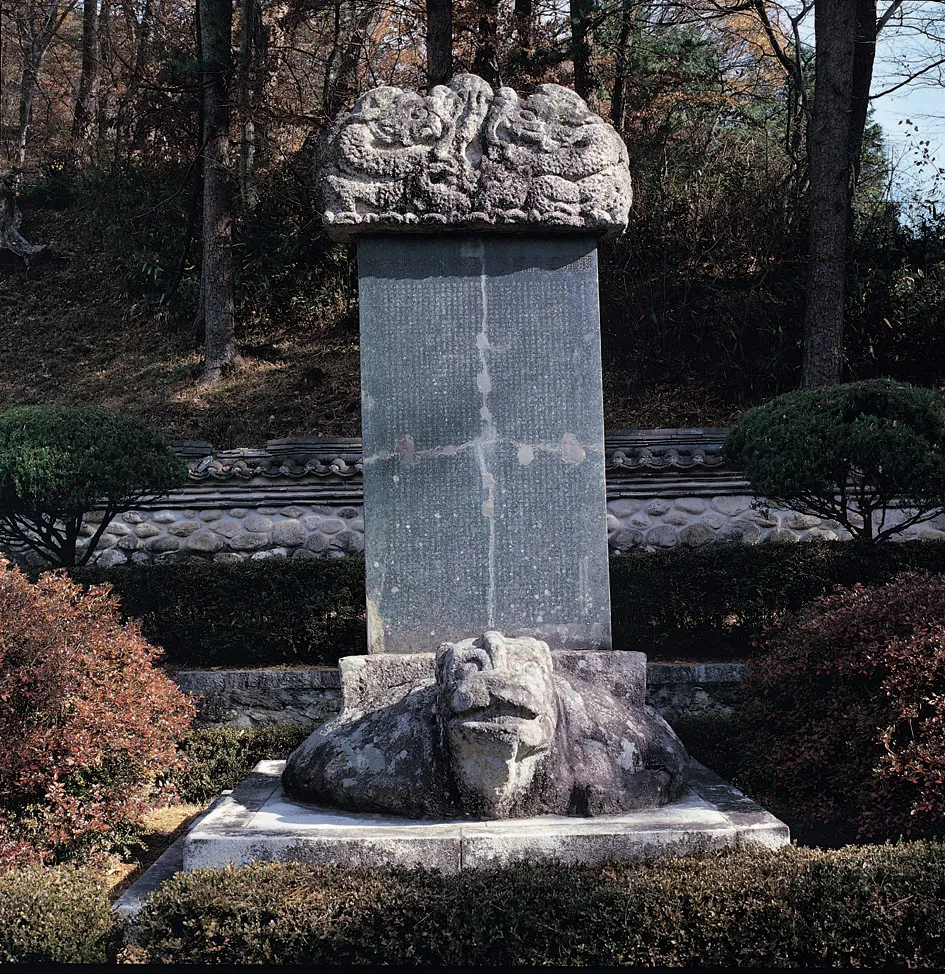
Haeinsa Hongjeam Samyeongdaesatap Mit Seokjangbi, Hapcheon
陜川 海印寺 弘濟庵 四溟大師塔 및 石藏碑
경상남도 합천군
Basic information
- Designation
- Treasure No.1301
- Category
- Sites & Pagodas
- Era
- 조선 후기(1612,1610)
- Designated year
- 2000
- Location
- 합천군, 경상남도— 경남 합천군 가야면 해인사길 154, 홍제암 (치인리)
- Coordinates
- 35.802194, 128.095353
AI Docent
Coming soonAn AI-generated, friendly retelling of this heritage site is available in Korean. An English version is on our roadmap — for now, please see the official description below.
Description
The Stupa and Stele at Hongjeam Hermitage of Haeinsa Temple are dedicated to Buddhist Monk Samyeong, remembered for his brilliant wartime achievements as the head of a monk army during the Japanese Invasion of 1592 and the Second Japanese Invasion of 1597. Samyeong spent last days of his life in Hongjeam Hermitage, in a spiritual retreat and died there. The name “Hongjeam” derives from ‘Jatong Hongje Jonja,’ the posthumous title bestowed on Samyeong after his death by King Gwanghaegun. The Stupa is located in the flank of a hill, situated about 20m northeast of Hongjeam Hermitage. This majestic stupa, in the shape of a gigantic bell, bears flattering testimony to late Joseon stonework. The bell-shaped body of the stupa is mounted on a two-tiered platform was hewn in a single stone block. The stupa has, at its summit, a lotus bud-shaped cintamani. The stele is carved with biographical details and dates about the monk Samyeong’s life and career. The stele was erected in 1612 (the 4th year of King Gwanghaegun’s reign), and the text was written by Heo Gyun, famously known for his Korean classical novel Hong Gil-dong jeon (The Tale of Hong Gil-dong). In 1943, the Japanese colonial administration ordered the police of Hapcheon to dismantle and destroy the stele on the ground that the inscription on the stele is seditious and could ignite the nationalist fervor of Korean people. In the subsequent era, the stele, found split in four pieces, was repaired and re-erected at its original site in 1958. This stele is the oldest of all extant stone monuments dedicated to Samyeong. Its historical significance is immense also because of the account of Samyeong’s life and his accomplishments inscribed on it. The account is not only elegantly and eloquently written, but is quite highly detailed. Pairing a monk’s stupa with a stele is a practice that dates as far back as to the Silla Period. This stupa and stele are, therefore, also significant as a testament to this enduring tradition.
Location
지도를 불러오는 중…
Have you visited this place?
Log in and verify your visit on-site via GPS to record a stamp in My Journey. (QR verification coming later.)
Images: KOGL (khs.go.kr) · Data source: Korea Heritage Service Open API (khs.go.kr)