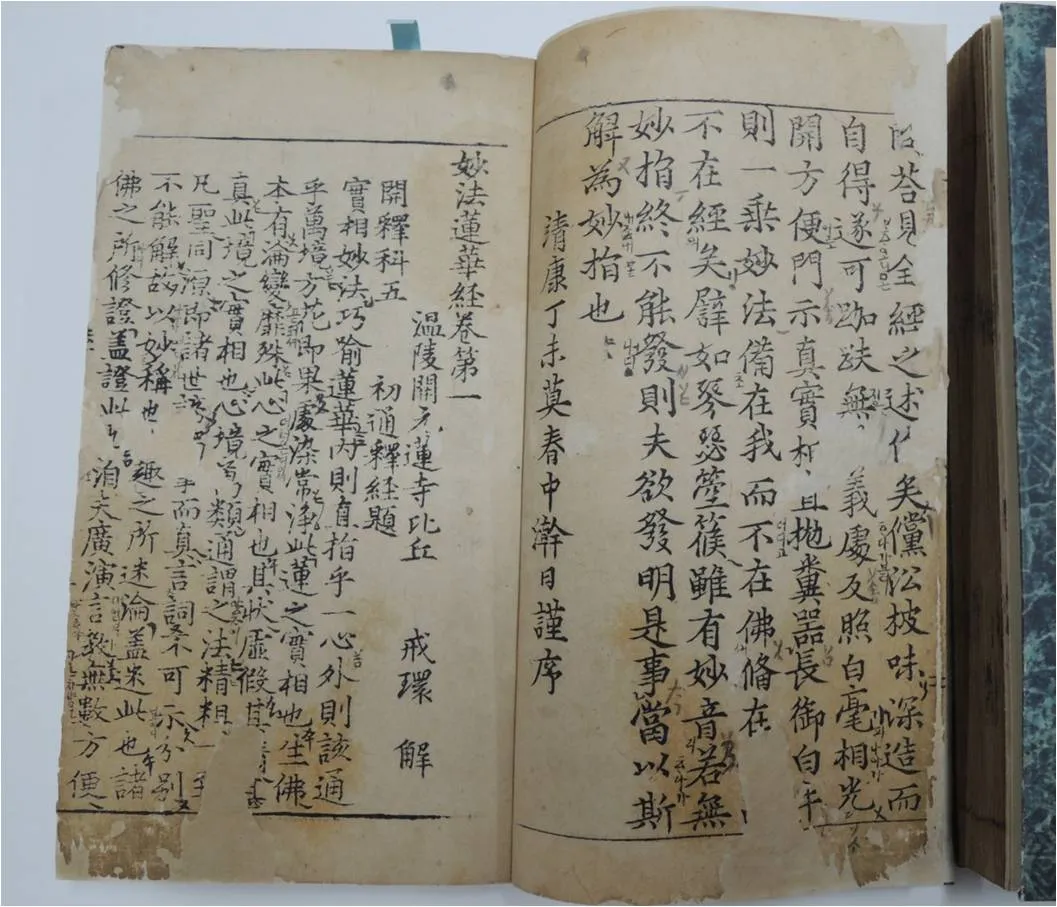
Myobeobyeonhwagyeong(2019)
妙法蓮華經(2019)
서울특별시 중랑구
Basic information
- Designation
- Treasure No.1306-2
- Category
- Books & Records
- Era
- 1405년(태종 5) 경 판각, 후쇄본 개장
- Designated year
- 2019
- Location
- 중랑구, 서울특별시— 서울특별시 중랑구 숙선옹주로 69 (묵동, 대한불교조계종 법장사)
- Coordinates
- 37.614885, 127.084056Kakao address conversion
AI Docent
Coming soonAn AI-generated, friendly retelling of this heritage site is available in Korean. An English version is on our roadmap — for now, please see the official description below.
Description
Saddharmapundarika Sutra(The Lotus Sutra) is a collection of Buddhist Scriptures published in 1405 (the 5th year of the reign of King Taejong) at Ansimsa Temple in Jeolla province. An ascetic named Sinmun played the lead role in the publication of the scriptures, which were based on the woodblock-printed book of the Lotus Sutra handwritten meticulously by two brothers, SEONG Dalsaeng and SEONG Gae, to pray for the eternal repose of the souls of their deceased parents. The Lotus Sutra forms a complete set of works consisting of seven parts in two volumes. Part 4 contains six pages of Buddhist paintings, and it is engraved with exquisition on the wood block. Images of Guardian Deities in the paintings in the Lotus Sutra kept in Ansimsa Temple were made on a large scale and exquisite woodblocks, and are thus considered more valuable than their counterparts in other copies of the Lotus Sutra. The use of gugyeol/duju/hyeonto (methods of writing Korean according to the phonetic or semantic values of Chinese characters or the addition of features of Korean language to facilitate understanding of texts written in classical Chinese) in the text help researchers to understand how Hangeul (Korean alphabetic script) was used in the period right after its creation in 1443. The Lotus Sutra is a complete set of works, while those designated as a Treasure are not. The Lotus Sutra relatively keeps the shape in the early days of their publication, and it is still in its shape of early days. Their epilogue tells us how Buddhist Scriptures were published in the early Joseon Period. All in all, they are valuable materials for scholars interested in the bibliography and history of Buddhism.
Location
지도를 불러오는 중…
Have you visited this place?
Log in and verify your visit on-site via GPS to record a stamp in My Journey. (QR verification coming later.)
Images: KOGL (khs.go.kr) · Data source: Korea Heritage Service Open API (khs.go.kr)