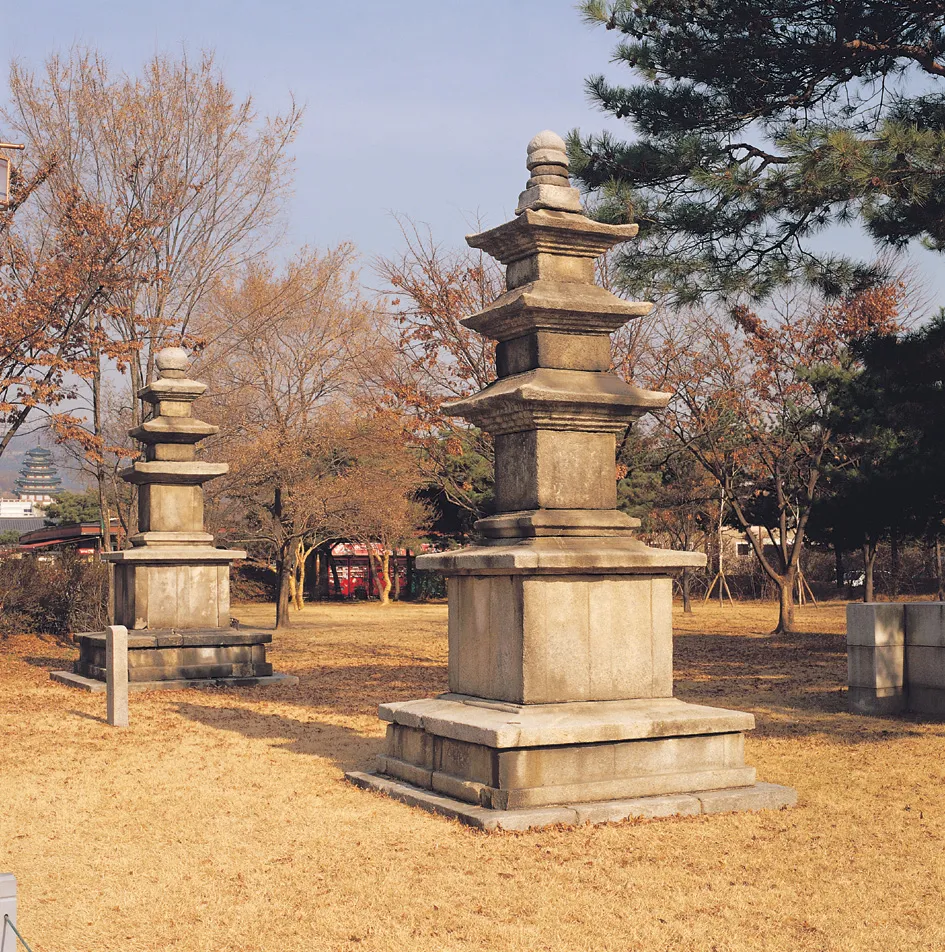
Stupas of Buddhist Monk Boje from Yeongjeonsa Temple Site, Wonju
原州 令傳寺址 普濟尊者塔
서울특별시 용산구
Basic information
- Designation
- Treasure No.358
- Category
- Sites & Pagodas
- Era
- 고려시대 후기
- Designated year
- 1963
- Location
- 용산구, 서울특별시— 서울 용산구 서빙고로 137, 국립중앙박물관 (용산동6가)
- Coordinates
- 37.522138, 126.981484
AI Docent
Coming soonAn AI-generated, friendly retelling of this heritage site is available in Korean. An English version is on our roadmap — for now, please see the official description below.
Description
These two Stupas of the Buddhist Monk Boje were built in the 14th year of the reign of King U of Goryeo (1388). Boje (1320-1376) is also known by his Buddhist name Naong who entered Nirvana in Silleuksa Temple, Yeoju. His stupa still remains in Silleuksa Temple, but his students built another one for him in Yeongjeonsa Temple. In 1915, the Japanese moved it to its present location in the National Museum of Korea. It is very different from the usual stupa in that it takes the form of stone pagoda, a three-story pagoda standing on a two-story stylobate. Pillar-shaped patterns are engraved on upper and lower stylobates at the edge. On the upper stylobate lies a stone that supports the body of the stupa. The main stone and the roof stone of the body of the stupa are each made of a single stone. A pillar-shaped pattern is engraved on each edge of the main stone. The roof stone has a four-tiered base. The roof stone of the first floor of one stupa of two shows a different style from others, and it is doubtful whether it originally belonged to this stupa. The ornamentation on top of the pagodas has not remained in perfect condition but it is an exceptional stupa, and it is unique that two stupas were built in almost the same style. While they were being moved to the present location, the sarira relinquary was found within the pagodas. The history of the erection of this stupa was known from a memorial stone found in one of the pagodas. Overall, it is very well assembled and balanced.
Location
지도를 불러오는 중…
Have you visited this place?
Log in and verify your visit on-site via GPS to record a stamp in My Journey. (QR verification coming later.)
Images: KOGL (khs.go.kr) · Data source: Korea Heritage Service Open API (khs.go.kr)