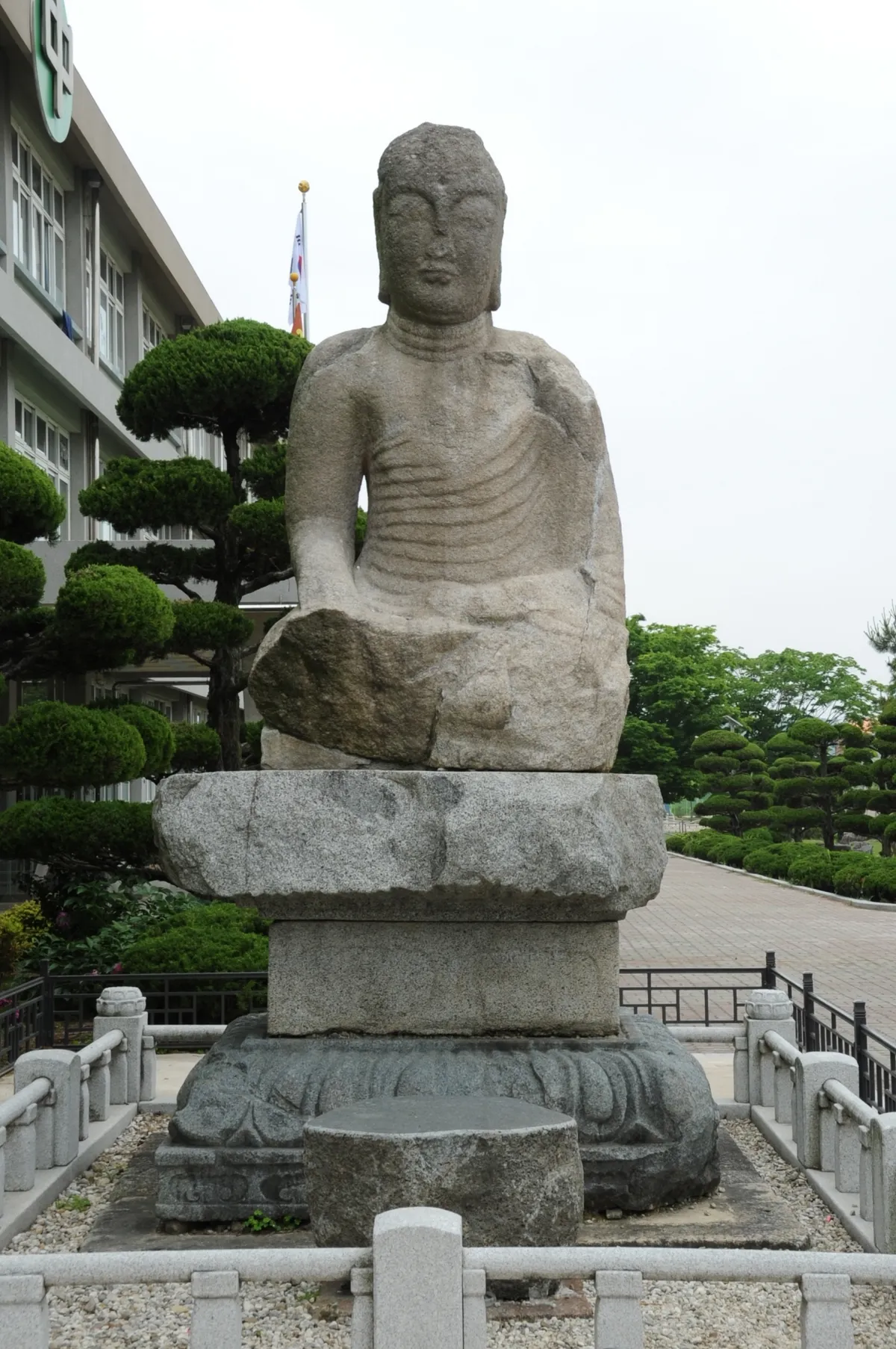
Stone Seated Buddha in Gyosan-ri, Hamyang
咸陽 校山里 石造如來坐像
경상남도 함양군
Basic information
- Designation
- Treasure No.376
- Category
- Sculpture
- Era
- 고려시대
- Designated year
- 1963
- Location
- 함양군, 경상남도— 경남 함양군 함양읍 함양배움길 11 (교산리)
- Coordinates
- 35.525177, 127.730587
AI Docent
Coming soonAn AI-generated, friendly retelling of this heritage site is available in Korean. An English version is on our roadmap — for now, please see the official description below.
Description
This Stone Seated Buddha from the Goryeo Dynasty is presently located in Hamyang Middle and High School. The overall height of the statue including the pedestal is 4 meters. The mandorla (Buddhist halo of light) behind the statue is now gone as well as some parts of the face, right hand, thighs and pedestal. Despite all this damage the statue itself still gives a majestic impression. The face is severely worn and the head is also fairly damaged, but although it has lost detail, it still looks plump and strong. The face and the smile on it are similar to those of the Rock-carved Standing Buddha in Deokjeon-ri, Hamyang (Treasure No. 375). The beobui (sacerdotal robe) is hung over the left shoulder leaving the right shoulder exposed. The body is robust and dignified. The folds of the clothing are parallel across the body, but they are a little formal. The right arm is thick and stately. The right hand was damaged but it seems to be pointing towards the ground. The left hand is on the thigh with the palm facing up. The pedestal is rectangular. The upper pedestal was broken at the front and rear part and lotus flower patterns are carved on the both sides. The middle pedestal has the symbolic images of the elephant’s eyes in its center and the cloud patterns are carved on the lower pedestal. The patterns on the pedestal are made with carving methods identical to those used on Buddha statues of the early Goryeo Dynasty. All in all, this seated Buddha is considered a masterpiece that typifies the beauty and power of Goryeo Buddha statues.
Location
지도를 불러오는 중…
Have you visited this place?
Log in and verify your visit on-site via GPS to record a stamp in My Journey. (QR verification coming later.)
Images: KOGL (khs.go.kr) · Data source: Korea Heritage Service Open API (khs.go.kr)