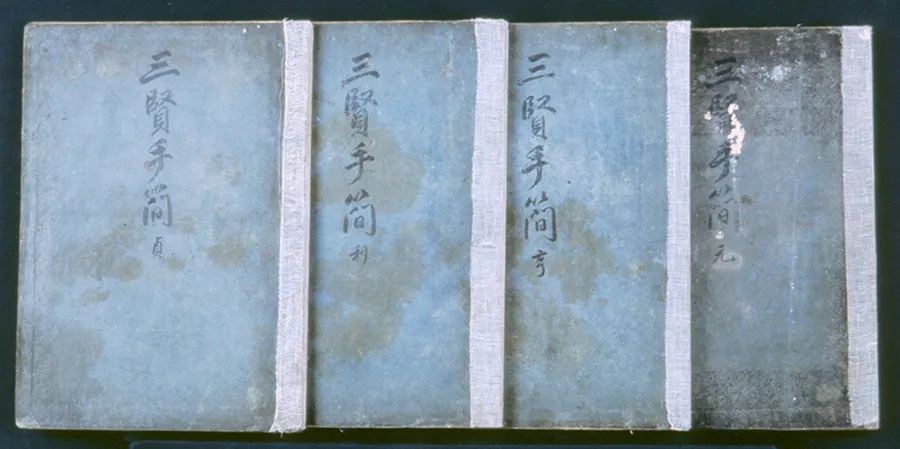
Samhyeonsugan
三賢手簡
서울특별시 용산구
Basic information
- Designation
- Treasure No.1415
- Category
- Books & Records
- Era
- 조선 명종 15∼선조 26년
- Designated year
- 2004
- Location
- 용산구, 서울특별시— 서울특별시 용산구 서빙고로 137 (용산동6가, 국립중앙박물관)
- Coordinates
- 37.538427, 126.965444
AI Docent
Coming soonAn AI-generated, friendly retelling of this heritage site is available in Korean. An English version is on our roadmap — for now, please see the official description below.
Description
Samhyeon sugan are a collection of letters exchanged between Song Ik-pil (penname: Gubong, 1534-1599), Seong Hon (penname: Ugye, 1535-1598) and Yi I (penname: Yulgok, 1536-1584) that were bound into four books at a later period. As these prominent 16th-century scholars of Neo-Confucianism were close friends, the letters contain extensive debates and discussions that they exchanged relating to Neo-Confucianism, such as the basic principles and the atmospheric force of the universe; the nature of the mind; the four emotions innate to human nature; and a theory on decorum. The letters are historically significant and valuable materials for the study of philosophy in Korea. Some of these letters can be also found in such works as Gubongjib (The Collection of Writings of Gubong), Ugyejip (The Collection of Writings of Ugye), and Yulgokjeonseo (The Complete Works of Yulgok). However, this collection of letters contains works that are not included in any other collection of the scholars’ works (sixteen letters have never been published elsewhere and fifteen have only partially been published in other books), further adding to the historical significance of the collection. In addition, the letters are written in the scholars’ own handwriting, which is in itself valuable in terms of the study of calligraphy. The cursive style of Gubong’s handwriting, in particular, is executed so neatly and flawlessly that it could be used as a textbook on cursive characters. Also, there are very few extant works by Yulgok that are written in his own handwriting, which makes this collection containing thirteen of his letters to Gubong, written in his own hand, all the more valuable.
Location
지도를 불러오는 중…
Have you visited this place?
Log in and verify your visit on-site via GPS to record a stamp in My Journey. (QR verification coming later.)
Images: KOGL (khs.go.kr) · Data source: Korea Heritage Service Open API (khs.go.kr)