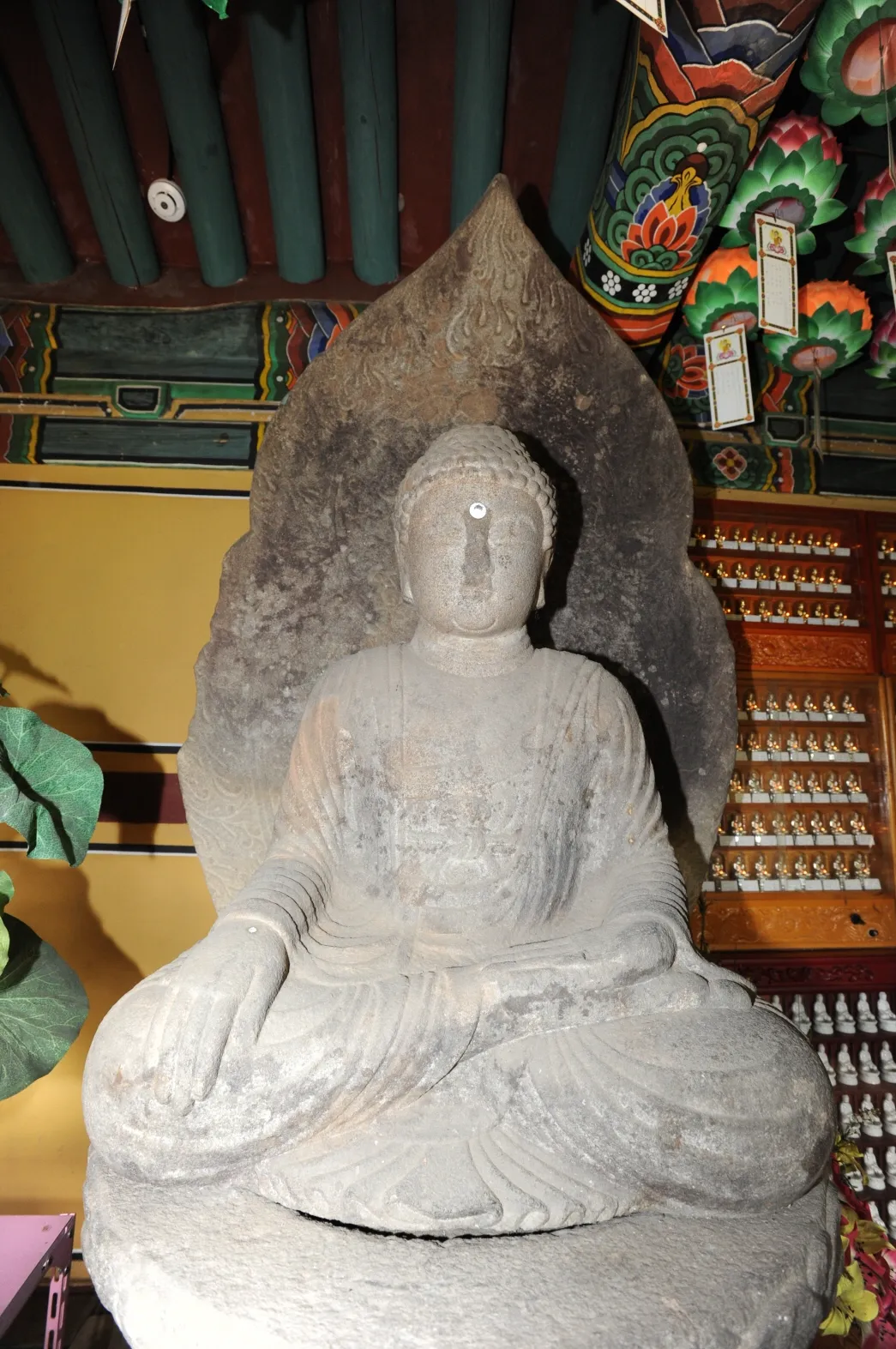
Stone Seated Buddha of Cheongnyongsa Temple, Yecheon
醴泉 靑龍寺 石造如來坐像
경상북도 예천군
Basic information
- Designation
- Treasure No.424
- Category
- Sculpture
- Era
- 통일신라시대
- Designated year
- 1965
- Location
- 예천군, 경상북도— 경북 예천군 용문면 선리 521 외 1필지(520-2)
- Coordinates
- 36.731078, 128.400943
AI Docent
Coming soonAn AI-generated, friendly retelling of this heritage site is available in Korean. An English version is on our roadmap — for now, please see the official description below.
Description
This stone seated Buddha made during the Unified Silla Dynasty is enshrined together with the Stone Seated Vairocana Buddha (Treasure No. 425) in the Buddhist sanctuary at Cheongnyongsa Temple in Yecheon. The Buddha’s hair is expressed in the curly nabal style (i.e. twirled up and around in a seashell-shaped fashion), and a large usnisa (a protuberance symbolizing supreme wisdom) can be seen on top of his head. The oval-shaped face is carved with eyes, nose, and mouth in a sophisticated and detailed way, and the short ears and distinctively-carved wrinkles on the neck are also impressive. The shoulders are narrow and the body, along with the feeble hands and feet, looks weak and unsolid. The beobui (sacerdotal robes) covering both shoulders has parallel folds and a knotted band at the chest, which are common characteristics of Buddha statues made during the Unified Silla Period. The mandorla (Buddhist halo of light) is made up of a dugwang (light radiating from the head) behind the head and a singwang (light emanating from the body) behind the body, expressed with double lines. The center of the dugwang is carved with lotus flower patterns, and the singwang is carved with vine patterns, while the background of the singwang features spark patterns. The Buddha statue is seated on an octagonal pedestal, the lower part of which is engraved with over-turned lotus flower patterns, while the upper part is adorned with full-blown lotus flowers. Judging from the smooth expression of the body and the styles of the pedestal and mandorla, this stone seated Buddha was made during the late Unified Silla Period.
Location
지도를 불러오는 중…
Have you visited this place?
Log in and verify your visit on-site via GPS to record a stamp in My Journey. (QR verification coming later.)
Images: KOGL (khs.go.kr) · Data source: Korea Heritage Service Open API (khs.go.kr)