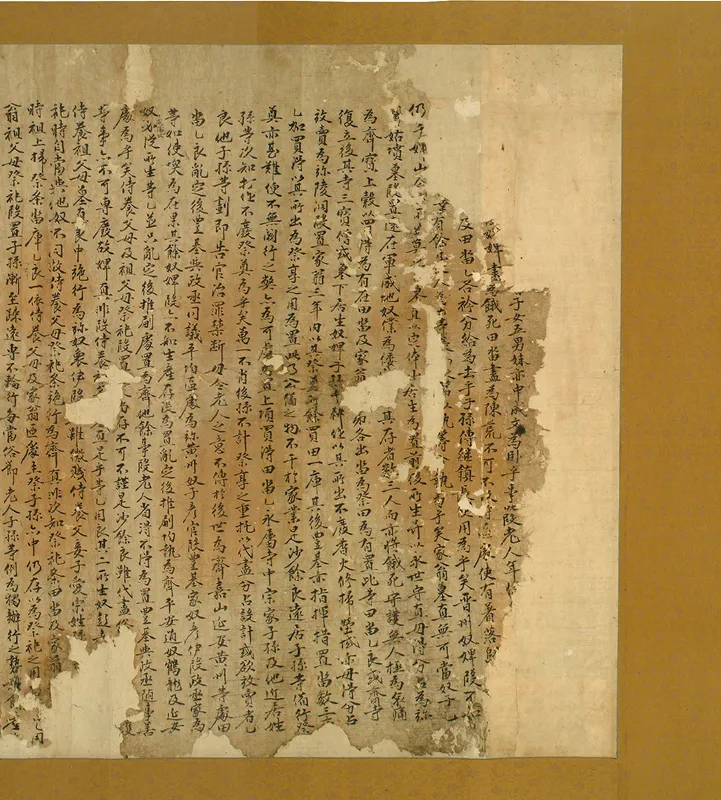
Artifacts of Ryu Seong-ryong's Family
柳成龍 宗家 遺物
경상북도 안동시
Basic information
- Designation
- Treasure No.460
- Category
- Craft
- Designated year
- 1967
- Location
- 안동시, 경상북도— 경북 안동시 풍천면 종가길 69, 영모각 (일부 국학진흥원 위탁보관) (하회리)
- Coordinates
- 36.538112, 128.517485Kakao address conversion
AI Docent
Coming soonAn AI-generated, friendly retelling of this heritage site is available in Korean. An English version is on our roadmap — for now, please see the official description below.
Description
These relics were handed down from generation to generation in the head family of Ryu Seong-ryong (pen-name: Seoae, 1542-1607), who was a government official during the mid-Joseon Dynasty. These relics can be classified into three: first are Ryu's personal belongings; second is his mother's Gonmungi; and third are various documents given to Ryu by the government. Ryu’s personal belongings include armor, leather shoes, ivory scepter, card held by a retainer to see a king or for an ancestral ceremony, laces of a gat (Korean top hat made of horsehair), headband buttons, seven kinds of documents including Dongguk jido (map of Korea that Ryu used to carry with him), and Seoae seonsaeng mobuin gonmungi, which is a record of the distribution of property and slaves to his children. The old government documents have 14 kinds in all such as certificate, royal edict, royal certificate, and funeral oration. The relics are considered valuable materials in studying the life and achievements of Ryu Seong-ryong and the social aspects of the time. Ryu Seong-ryong was a follower of Yi Hwang (pen-name: Toegye, one of the two most prominent Korean Confucian scholars of the Joseon Dynasty along with Yi I), and Kim Seong-il was his fellow student. In 1566 (the 21st year of the reign of King Myeongjong), he passed the civil service examination; since then, he had been appointed to many important posts (such as third, second, and chief state councilors, minister of the Board of Personnel, etc.). In this capacity, he knew that the Japanese army would attack Joseon and appointed generals Yi Sun-sin and Gwon Yul to prepare for war. He also dedicated himself to beefing up military strength by manufacturing arms such as canvas and building walls. Moreover, he had great Taoism writing style and skill. He was granted the posthumous title “Munchung” and enshrined in Byeongsanseowon Confucian Academy in Andong.
Location
지도를 불러오는 중…
Have you visited this place?
Log in and verify your visit on-site via GPS to record a stamp in My Journey. (QR verification coming later.)
Images: KOGL (khs.go.kr) · Data source: Korea Heritage Service Open API (khs.go.kr)