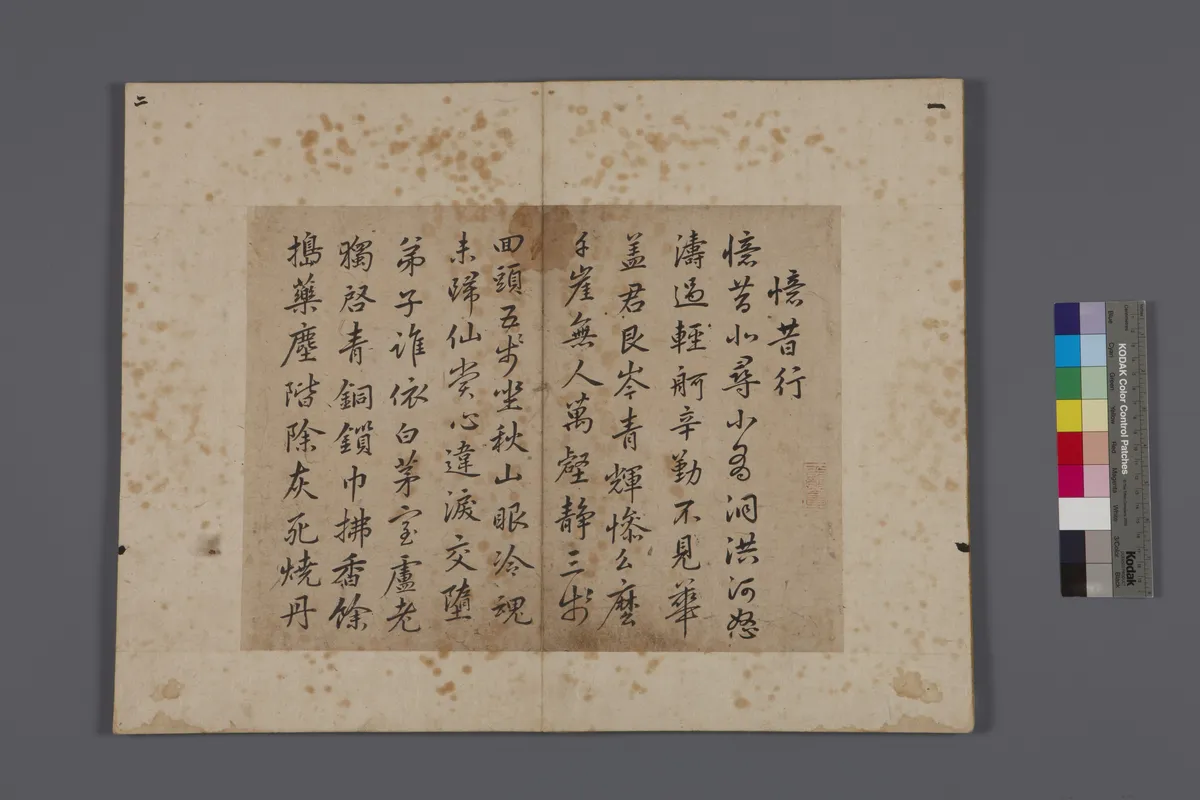
Calligraphy by Yi Hwang
李滉 筆蹟 - 先祖遺墨帖
경상북도 안동시
Basic information
- Designation
- Treasure No.548-2
- Category
- Books & Records
- Designated year
- 2010
- Location
- 안동시, 경상북도— 경북 안동시 도산면 퇴계로 1997, 한국국학진흥원 (서부리)
- Coordinates
- 36.702059, 128.810946
AI Docent
Coming soonAn AI-generated, friendly retelling of this heritage site is available in Korean. An English version is on our roadmap — for now, please see the official description below.
Description
Seonjoyumukcheop is a collection of various autographs of Toegye Yi Hwang (1501-1570), including letters to his descendants, manuscripts of poems by him, hand-copies of others’ works and calligraphic copies of Tang and Song-dynasty Chinese poems. This collection of miscellaneous autographs dating from Yi Hwang’s youth to late years bears the title “Seonjoyumuk [‘Autographs of an Ancestor’]” on the covers. Based on the number of the cover pages, the collection must have consisted of twenty-three books. Only eighteen of them have survived to the present, with Books 2, 7, 10, 21 and 22 missing. Page numbers are indicated at the top left of each page. At the end of book 13, there is a text by Lee Hwang saying that he had written several maxims and precepts for his grandson Ando, in 1565. There are seal marks in several places that read “Yiandojang [‘Yi-An-do Chapter’].” Two postscripts by Yi Ji-su, a ninth-generation descendant of Lee Hwang, are also found at the end of Books 12 and 18. There are other cultural heritage-designated autographs of Yi Hwang such as Toedoseonsaeng pilbeop –in the private collection of the Gwon Ho-mun family- or the set of old documents, autographs and books in the collection of Oksanseowon Confucian Academy. The list also includes Samunsugan, Seonsaengsujeok and Toedoseonsaeng yumuk in the collection of Dosanseowon Confucian Academy. Seonjoyumuk –in the private collection of the Sanggye family- surpasses all of these other autographs regarding the variety of handwriting, moral and instructional quality of the contents and the number of outstanding calligraphic works; hence fully deserving its designation as a Treasure. ‘Gaseo’ (Books 1-9) and ‘Myeongjongdaewang haengjang wongo’ (Book 23) are particularly instructive for understanding Lee Hwang’s style in semicursive and grass scripts. Also of note are the maxims in Book 13, ‘Gamheungsi [Ganxingshi]’ by Zhu Xi calligraphed in mid-size semicursive characters in Book 14, ‘Daebojam’ in Book 15 and copies of calligraphic works by Zhong Yao and Wang Xizhi in Book 20. Meanwhile, ‘Hwarinsimbang’ in Book 18, the description of Taoist exercises that were popularly practiced in Lee Hwang’s time, in text and illustrations, dating from when he was in his mid-thirties, is interesting for its unusual subject matter as well as for the drawings by him it contains. Finally, Book 11 bears seal marks that read ‘Jinseonghuin’ and ‘Yihwangjangin,’ and Book 17 seal marks that read ‘Ongye,’ ‘Jinseonghuin,’ ‘Yihwangjangin’ and ‘Gyeongho.’
Location
지도를 불러오는 중…
Have you visited this place?
Log in and verify your visit on-site via GPS to record a stamp in My Journey. (QR verification coming later.)
Images: KOGL (khs.go.kr) · Data source: Korea Heritage Service Open API (khs.go.kr)