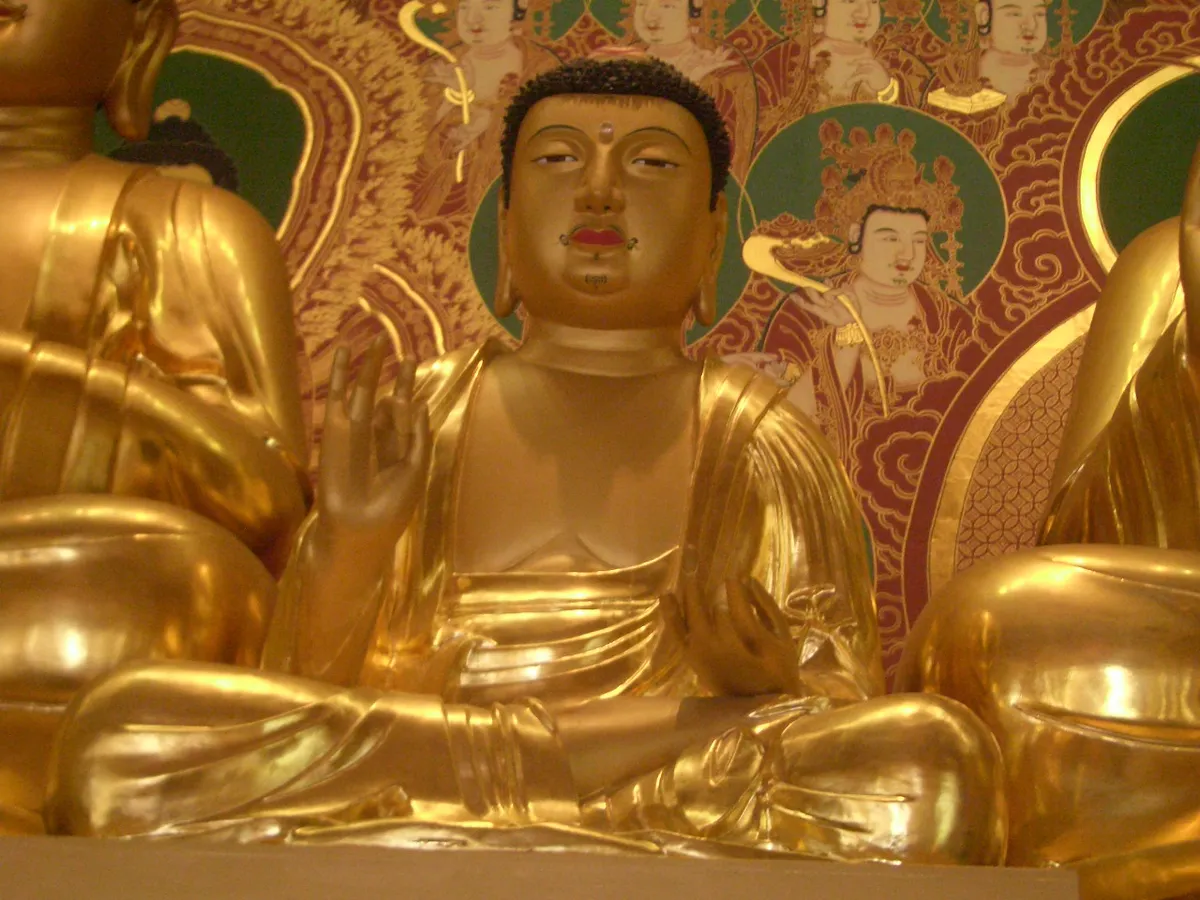
Suguksa Mokjoamitayeoraejwasang Mit Reliquary Objects, Seoul
서울 守國寺 木造阿彌陀如來坐像 및 腹藏遺物
서울특별시 은평구
Basic information
- Designation
- Treasure No.1580
- Category
- Sculpture
- Designated year
- 2008
- Location
- 은평구, 서울특별시— 서울 은평구 서오릉로23길 8-5, 수국사 (구산동)
- Coordinates
- 37.615883, 126.905073
AI Docent
Coming soonAn AI-generated, friendly retelling of this heritage site is available in Korean. An English version is on our roadmap — for now, please see the official description below.
Description
When Crown Prince Uigyeong (1438-1457), the eldest son of King Sejo, died prematurely at age 20, he was posthumously honored as King Deokjong and a Buddhist temple named Jeonginsa was built in 1459 near the prince’s grave to pray for his soul. The temple was rebuilt later at the present location and renamed Suguksa, meaning the “Temple of Protecting the Country,” to serve as a tutelary temple for the royal family. As there is no inscription or invocation, it is not known exactly when the Amitabha image was created. But the Buddha’s dignified face and robust body and the double robes with unique and natural folds show stylistic resemblance to Buddhist images produced in the 13th to the early 14th centuries. In particular, the noble and masculine face, the narrow folds in the robe flowing down along the sides of the shoulders, and the simple and unadorned inner garment are all reminiscent of several other images dated mid- to late 13th century, including the Seated Amitabha of Gaesimsa Temple in Seosan, which was repaired in 1280; another Seated Amitabha at Gaeunsa Temple in Seoul, dated around 1274; and Dry-lacquered Seated Amitabha of Simhyangsa Temple in Naju, designated Treasure No. 1544. Notably, this icon’s dignified masculinity stands for a new aesthetic tendency which differs from the graceful elegance characterizing most Buddhist sculptures of the late Goryeo Dynasty.
Location
지도를 불러오는 중…
Have you visited this place?
Log in and verify your visit on-site via GPS to record a stamp in My Journey. (QR verification coming later.)
Images: KOGL (khs.go.kr) · Data source: Korea Heritage Service Open API (khs.go.kr)