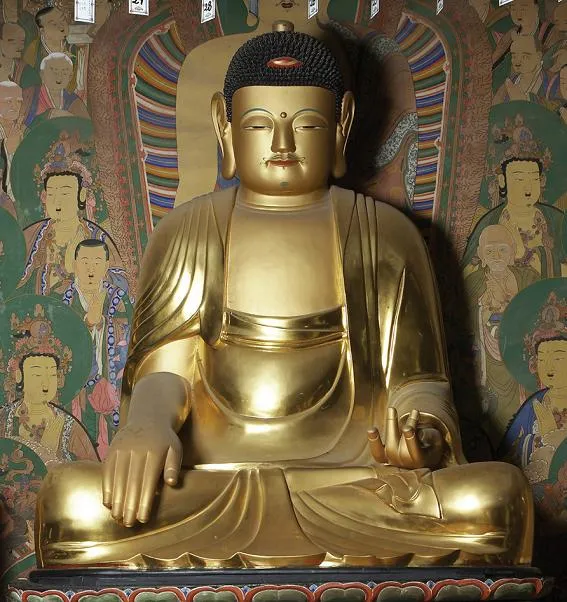
Songrimsa Mokjoseokgayeoraesamjon Seated Figure, Chilgok
漆谷 松林寺 木造釋迦如來三尊坐像
경상북도 칠곡군
Basic information
- Designation
- Treasure No.1605
- Category
- Sculpture
- Era
- 1657년
- Designated year
- 2009
- Location
- 칠곡군, 경상북도— 경북 칠곡군 동명면 송림길 73, 송림사 (구덕리)
- Coordinates
- 35.982098, 128.577426
AI Docent
Coming soonAn AI-generated, friendly retelling of this heritage site is available in Korean. An English version is on our roadmap — for now, please see the official description below.
Description
This big Sakyamuni Buddha triad enshrined on the Buddhist altar in Daeungjeon Hall of Songnimsa Temple consists of Sakyamuni and two attendant Bodhisattvas, Manjusri and Samantabhadra. The main Buddha image is 2.77 meters tall. Though huge in size, the Triad looks remarkably stable and beautiful thanks to appropriate physical proportions. Sakyamuni Buddha shows the earth-touching mudra, symbolic of his victory over the demon troops of Mara to attain enlightenment. The two Bodhisattvas are depicted in a similar way to Sakyamuni, but have a different mudra in mutually inverted positions, each holding a long lotus stalk with both hands. The lotus stalks as well as the crowns worn by the Bodhisattvas are assumed to have been repaired in later years. The three images have common stylistic features represented by healthy and dignified appearance, solemn facial expression with a somewhat awkward smile, and simply abbreviated but rigorous folds in the robe. These traits characterized popular Buddhist iconography of the early to mid-17th century, when many temples were reconstructed after two major foreign invasions. This Buddha triad is a monumental work representing the 17th-century late Joseon Dynasty. An invocation paper found inside the Buddha has clarified when the triad was made and who commissioned it. The invocation also revealed a list of 18 monk sculptors who participated in the project under the head artist Dou. They all belonged to the same lineage as the famous monk sculptor Muyeom, who was active in the early 17th century.
Location
지도를 불러오는 중…
Have you visited this place?
Log in and verify your visit on-site via GPS to record a stamp in My Journey. (QR verification coming later.)
Images: KOGL (khs.go.kr) · Data source: Korea Heritage Service Open API (khs.go.kr)