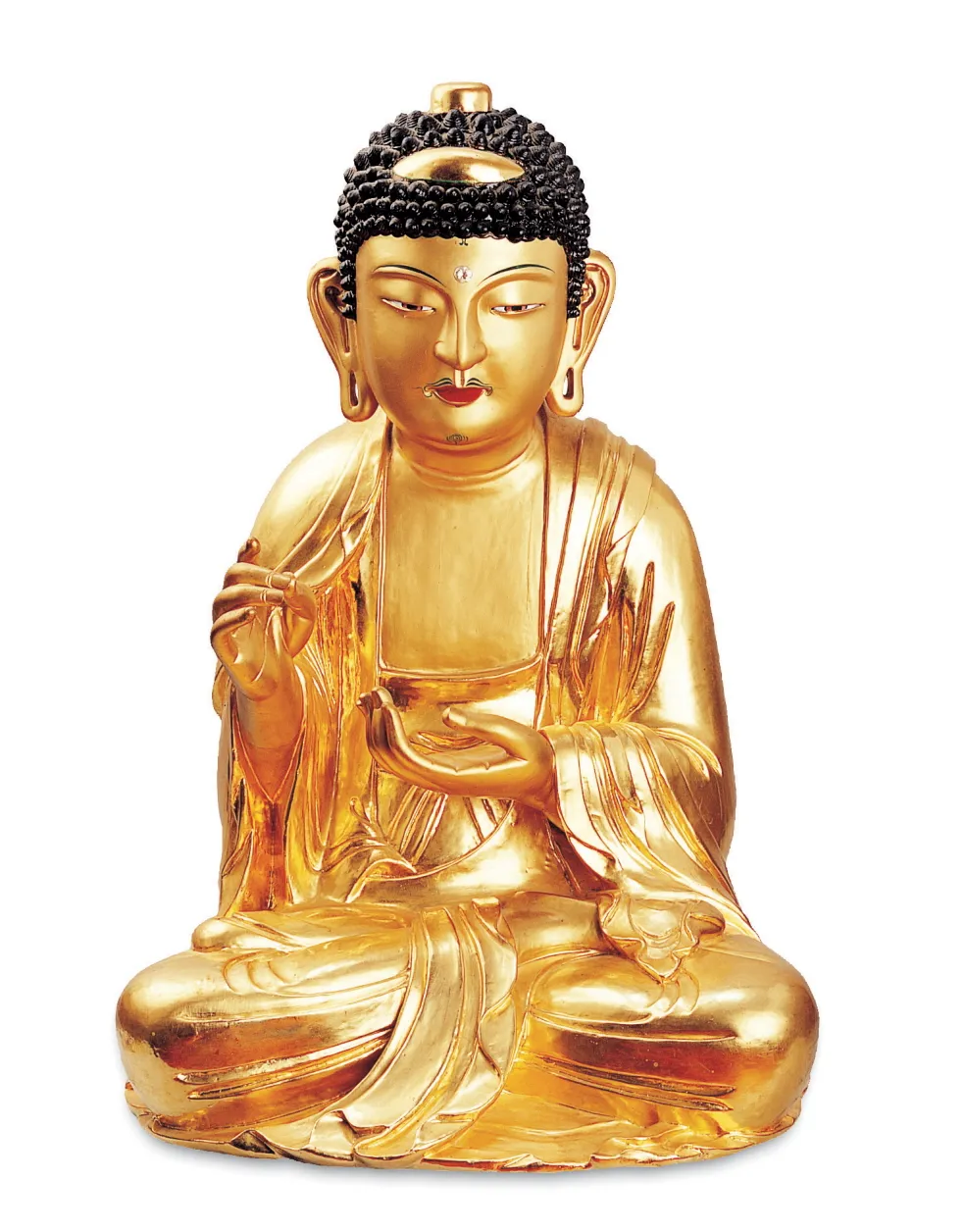
Yongmunsa Wooden Amitabha Seated Buddha, Yecheon
醴泉 龍門寺 木造阿彌陀如來坐像
경상북도 예천군
Basic information
- Designation
- Treasure No.1637
- Category
- Sculpture
- Designated year
- 2010
- Location
- 예천군, 경상북도— 경북 예천군 용문면 내지리 381번지 용문사
- Coordinates
- 36.731535, 128.369701Kakao address conversion
AI Docent
Coming soonAn AI-generated, friendly retelling of this heritage site is available in Korean. An English version is on our roadmap — for now, please see the official description below.
Description
A two-sheet list of donors was found inside this Buddha statue, along with a prayer text. The list containing the names of hundreds of donors who funded the creation of the Buddhist sculpture and those of painters, carpenters and metal workers who participated in it, also provides information about other important facts, such as the details of the repair done on the ninth day in the fourth lunar month, 1515. This early 16th-century sculpture, created under a project led by the painter Yi Yeong-mun, according to the same text, is, therefore, an important example of a work by secular artists and artisans, and not by monk sculptors. Amitabha Buddha is represented in this sculpture, dressed in two layers of garments. The drapery, the chest, knees and feet are all very natural, and volume and depth are emphasized by underlining curved and bulged lines of the body. The eyes are almond-shaped, and the face has a raised nose bridge and protruded cheeks. Such facial details and the natural drapery reveal the lingering influence of the sculptural style of early Joseon, more precisely of the 15th century. This work, in other words, exhibits transitional characteristics manifested by sculptures created before the emergence of a trend toward more two-dimensional sculptures in the 16th century. This early 16th-century work, one of the extremely rare Buddhist sculptures bearing inscriptions surviving from the period, is of inestimable value, also for its artistic merit.
Location
지도를 불러오는 중…
Have you visited this place?
Log in and verify your visit on-site via GPS to record a stamp in My Journey. (QR verification coming later.)
Images: KOGL (khs.go.kr) · Data source: Korea Heritage Service Open API (khs.go.kr)