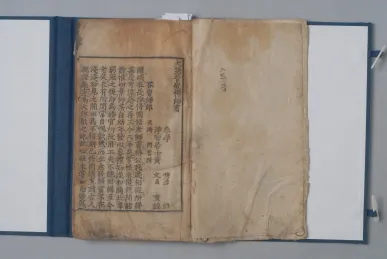
Daehyebogakseonsaseo(2010)
大慧普覺禪師書(2010)
서울특별시 용산구
Basic information
- Designation
- Treasure No.1662
- Category
- Books & Records
- Era
- 1387년
- Designated year
- 2010
- Location
- 용산구, 서울특별시— 서울특별시 용산구 서빙고로 137 (용산동6가, 국립중앙박물관)
- Coordinates
- 37.576571, 126.974851
AI Docent
Coming soonAn AI-generated, friendly retelling of this heritage site is available in Korean. An English version is on our roadmap — for now, please see the official description below.
Description
This is a collection of correspondence of the Song-dynasty monk Ta Hui Zonggao (1088-1163). Letters contained in this collection are mostly answers to questions about Zen asked by scholar-officials. The letters are written in the hand of his disciple Huiran and were compiled by Huang Wenchang. This book is part of Daehye eorok (Tahui yilu in Chinese, Sayings of Tahui), corresponding to volumes 25-30 of its thirty total volumes. Of the sixty-two total letters in this book, except for two addressed to a Buddhist monk and one sent to a woman, all others are addressed to Song officials or intellectuals. Daehye (Ta Hui) used to sign the letters is his courtesy name, and Hyeongak (Pu Chue) is his pen-name. This collection of his letters is at times referred to as “Daehyeseojang,” “Seojang” or “Seo,” but most often “Seojang.” This book was printed in Goryeo, in 1387 (the 13th year of King U’s reign), with woodblocks carved based on the Song-dynasty edition of Miaoxian (Jinshan). The cover page, in an added sheet, displays the title Daehye eorok, written in ink. At the beginning of the book, there is the volume title Daehye Bogakseonsaseo, and beneath it, a secondary title Chamhak hyeyeonnook, and the name of the compiler, Jeonggeojisa Hwang Mun-chang (Huang Wenchang). The text has gugyeol (oral formula) markings. The postscript by Huang Wenchang is added at the end of the book, along with the date and place of publishing; the eighth lunar month in 1166, Miaoxian, Jinshan. This is followed by a postscript by Yi Saek, dated 1387 (the 13th year of King U’s reign), a text addressed to the king, and the list of names of donors. The collection of Ta Hui’s letters was widely used during the Joseon Period, as a textbook in Buddhist seminars, and this book, the only surviving copy of a Goryeo edition, served as the base text for editions published in Joseon temples.
Location
지도를 불러오는 중…
Have you visited this place?
Log in and verify your visit on-site via GPS to record a stamp in My Journey. (QR verification coming later.)
Images: KOGL (khs.go.kr) · Data source: Korea Heritage Service Open API (khs.go.kr)