Pungaik
風雅翼
전라남도 장흥군
Basic information
- Designation
- Treasure No.1664
- Category
- Books & Records
- Era
- 1553년(명종8)경
- Designated year
- 2010
- Location
- 장흥군, 전라남도— 전라남도 장흥군
- Coordinates
- 34.681612, 126.907058
AI Docent
Coming soonAn AI-generated, friendly retelling of this heritage site is available in Korean. An English version is on our roadmap — for now, please see the official description below.
Description
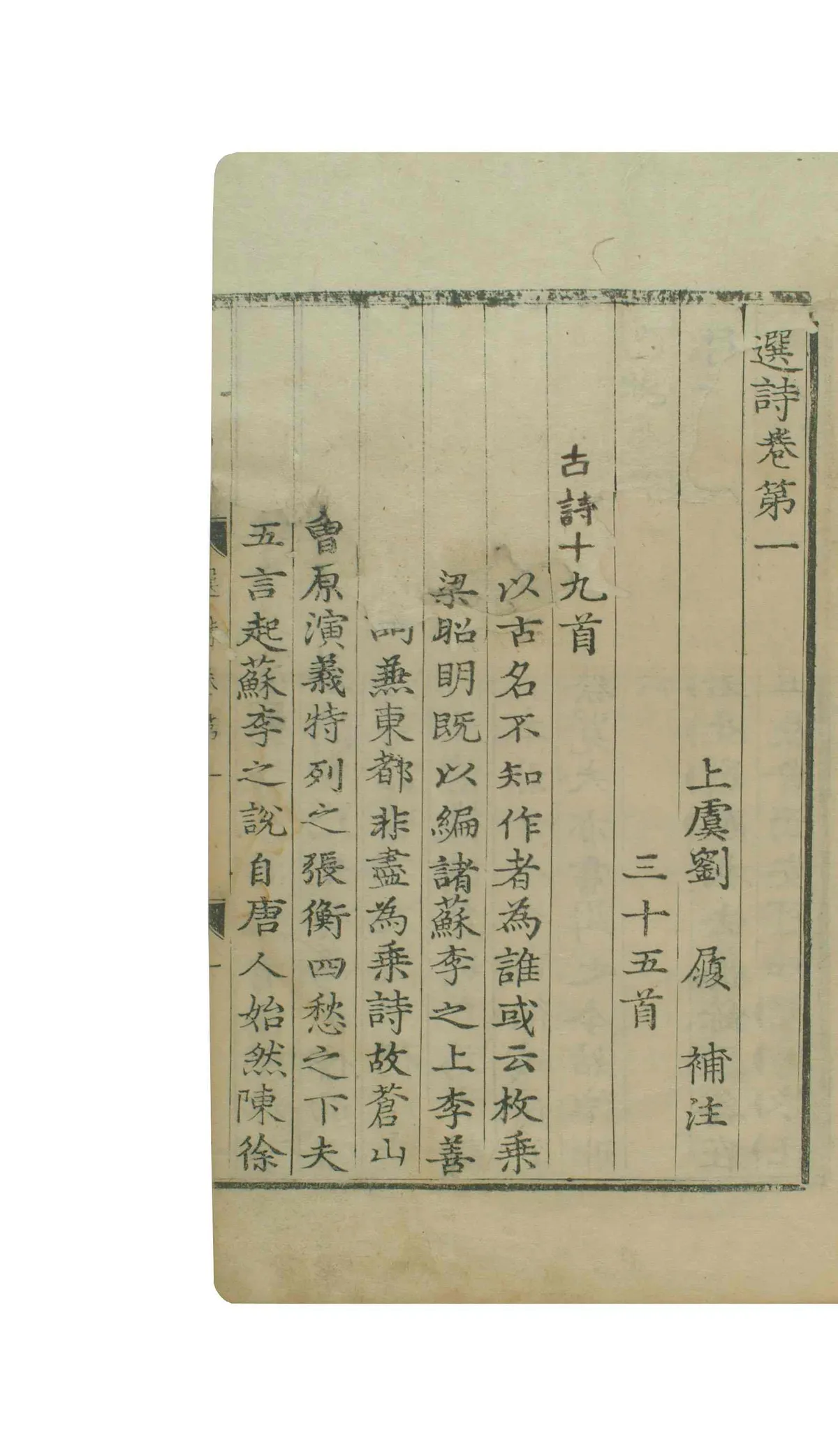
Liu Lu (1317-1379), who compiled this book, revered Zhu Xi and selected two hundred twelve poems from Munseon, following the latter’s preference, thirty-four composed by Tao Yuanming and other poets to publish Seonsi boju (Xuanshi buzhu in Chinese: Selected Poems with Annotations). Later, he published another anthology titled Seonsi sokpyeon (Selected Poems Continued) by compiling forty-two ancient verses from the time of Kings Yao and Sun to the Jin Dynasty into a two-volume book. Liu Lu followed up on this by publishing yet another sequel, this time, consisting in five volumes and containing one hundred thirty-two poems by Tang-Dynasty poets. He added his own annotations where existing annotations were incomplete and organized the annotations in the same way as in Shijing (Book of Songs) by Zhu Xi. Liu Lu baptized these three poetic anthologies, containing four hundred twenty poems in fifteen volumes, Pungaik (Fengyayi in Chinese, literally meaning “Wing of Polite Letters”), to signify that they could be supplements to the Book of Songs. Liu Lu’s annotations and comments were not well received by posterity, due to his strongly philosophical interpretation. Pungaik, however, was widely read in Joseon where Neo-Confucianism dominated both its scholarly scene and political scene. These books played, in Joseon, the role of companion books to the Book of Songs. Meanwhile, they were re-published several times both in China and in Joseon, over the centuries. The date of printing is provided at the end of the 15th volume, along with three short texts about the casting of three movable metal types (gyemi, gyeongja, and gabin) by Gwon Geun, Byeon Gye-ryang and Kim Bin, respectively: “7th year of Zheongtong,” corresponding to 1442. However, given the presence of numerous characters printed with additional type pieces, cast in later years, this book appears to have been printed rather around 1553, the year indicated in its distribution information. One of the largest-scale metal type-printed publications from early Joseon and as a book which was used for the study of poetry, Pungaik is invaluable for both literary research and the study of the history of Joseon publishing. This book, furthermore, is the only surviving copy of Pungaik which is complete with no missing volumes.
Location
지도를 불러오는 중…
Have you visited this place?
Log in and verify your visit on-site via GPS to record a stamp in My Journey. (QR verification coming later.)
Images: KOGL (khs.go.kr) · Data source: Korea Heritage Service Open API (khs.go.kr)