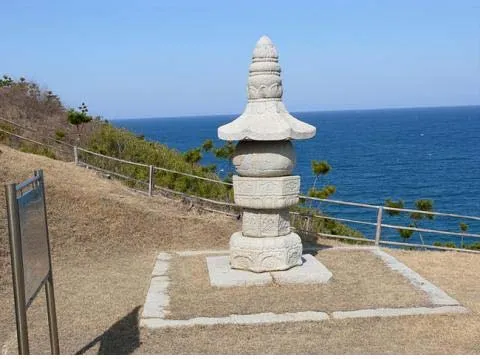
Naksansa Haesugwaneumgongjungsaritap·bi Mit Sarijangeomgu (Collection), Yangyang
襄陽 洛山寺 海水觀音空中舍利塔·碑 및 舍利莊嚴具 一括
강원특별자치도 양양군
Basic information
- Designation
- Treasure No.1723
- Category
- Sites & Pagodas
- Era
- 조선시대
- Designated year
- 2011
- Location
- 양양군, 강원특별자치도— 강원 양양군 강현면 전진리 55
- Coordinates
- 38.125873, 128.629272
AI Docent
Coming soonAn AI-generated, friendly retelling of this heritage site is available in Korean. An English version is on our roadmap — for now, please see the official description below.
Description
This monastic stupa of Naksansa Temple in Yangyang is far from a masterpiece of stonework. It is, however, a monument of high significance for several reasons other than aesthetic reasons: Firstly, this stupa with a clearly established date of creation (1692) is valuable for dating other stupas and stone monuments from the similar historical period. Secondly, it is one of the very few surviving stupas in the style of a pagoda. Thirdly, in terms both of its overall style and details of stonework, this stupa is highly similar to the stone lanterns found in Joseon kings’ graveyards, hinting, therefore, at the existence of a relationship of mutual influence between the two types of stone monuments, and by extension, between temple stone structures and stone structures at secular sites. As for the stele that is paired with the monastic stupa, it is a rather ordinary-looking stone monument in a generic late Joseon style. However, as an element of this set of three items for enshrining a monk’s sarira, namely, the stupa, stele, and reliquaries, this stele must be evaluated also in relation to its role within the whole it is a part of. The text inscribed on this stele, for example, is identical to the text in a document enshrined in the stupa, as part of the reliquary set. The reliquary is particularly valuable, as its components are completely undamaged and were found undisturbed from the state at the time of their enshrinement. From this set in which the sarira bottle is placed inside a gold casket, then inside a silver casket, and finally inside a bronze casket, one learns that this traditional style of nesting sarira receptacles remained in use all the way to the beginning of the early Joseon Period. Meanwhile, the eleven pieces of silk cloth found along with the reliquary set are vivid in color and richly varied in textile motifs. These fabrics in exceptional condition can shed important light on the history of Korean textiles. This set of a monastic stupa, memorial stone and a reliquary constitutes a rarity, not just because of its pristine condition, but also because few complete sets of such kind have survived to the present. Therefore, in its future preservation, it is also important that the elements making up this set be kept together, as much of their value derives from their relationship to one another.
Location
지도를 불러오는 중…
Have you visited this place?
Log in and verify your visit on-site via GPS to record a stamp in My Journey. (QR verification coming later.)
Images: KOGL (khs.go.kr) · Data source: Korea Heritage Service Open API (khs.go.kr)