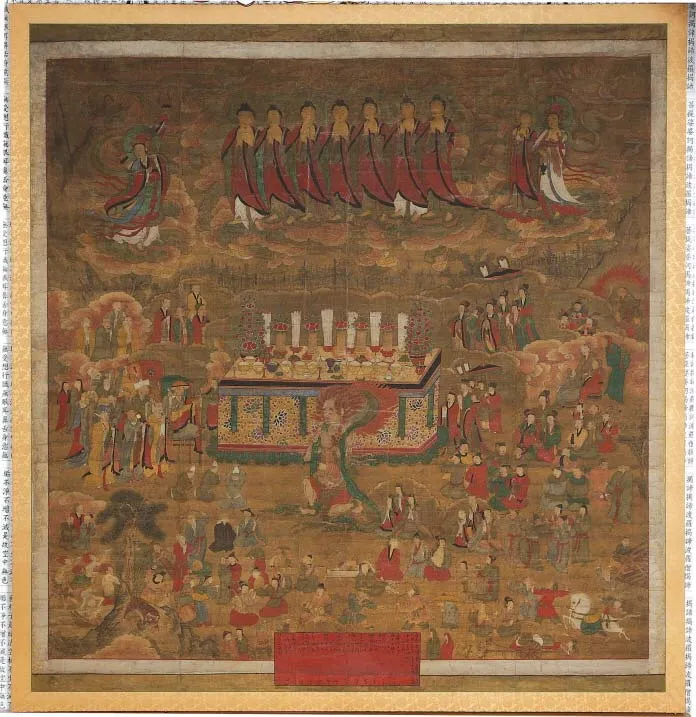
Beobinsa Gamrowangdo, Hamyang
咸陽 法印寺 甘露王圖
경상남도 함양군
Basic information
- Designation
- Treasure No.1731
- Category
- Painting
- Era
- 1726년
- Designated year
- 2011
- Location
- 함양군, 경상남도— 경상남도 함양군 금성길 14 (안의면)
- Coordinates
- 35.629318, 127.811064Kakao address conversion
AI Docent
Coming soonAn AI-generated, friendly retelling of this heritage site is available in Korean. An English version is on our roadmap — for now, please see the official description below.
Description
This painting on the theme of the King of Sweet Dew was painted, according to the note written near its bottom edge, in Geumdaeam Hermitage in Hamyang-gun and was intended to be housed in Angugam Hermitage. The painting displays, in the top tier, the images of the Seven Buddhas, Illowang Bosal (Guiding Bodhisattva), Avalokitesvara, Ksitigarbha Bodhisattva, and in the middle tier, an altar, hungry ghosts, a monk officiating a death rite and surviving family members of the dead attending the rite. The bottom tier shows images of people dying from various causes, including a forest fire, attack from a tiger and a flood. The iconography is overall that of a typical 18th-century painting of the King of Sweet Dew. The facial contour and the outlines of the body are very precise, and the clothing is finely depicted as well. The color tone with red and green as the dominant colors is rather light, and is well in harmony with the soft atmosphere of this painting. For a painting on the theme of judgment in hell, this painting of the King of Sweet Dew is, in fact, a bit too tame. The hesitant way in which trees under the Seven Buddhas are depicted, and the blank faces of the pretas are some of the examples to this effect. But, the souls of the dead, depicted in ink, are quite realistic and lively. This painting, according to the information provided by the inscription near the bottom edge, was created in 1726, by three monk painters; Chaein, Ilmin, and Taehyeon. These three people are recorded to have collaborated with Uigyeom, a renowned monk artist who was active in the early 18th-century in Jeolla-do and Gyeongsang-do. Chaein, who led this group of three artists had also participated in the creation of the Painting of the King of Sweet Dew of Unheungsa Temple (1730, Gyeongsangnam-do Tangible Cultural Heritage No. 356); which may explain the striking iconographic similarity between the two paintings. The Painting of the King of Sweet Dew of Gwallyongsa Temple is among the oldest extant paintings on this theme and is very telling of the prevailing style in Buddhist painting of the time.
Location
지도를 불러오는 중…
Have you visited this place?
Log in and verify your visit on-site via GPS to record a stamp in My Journey. (QR verification coming later.)
Images: KOGL (khs.go.kr) · Data source: Korea Heritage Service Open API (khs.go.kr)