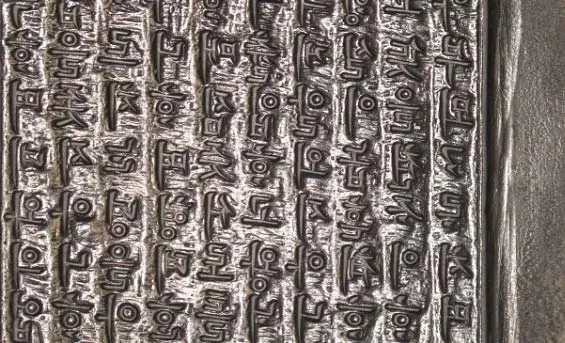
Bulseoldaebobumoeunjunggyeongpan
佛說大報父母恩重經版
경기도 화성시
Basic information
- Designation
- Treasure No.1754
- Category
- Books & Records
- Era
- 1796~1799년(정조 20~23추정)
- Designated year
- 2012
- Location
- 화성시, 경기도— 경기도 화성시 용주로 136(송산동, 용주사)
- Coordinates
- 37.211780, 127.005615Kakao address conversion
AI Docent
Coming soonAn AI-generated, friendly retelling of this heritage site is available in Korean. An English version is on our roadmap — for now, please see the official description below.
Description
This collection of Printing Woodblocks of Bulseol daebo bumo eunjunggyeong (Sakyamuni's Teaching on Parental Love) in Yongjusa Temple, made between 1796 and 1799, comprises 73 elements in total, including 42 woodblocks, 7 metal blocks, and 24 stone blocks. The woodblocks contain “transfiguration illustrations”, “segments”, Chinese and Korean editions carved in low relief on both sides, while the metal blocks contain “transfiguration illustrations” carved in low relief on one side only. As for the stone blocks, “segments” and Chinese edition are incised on one side. According to Jujaso eunghaeng jeolmok (Provisions of the Type Foundry), the scripture boards were stored in the type foundry before being sent to Yongjusa Temple. These printing woodblocks attest to the outstanding carving skills and superb aesthetic properties of the transfiguration illustrations of Kim Hong-do (pen-name: Danwon, 1745-?) and the calligraphic works of Hwang Un-jo (pen-name: Osu, 1730-1800), two of the greatest artists of their time. The Sakyamuni's Teaching on Parental Love published by Yongjusa Temple is now regarded by many as one of the most beautiful Buddhist sutras in the world, primarily because its publication was inspired by the devoted filial piety of King Jeongjo (1776-1800), and its aesthetic virtues were accomplished by some of Joseon’s greatest artisans. As a major aesthetic achievement of the greatest artisans of their time, these printing woodblocks in three types now form an invaluable part of the nation’s cultural heritage. They are particularly highly regarded because they have been well preserved in their original condition, and contain valuable information about the Korean language in the late 18th century, as well as ‘transfiguration’ illustrations.
Location
지도를 불러오는 중…
Have you visited this place?
Log in and verify your visit on-site via GPS to record a stamp in My Journey. (QR verification coming later.)
Images: KOGL (khs.go.kr) · Data source: Korea Heritage Service Open API (khs.go.kr)