Cheongwansa Three-story Stone Pagoda, Jangheung
長興 天冠寺 三層石塔
전라남도 장흥군
Basic information
- Designation
- Treasure No.795
- Category
- Sites & Pagodas
- Era
- 고려시대
- Designated year
- 1984
- Location
- 장흥군, 전라남도— 전남 장흥군 관산읍 농안리 739번지
- Coordinates
- 34.551977, 126.904509
AI Docent
Coming soonAn AI-generated, friendly retelling of this heritage site is available in Korean. An English version is on our roadmap — for now, please see the official description below.
Description
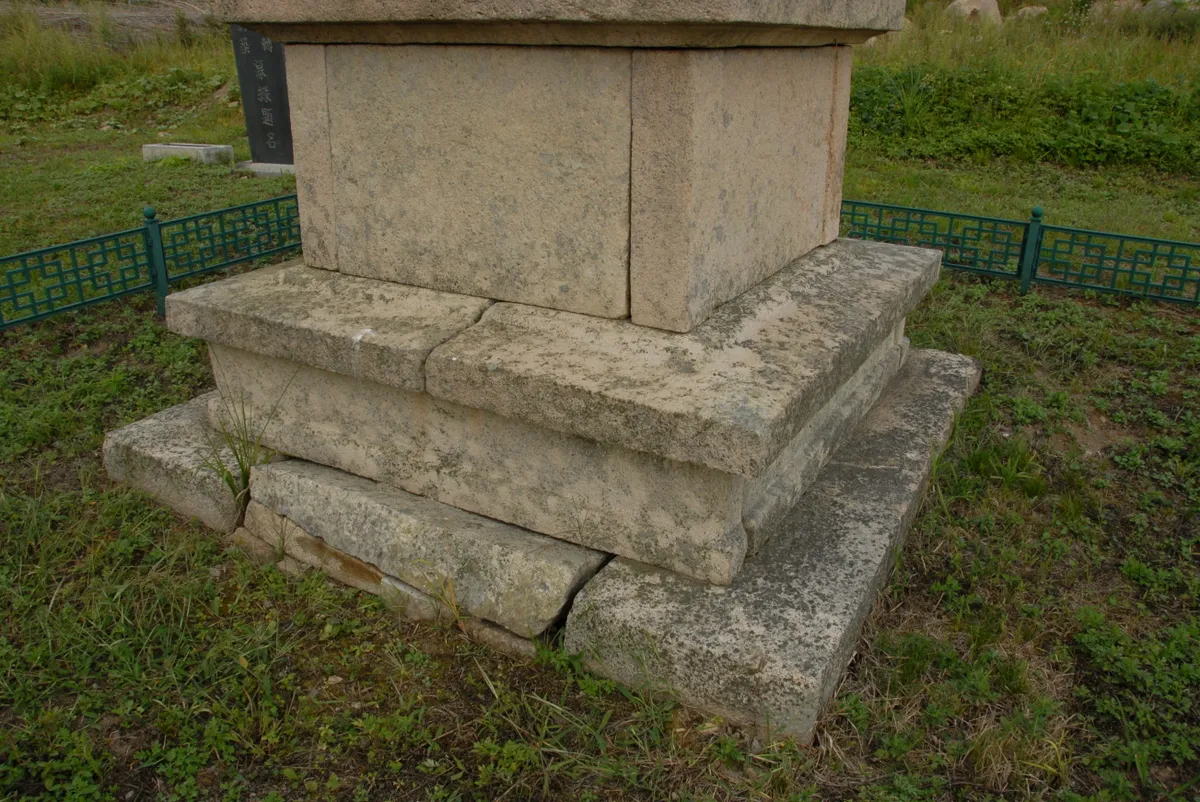
Cheongwansa is a temple founded by Buddhist Monk Tongnyeong in the reign of King Jinheung of Silla. It was so named because it enshrined the Bodhisattva named Cheongwan. The location of the temple on the seashore made it vulnerable to Japanese invasion. After several attacks, the temple was reduced and only the left site remained as the Buddha hall for Cheongwan. This pagoda, built during the Goryeo period, stands at the right side of the Buddha hall and consists of three stories in the main part supported by a two-story stylobate. The stylobate still retains the engraving of the pillar patterns on the edges at the lower and upper stories. The three-story main section of the pagoda is shaped after a tile-roofed house and is layered with stone assembled with the main stone and the roof stone. Each story of the main section has a pillar pattern decoration at the edge. The roof stone has a thin four-tiered base. As it goes down, the roof stone shows a moderate incline. The corners of the roof stone harbor a sense of the refinement as they are lightly curved upwards. Nothing has remained except the square final base and the round over-turned bowl decoration on the finial. Overall, the pagoda combines stability and refinement in appropriate proportions. Nonetheless, its execution is lacking, with the omission of pillar decoration and the thinness of the strut for the roof stone. This trend is seen in the process in which the style of Silla became localized in the transition from the Silla to the Goryeo Dynasty. Based on these facts, the pagoda is believed to have been built in early Goryeo.
Location
지도를 불러오는 중…
Have you visited this place?
Log in and verify your visit on-site via GPS to record a stamp in My Journey. (QR verification coming later.)
Images: KOGL (khs.go.kr) · Data source: Korea Heritage Service Open API (khs.go.kr)