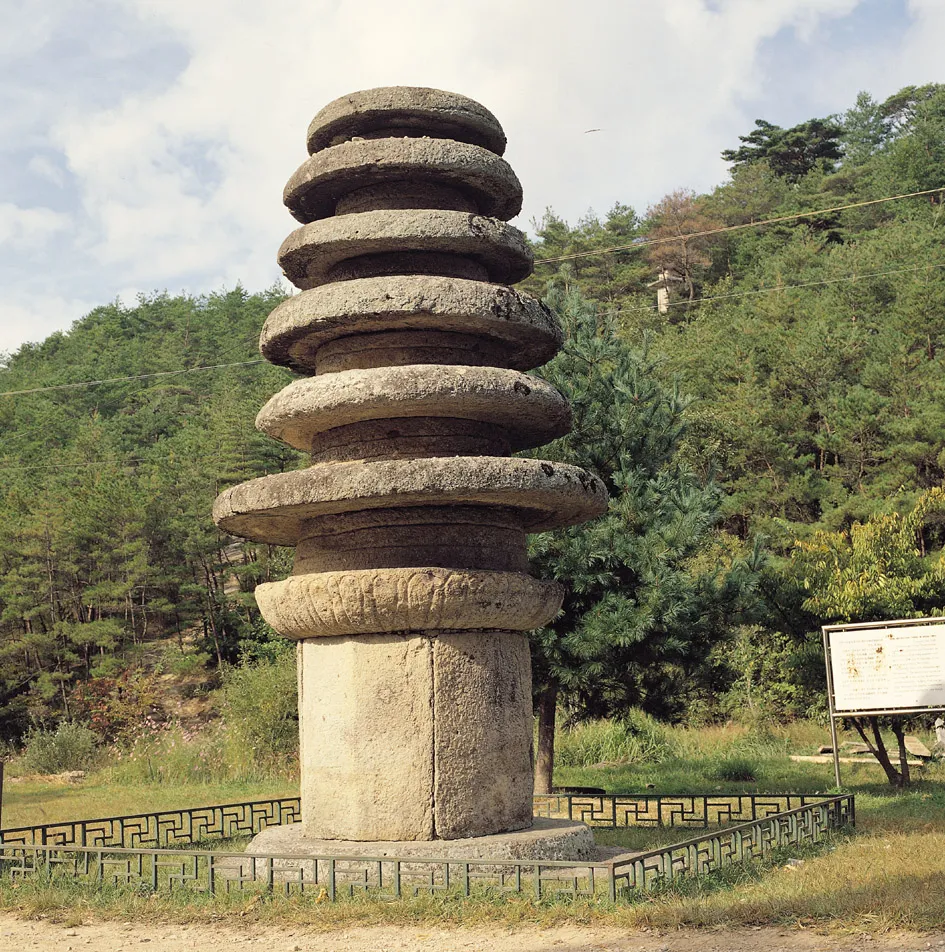
Unjusa Wonhyeong Dacheung Stone Pagoda, Hwasun
和順 雲住寺 圓形 多層石塔
전라남도 화순군
Basic information
- Designation
- Treasure No.798
- Category
- Sites & Pagodas
- Era
- 고려시대
- Designated year
- 1984
- Location
- 화순군, 전라남도— 전남 화순군 도암면 천태로 91-44 (대초리) / (지번)전남 화순군 도암면 용강리 941-32
- Coordinates
- 34.924899, 126.879993
AI Docent
Coming soonAn AI-generated, friendly retelling of this heritage site is available in Korean. An English version is on our roadmap — for now, please see the official description below.
Description
Unjusa Temple embodies the myth that State Preceptor Doseon built 1000 Buddhist statues and 1000 pagodas in Jeolla-do so that the ship of state, symbolizing this country, would not list to port. The monk viewed the land of this country as a ship and was worried that the ship would tip over because there are more mountains than flat land in the Honam area, which was considered as the centre of the ship. Currently, there are 18 pagodas and 70 Buddhist statues remaining in the temple. This is one of the pagodas, and it is situated in front of the Shrine of Stone Buddha at Unjusa Temple. It does not follow the usual form of stone pagoda in its composition and overall appearance, but rather it reflects local characteristics from the Goryeo. The stylobate consists of two stories of round base stone, a tall middle stone with ten facets, and the upper stone decorated with 16 lotus petals. The main part of the pagoda keeps the shape of circle at the body stone and roof stone. Each story has double lines along the side of the body stone. Although it exists now as a six story construction, the original seems to have had more stories. The composition and method of construction of the pagoda make it quite different from others, and reflect the special local characteristics that developed during the Goryeo period. The surface of the upper stylobate is smooth and even and the side round, while the bottom of the roof stone is smooth and even and the surface of it round, showing stability and harmony between the top and the bottom.
Location
지도를 불러오는 중…
Have you visited this place?
Log in and verify your visit on-site via GPS to record a stamp in My Journey. (QR verification coming later.)
Images: KOGL (khs.go.kr) · Data source: Korea Heritage Service Open API (khs.go.kr)