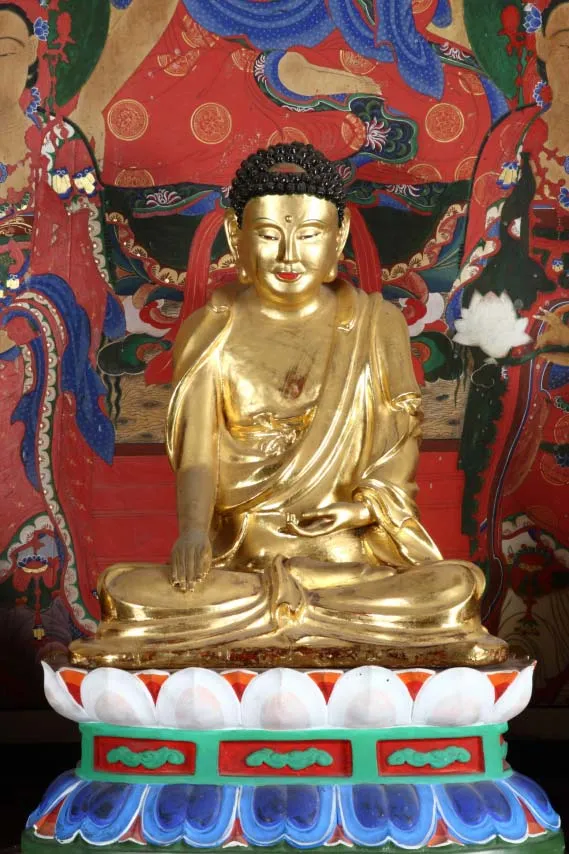
Heungguksa Sojoseokgayeoraesamjonjwasang Mit 16nahansang (Collection), Namyangju
南楊州 興國寺 塑造釋迦如來三尊坐像 및 十六羅漢像 一括
경기도 남양주시
Basic information
- Designation
- Treasure No.1798
- Category
- Sculpture
- Era
- 1650년 중수
- Designated year
- 2013
- Location
- 남양주시, 경기도— 경기도 남양주시 덕릉로1071번길 58 (별내동, 흥국사)
- Coordinates
- 34.751200, 127.661400Museum-based location
AI Docent
Coming soonAn AI-generated, friendly retelling of this heritage site is available in Korean. An English version is on our roadmap — for now, please see the official description below.
Description
The Clay Seated Sakyamuni Buddha Triad and Sixteen Arhats of Heungguksa Temple exhibit the representative styles of Buddhist statues made in the early Joseon Period. A letter of invocation confirming the details of these statues’ date of production has not yet been found, but a record of the third restoration of the statues undertaken in 1650 was discovered along with the names of the artists who participated in the repair work, confirming that they were originally created well before 1650. The Clay Seated Sakyamuni Buddha Triad and Sixteen Arhats have small faces with broad foreheads, small chins and slender bodies. These bodily and facial proportions were a common feature of Buddhist statues made in the late 15th and early 16th centuries, including the Wooden Seated Amitabha Buddha of Heukseoksa Temple, Yeongju (National Treasure No. 282, 1458); the Wooden Seated Amitabha Buddha of Wangnyongsawon Temple, Gyeongju (Treasure No. 1615, 1466-1474); and the Lacquered Pensive Bodhisattva at Girimsa Temple, Gyeongju (Treasure No. 415, 1501). These statues in Heungguksa Temple also show slight changes in the expression of their figures and the sense of volume and lines, offering valuable information on Buddhist sculptures made in the early Joseon Period.
Location
지도를 불러오는 중…
Have you visited this place?
Log in and verify your visit on-site via GPS to record a stamp in My Journey. (QR verification coming later.)
Images: KOGL (khs.go.kr) · Data source: Korea Heritage Service Open API (khs.go.kr)