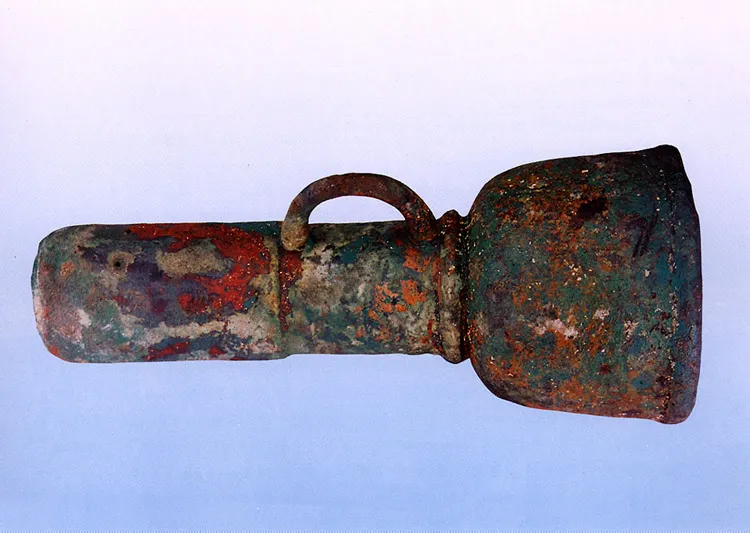
Jungwangu(1986-2)
中碗口(1986-2)
경상남도 창원시
Basic information
- Designation
- Treasure No.859
- Category
- Craft
- Era
- 조선시대
- Designated year
- 1986
- Location
- 창원시, 경상남도— 경상남도 창원시 진해구 중원로 1(남빈동) 사서함 88-2-6호 해군사관학교박물관
- Coordinates
- 35.227875, 128.681844
AI Docent
Coming soonAn AI-generated, friendly retelling of this heritage site is available in Korean. An English version is on our roadmap — for now, please see the official description below.
Description
Called wangu or daenggu in Korean, this mortar is a type of firearm that can be shot by ignition on a wire. Choe Hae-san (1380-1443) is said to have invented it during the reign of King Taejong (r. 1400-1418) of the Joseon Dynasty. A mortar can be divided into three parts: a muzzle, a barrel, and a powder chamber; the bowl-shaped muzzle is the place where shots such as a large stone or a metal ball are placed. The powder chamber is the place where gunpowder is put, and it has two ignition holes into which an igniter is put. In the middle, between the powder chamber and the muzzle, is the barrel, where there is a wooden piece for conveying the explosive force that occurs when gunpowder explodes to the muzzle. This mortar was salvaged by a diver in the sea across from Tongyeong-gun, Gyeongsangbuk-do Province in March 1970. Made of bronze, it has total length of 62.6 cm; the muzzle is 20.5 cm long, the powder chamber, 24.7 cm long, and the barrel, 14.7 cm long. Having been submerged under the sea for a long time, it is in a state of extreme corrosion, and the inscriptions can hardly be deciphered. Since its shape and size are nearly similar to the Medium Mortar designated as Treasure No. 858, however, it is presumed to have been manufactured between 1575 (8th year of King Seonjo’s reign) and 1605 (38th year of the reign of the same king). As a unique relic salvaged from the ocean, it is regarded as the only example directly used in naval battles and is highly regarded as a significant material not only for the development history of firearms but also for the history of naval warfare.
Location
지도를 불러오는 중…
Have you visited this place?
Log in and verify your visit on-site via GPS to record a stamp in My Journey. (QR verification coming later.)
Images: KOGL (khs.go.kr) · Data source: Korea Heritage Service Open API (khs.go.kr)